


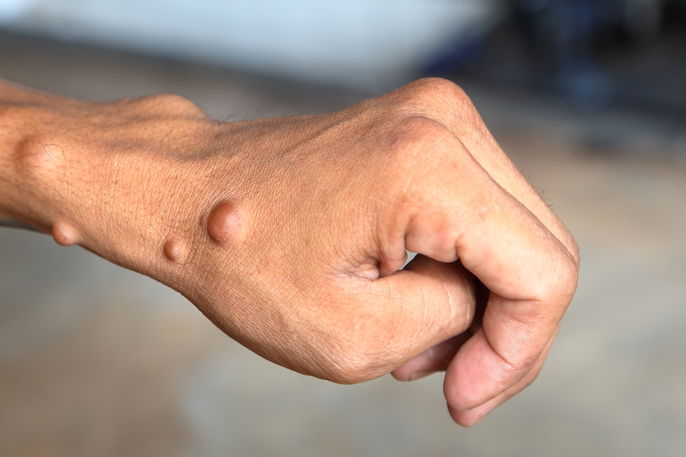
Neurofibromatosis, also known as Von Recklinghausen disease, is a hereditary condition that causes abnormal nerve tissue growth throughout the body. This can lead to the formation of small nodules and external tumors called neurofibromas.
Neurofibromatosis is usually benign and does not directly pose a health risk. However, because it can cause visible external tumors, it may lead to body disfigurement and cause some people to consider surgery to remove them.
Although neurofibromatosis has no cure, treatments such as surgery or radiation therapy may be used to reduce the size of tumors. These treatments can also help improve the appearance of the skin.
Main symptoms
The main symptoms of neurofibromatosis include:
-
Vision loss
-
Erectile dysfunction
-
Hearing loss
-
Skin nodules, known as neurofibromas
-
Brown and white spots on the skin
-
Bone changes
-
Tingling or numbness in the hands, arms, legs, or feet
A person with neurofibromatosis may develop tumors in the central nervous system, which can cause reduced sensation or weakness in certain parts of the body when they press on nearby nerves.
According to the National Institute of Neurological Disorders and Stroke (NINDS), neurofibromatosis can also affect peripheral nerves, with symptoms varying based on the location and size of the tumors.
Symptoms may also differ depending on the type of neurofibromatosis, and in some people they begin in early childhood and gradually worsen over time.
Confirming a diagnosis
A diagnosis of neurofibromatosis should be made by a pediatrician, dermatologist, or neurologist after evaluating the child’s signs and symptoms. Genetic testing may also be used to look for mutations on chromosomes 17 and/or 22, which are associated with the condition.
In addition, the doctor may recommend an MRI or CT scan to check for the presence of tumors. Tests to assess hearing, vision, and skin changes may also be requested.
Different types
Neurofibromatosis can be divided into three types:
1. Neurofibromatosis type 1
Neurofibromatosis type 1 is caused by mutations in chromosome 17 that reduce the production of neurofibromin. Neurofibromin is a protein the body uses to help prevent tumor formation.
This type of neurofibromatosis may also cause vision loss, erectile dysfunction, and neurological and skin changes.
2. Neurofibromatosis type 2
Neurofibromatosis type 2 is caused by mutations in chromosome 22, which reduce the production of merlin. Merlin is another protein that helps suppress tumor growth in healthy people.
Neurofibromatosis type 2 may cause hearing loss.
3. Schwannomatosis
Schwannomatosis is the rarest type of this disease, in which tumors develop in the skull, spinal cord, or peripheral nerves. Symptoms of this type usually appear between ages 20 and 25.
What causes neurofibromatosis?
Neurofibromatosis is caused by genetic changes in certain genes, especially those on chromosomes 17 and 22. In addition, rare cases of schwannomatosis seem to be caused by changes in more specific genes, such as SMARCB1 and LZTR1.
All of the affected genes play an important role in suppressing tumor formation. When these genes are altered, they can lead to the development of the characteristic tumors seen in neurofibromatosis.
Although most diagnosed cases are passed from parents to children, some people may develop the disease even without any family history.
Treatment options
Treatment for neurofibromatosis may include surgery to remove tumors that are putting pressure on organs. Radiation therapy may also be used to reduce tumor size.
However, according to the National Institute of Neurological Disorders and Stroke (NINDS), there is currently no cure for neurofibromatosis, and treatment is focused on managing symptoms and treating complications that may develop.
In more severe cases, when the person develops cancer, treatment with chemotherapy or targeted radiation therapy for malignant tumors may be necessary.
