


A mucous cyst is a type of blister that can forms on the lip, tongue, cheeks or roof of the mouth. It can be caused by a direct blow to the area, repetitive biting or a blocked salivary gland.
A mucous cyst, also referred to as a mucocele, is benign in nature, and can range in size from a few millimeters to 2 or 3 centimeters in diameter. It usually does not cause pain, except when it is caused by some type of injury.
Mucous cysts are not contagious and usually resolve on their own without the need for treatment. However, in some cases, minor surgery by a dentist may be necessary to remove the affected cyst and salivary gland.
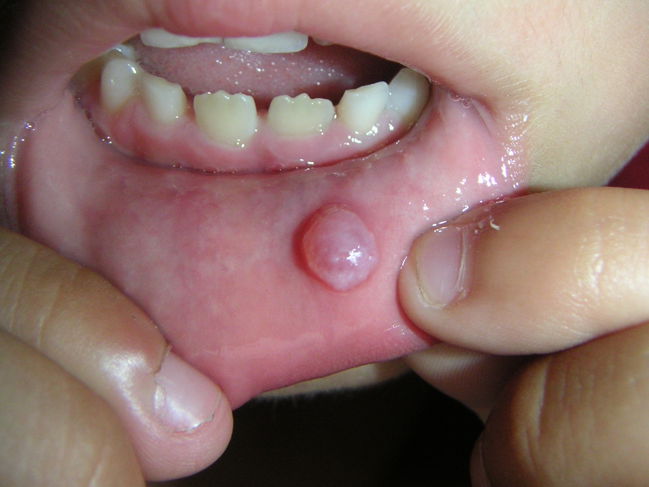
Main symptoms
A mucous cyst is characterized by the formation of a blister in the mouth, which presents with the following characteristics:
- Smooth and soft to the touch
- Shaped like a dome or semi-sphere
- Presence of mucus inside
- Clear or bluish in color
- Size from 1 millimeter to 2 centimeters
- Does not cause pain
A mucous cyst is usually found on the inside of the lower lip, but can also form on the cheeks, roof of the mouth or gums.
After some time, a mucocele blister can rupture, causing a small wound in the area that heals on its own.
Are mucous cysts serious?
Mucous cysts are not serious conditions, as they usually heal on their own with no medical treatment.
However, blisters in the mouth that do not improve within 2 weeks, it is important to consult a dentist or family doctor for further assessment as there is a type of cancer called mucoepidermoid carcinoma that can cause similar symptoms. Learn how to identify other symptoms that indicate mouth cancer.
Confirming a diagnosis
A mucous cyst diagnosis is initiated by a family doctor, dentist or pediatrician through an assessment of the patient's symptoms and a physical examination of the blister or wound in the mouth.
Generally, no further tests are necessary, although in some cases, the doctor may request an ultrasound to identify the type of mucocele.
A biopsy of the lesion may be performed to confirm the diagnosis and rule out other health conditions, such as an abscess, fibroma or cancer.
Possible causes
A mucocele in the mouth is caused by a blockage or injury to a salivary gland or duct, leading to the onset of symptoms.
Who is at greater risk?
The main factors that can lead to the development of mucocele in the mouth are:
- Biting or sucking the lips or the inside of the cheeks;
- Blows to the face, especially the cheeks;
- History of other diseases that affect the mucous membranes, such as Sjögren's syndrome or sarcoidosis, for example.
In addition, mucoceles can also appear in newborns from birth from trauma during birth, but they rarely require treatment.
Types of mucoceles
A mucous cyst can be classified into two types, according to the patient's age and the underlying cause:
1. Mucous extravasation cyst
A mucous extravasation cyst is the most common type and typically appears between 10 and 30 years of age.
This type of mucocele in the mouth can be caused by complications in dental surgeries, repetitive biting or the use of braces.
2. Retention mucocele
A retention mucocele is rarer and usually appears in people over 40 years of age. Generally, this type of mucocele in the mouth appears due to salivary gland obstructions, which prevents the flow of saliva.
Treatment options
Mucoceles often resolve on their own and disappear within a few days without any treatment. However, in cases where the lesion continues to grow and gets too big or shows no signs of improving, the dentist may indicate a minor surgery in the office to remove the affected salivary gland and reduce swelling.
This surgery is a simple procedure which does not require hospitalization. Patients are usually discharged home within a few hours and able to return to work or school 1 to 2 days after the procedure.
There are some cases in which removed mucoceles may regrow. Further surgery may be necessary for these cases.