


- Miliaria, also known as heat rash, happens when blocked sweat glands trap sweat under the skin, causing small bumps that may itch or burn.
- Miliaria is more common in babies and children, but it can also affect adults, especially in hot, humid environments or after heavy sweating.
- Most cases improve on their own with cooling, reduced sweating, and daily skin care.
Miliaria, also known as heat rash, is a skin condition caused by blocked sweat glands. This makes it harder for sweat to leave the skin, leading to small red bumps that may itch or burn.
Miliaria is more common in babies and children because their bodies are still adapting to heat and sweating. However, it can also affect adults and people of any age.
The bumps caused by miliaria are not serious and usually go away on their own. In most cases, it is only necessary to keep the skin clean and dry, although a pediatrician or dermatologist may recommend corticosteroid or antibiotic ointments in some cases.
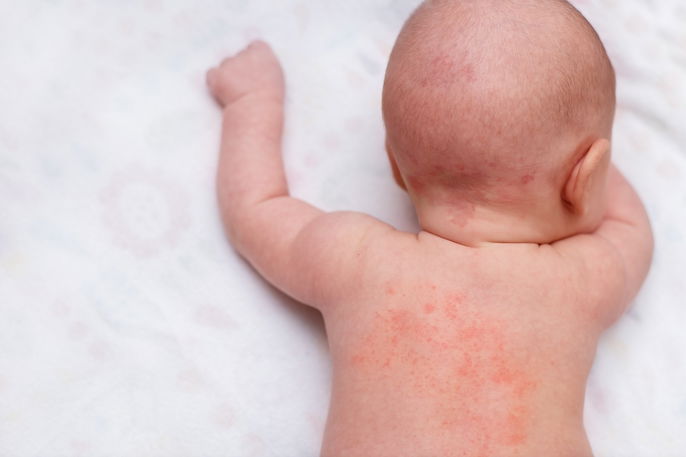
Miliaria symptoms
The main symptoms of miliaria are:
-
Small bumps on the skin, measuring 1 to 4 mm
-
Red patches on the skin
-
Itching and a burning sensation
-
Mild skin swelling
Miliaria bumps can appear anywhere on the body, but they are more common on the face, neck, back, chest, and thighs.
In some cases, depending on the type of miliaria, the bumps may appear on several areas of the body.
Is miliaria contagious?
Miliaria is not contagious and cannot spread from one person to another.
Confirming a diagnosis
The diagnosis of miliaria is clinical and is made by a pediatrician, primary care provider, or dermatologist based on symptoms, health history, and a physical exam. Additional tests are usually not needed to confirm a diagnosis of miliaria.
However, when miliaria happens very often, the doctor may recommend a skin biopsy to check for a more specific skin condition that may need treatment.
Another test that may be done is an analysis of the fluid inside the skin bumps. This can help confirm the diagnosis and rule out skin conditions with similar symptoms, such as herpes simplex or erythema toxicum in newborns.
Possible causes
Miliaria happens when sweat glands become blocked. This traps sweat under the skin, causing irritation and inflammation in the affected area.
Risk factors
The main risk factors for miliaria are:
-
Age, as it is more common in babies
-
Exposure to very hot and humid environments
-
Very intense physical activity
-
High fever
In addition, people who use occlusive dressings on the skin may develop miliaria in the area covered by the dressing, as it can make it harder for the skin to breathe.
Miliaria in babies
Miliaria is very common in babies, especially newborns, because their sweat glands are not fully developed yet.
Main types
The main types of miliaria are:
Symptoms usually appear within minutes to hours after sweating and improve once sweating stops.
Miliaria pustulosa is another type of miliaria. It is a variation of miliaria rubra that causes bumps that look like pimples.
A healthcare provider can identify the type of miliaria through a clinical exam and by looking at the appearance of the bumps.
Treatment options
Miliaria usually goes away on its own. According to the American Academy of Dermatology, most cases improve by cooling the skin and avoiding further sweating.
However, treatment may be recommended to relieve symptoms, and may include:
1. Daily care measures
Daily care measures can help clear miliaria and prevent it from coming back. These include:
-
Avoiding sun exposure
-
Wearing cool, loose-fitting cotton clothing
-
Taking cool or lukewarm baths and using a gentle soap without fragrances or dyes
-
Letting the skin air dry without using a towel
-
Applying cool compresses to the affected areas
-
Avoiding using creams or perfumes
In addition, the room should be kept cool and well ventilated by opening windows, using a fan, or turning on the air conditioning.
2. Pain relievers and fever reducers
Pain relievers or fever reducers, such as acetaminophen or ibuprofen, may be recommended to help lower a fever. The underlying cause of the fever should also be assessed and treated.
3. Calamine lotion
Calamine lotion may be recommended by a healthcare provider to help relieve itching caused by miliaria. It contains zinc oxide and other ingredients with anti-itch, pain-relieving, and skin-protective properties.
4. Ointments
Ointments for miliaria include corticosteroid ointments, such as triamcinolone, to reduce skin inflammation and symptoms of miliaria rubra.
A healthcare provider may also recommend antibiotic ointments, such as clindamycin, to treat miliaria pustulosa and bacterial skin infections.
