


Microdermabrasion is a non-surgical exfoliation procedure used to help rejuvenate the skin by removing dead skin cells. It may be recommended to help treat wrinkles, stretch marks, acne scars, and dark spots.
The procedure should be performed by a dermatologist or qualified skin care professional using specific equipment or topical products. The number of sessions depends on the treatment goal and the skin’s characteristics.
In most cases, 5 to 12 sessions are needed to achieve the desired results. Each session usually lasts about 30 minutes.
Main uses
Microdermabrasion may be performed to:
-
Smooth fine lines and wrinkles
-
Lighten pigmentation spots
-
Reduce small stretch marks, especially those that are still red
-
Reduce acne scars
-
Minimize other skin imperfections
It may also be used to treat rhinophyma, a condition characterized by masses on the nose that, when severe, can cause nasal obstruction.
Different types
There are two main types of microdermabrasion:
- Crystal peeling, which uses a small suction device to remove the outermost layer of skin and stimulate collagen production.
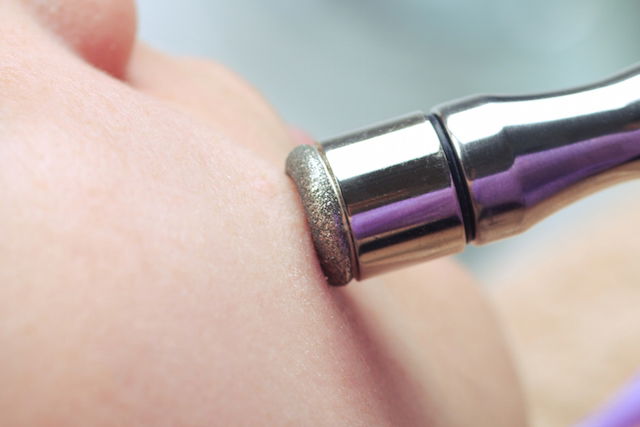
- Diamond peeling, which provides deeper exfoliation and may help reduce spots and wrinkles.
There is also at-home microdermabrasion, which doesn’t require devices and instead involves applying an exfoliating cream to the skin using circular motions.
The most appropriate type of microdermabrasion should be chosen by a dermatologist or another qualified aesthetic professional, based on the treatment goals and your skin type.
How it works
Microdermabrasion should be performed in a dermatologist’s office or in a clinic that specializes in this procedure. It is done with a device that sprays aluminum oxide crystals onto the skin to remove its outermost layer, followed by vacuum suction to remove the residue.
When microdermabrasion is done with creams, the product is applied to the desired area, gently massaged for a few seconds, and then rinsed off.
These creams usually contain crystals that stimulate skin microcirculation and remove dead skin cells, helping the skin look healthier.
Microdermabrasion can be done on the face, chest, neck, arms, or hands, but several sessions may be needed for satisfactory results.
Aftercare instructions
According to the American Academy of Dermatology, after microdermabrasion the treated skin may become pink or red, slightly swollen, bruised, or more sensitive, and some people may also experience burning, stinging, or increased sensitivity to sunlight. For this reason, it is important to avoid sun exposure and use sunscreen after the procedure.
It is also recommended to avoid applying any products or creams to the face unless they were specifically recommended by the professional performing the treatment, as they may irritate the skin.
Mild pain, slight swelling, minor bleeding, and increased sensitivity are also common after the procedure.
The American Academy of Dermatology also notes that people whose skin tends to develop dark spots after acne heals or after a skin injury may have a higher risk of developing additional dark spots after microdermabrasion, although this risk is small when the procedure is performed by a dermatologist.