


Mallow is a medicinal plant used to help relieve nasal congestion, soothe throat and mouth irritation, and ease symptoms of skin conditions. It contains phenolic compounds and flavonoids that have natural antioxidant and antimicrobial properties.
The flowers and leaves of mallow are the parts most often used to make teas, infusions, or poultices for different health purposes. These preparations can support care for infections, inflammation, and digestive discomfort.
Mallow can be purchased in herbal shops, health food stores, or compounding pharmacies, and is typically used under professional guidance. Proper use is important because the plant can interact with medications and may not be suitable for everyone.
Medicinal uses
Mallow can be used to help treat certain health problems, such as:
- Respiratory infections, like bronchitis, colds, flu, and pneumonia;
- Inflammation in the mouth, such as stomatitis, mouth sores, and gingivitis;
- Oral thrush;
- Throat inflammation, such as tonsillitis, pharyngitis, laryngitis, and sore throat;
- Intestinal problems, such as constipation, colitis, gastritis, and stomach ulcers;
- Relieving stomach pain, abdominal pain, and toothache;
- Skin problems, such as insect bites, dermatitis, eczema, pimples, abscesses, boils, and burns;
- Vaginal infection and ovarian infection.
Although it has many benefits, mallow should not replace medical treatment and should not be used without guidance from a doctor or a healthcare professional experienced in the use of medicinal plants.
How to take
The parts of mallow that are most commonly used are the leaves and flowers from which actives substances with medicinal properties are extracted. Mallow leaves and flowers are used to make teas, infusions or poultices, with each form being used for different purposes.
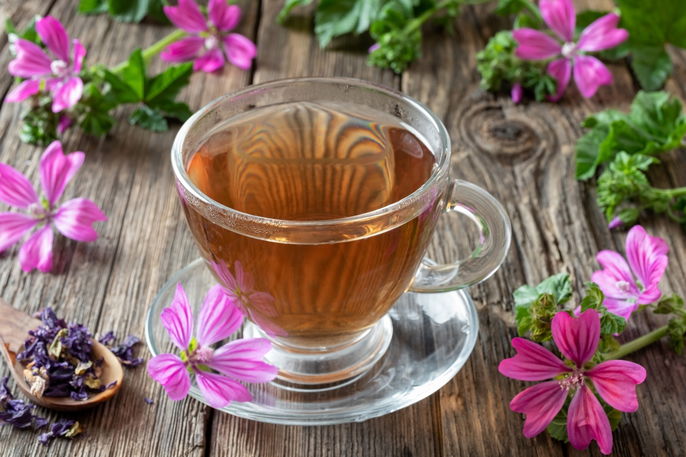
1. Mallow tea
Mallow tea can be used to help treat respiratory problems, such as coughs, bronchitis, sore throat, pharyngitis, laryngitis, gastritis, stomach ulcers or constipation.
Ingredients
- 1 teaspoon of dried mallow flowers or leaves
- 1 cup of boiling water
Directions
Place the mallow flowers or leaves in a cup of boiling water, and let them soak for 10 minutes. Then strain and drink up to 3 times a day or as directed by your doctor or herbalist.
2. Mallow infusion
A mallow infusion can be used as a gargle or mouthwash for gum inflammation, cold sores or sore throat.
Ingredients
- 30 g of dried mallow flowers and/or leaves;
- 1 liter of boiling water.
Directions
Add the dried mallow flowers and/or leaves to the boiling water, let them soak for 10 minutes, then strain. Use the mallow infusion in the form of mouthwash or gargle, and spit out the solution.
3. Mallow poultice
A mallow poultice can be used to apply directly on the skin to treat abscesses, skin ulcers, boils, insect bites or dermatitis.
Ingredients
- Dried mallow leaves and flowers
Directions
Mash the dried mallow leaves and flowers and add a small amount of water. Then apply to the affected region.
Possible side effects
The side effects of mallow are not fully known, however it can be toxic when used in excessively high doses.
For this reason, mallow should only be used as approved by a doctor or medicinal plant specialist to achieve specific health goals.
Contraindications for use
Mallow should not be used during pregnancy and breastfeeding, nor by people who have high blood pressure.
Mallow can also interfere with the absorption of other medications that contain mucilages. When consuming mallow tea, you should wait about an hour between ingesting it with other medications.