


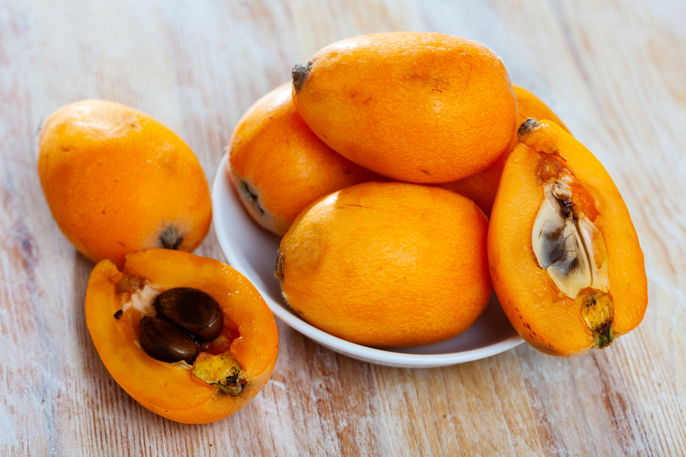
A loquat are a small, round, orange fruit with a soft, velvety peel, a firm texture and a sweet, refreshing flavor.
Loquats are high in fiber, vitamin A and manganese, and can therefore lead to health benefits like boosting immunity, combating constipation and preventing diabetes.
Loquats are grown from Eriobotrya Japonica trees, and can be eaten raw or added to smoothies, juices, cakes, mousses, sauces and salads. Loquat leaves can also be used to make tea.v
Health benefits
The main health benefits of loquats are:
1. Combating constipation
Loquat is rich in pectin, which is a type of soluble fiber that hydrates and adds bulk to the stool. This can help to promote easier bowel movements and combat constipation.
2. Boosting immunity
Because it is high in manganese and antioxidant compounds (like carotenoids and flavonoids), loquats strengthen immune system cells, making them more efficient in eliminating viruses, fungi and bacteria.
3. Managing cholesterol levels
The fiber content in loquat can help to reduce fat absorption in the gut, which can play a role in keeping cholesterol and triglyceride levels within normal levels in the blood.
4. Improving digestion
Loquats are rich in ursolic acid and chlorogenic acid, which are bioactive compounds with antioxidant and anti-inflammatory activity. These can help to preserve liver function and improve metabolic processes.
5. Promoting weight loss
Loquats are a low-calorie fruit, making them a great option to include in weight loss diets. As mentioned above, they also contain pectin, which is a fiber that forms a type of gel in the stomach. This increases the time food takes to digest, which can help to keep you full.
Check-out other fruits for weight loss that are low in calories and can help to manage appetite.
6. Preventing premature aging
Because they contain carotenoids and phenolic compounds with antioxidant properties, loquats can protect skin cells from free radical damage. Therefore, they can play a wrole in preventing the appearance of wrinkles, sagging skin and premature aging.
7. Preventing diabetes
Loquats are rich in fiber that slows down the absorption of carbohydrates from food. This can help with managing blood glucose levels, and prevent insulin resistance and diabetes.
8. Treating respiratory problems
Tea made from loquat leaves is traditionally used treat respiratory conditions, like coughing, bronchitis and asthma, as the leaves naturally contain anti-inflammatory, antioxidant and immunomodulatory properties.
However, more research on humans is still needed to support that this tea can be used for respiratory conditions.
Difference between loquats and plums
Plums are a fruit that belong to the Prunus domestica species. They are typically red, purple or yellow in color, and usually have a smooth peel, soft pulp and a sweet and slightly acidic flavor.
Loquat belong to the Eriobotrya Japonica species, and have a yellow-orange color. The peel is usually velvety, and have a firm texture and a sweet, refreshing flavor.
Nutritional information
The following table outlines the nutritional information in 100 g loquats, which are equivalent to about 3 large units
To ensure the health benefits of loquat, it is important that this fruit is part of a varied and healthy diet, combined with regular exercise.
How to eat
Loquats can be consumed naturally, in their raw form, or used in recipes for smoothies, mousses, cakes, jellies, sauces, or salads. Loquat leaves can be used to make teas.
Although there is no specific recommended amount of loquats to consume, the minimum daily recommendation of fruit is between 2 and 3 servings per day, which corresponds to between 160 g and 240 g per day.
Healthy recipes
Some recipes that can be prepared with loquats are:
1. Loquat tea
The tea can be prepared with dried or fresh loquat leaves, and is recommended to improve digestion or help treat coughs, bronchitis and asthma.
Ingredients:
- 10 g of dried or 10 g of fresh loquat leaves
- 1 liter of water
Directions:
Pour the water in a pot or kettle and bring to a boil. Then remove from heat, add the leaves, cover and steep for 10 minutes. Then strain and drink immediately.
As there are no studies available on the safe dosage and contraindications of this tea, this drink should only be consumed as approved by your doctor or medicinal plant specialist.
2. Loquat and date smoothie
Ingredients:
- 300 g of loquats
- 4 pitted dates
- 500 ml of milk or plant-based alternative
Directions:
Remove the seeds from the loquats and place the pulp in a blender. Add the milk and dates, and mix for 1 minute or until the mixture is smooth. Pour into a glass and drink immediately.
3. Loquat mousse
Ingredients:
- 2 unsweetened Greek yogurts
- 200 g of loquats
- 2 tablespoons of chia seeds
- 2 tablespoons of honey
Directions:
Open and remove the seeds from the loquat. Remove the pulp from the loquats and miz in a blender until you get a consistent puree texture. Transfer the loquat pulp to a bowl and add the yogurt, honey and chia seeds, mixing gently.
Pour the mixture into individual bowls, cover and refrigerate for at least 3 hours before serving.