


Lichen planus is an inflammatory condition that affects the skin and mucous membranes. It causes symptoms such as small red or purple plaques on the skin, blisters or sores, intense itching, and swelling.
Lichen planus can develop gradually or appear suddenly. While its exact causes are not fully understood, the lesions are thought to result from an immune system reaction. It is not contagious.
Treatment for lichen planus is provided by a dermatologist, who may recommend corticosteroids or immunosuppressants, tailored to the affected body area and severity of symptoms.
Main symptoms
The main symptoms of lichen planus include:
-
Red or purple plaques on the skin with a wrinkled and shiny appearance
-
Sores or blisters in the mouth or genital area, flat in appearance
-
Small white streaks, known as Wickham's striae
-
Pain at the site of the lesion, especially in the mouth or genital area
-
Intense itching at the affected site
-
Vaginal discharge or pain during intimate contact
-
Small bumps, pimples, or red lumps around the glans of the penis
The symptoms of lichen planus can appear anywhere on the body, including the chest, back, arms, wrists, legs, ankles, face, neck, scalp, mouth, gums, or genital area.
Additionally, it can also affect the nails, causing nail growth disruption, detachment, nail discoloration or thickening, or the absence of cuticles.
It is important to consult a dermatologist whenever symptoms of lichen planus arise to ensure accurate diagnosis, identify the type, and begin the most suitable treatment.
How to confirm a diagnosis
The diagnosis of lichen planus is made by a dermatologist through the evaluation of symptoms, medical history, and a physical examination of the lesions.
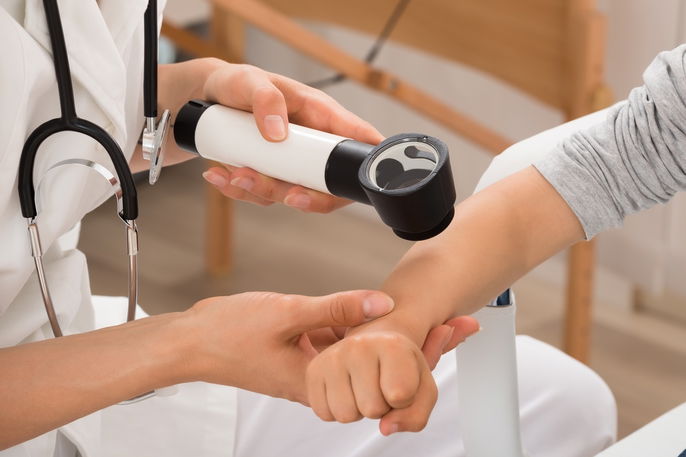
Additionally, the doctor may perform a dermoscopy, a detailed skin examination to check for the presence of Wickham’s striae and identify the type of lichen planus.
The doctor may also order a blood test to detect hepatitis C virus infection, as it is one of the causes of lichen planus.
To confirm the diagnosis, a biopsy may be performed, which involves removing a small part of the lesion to be analyzed in a laboratory.
Possible causes
The exact causes of lichen planus are not fully known, but it is understood that the lesions arise due to the body's defense cells attacking the skin and mucous membranes, leading to the development of symptoms.
Several factors can increase the risk of developing lichen planus, including:
-
Exposure to chemicals and metals
-
Use of antimalarial drugs, non-steroidal anti-inflammatory drugs (NSAIDs), or thiazide diuretics
-
Hepatitis C virus infection
-
Allergies to dental restoration products like mercury, copper, or gold
Skin lesions caused by lichen planus tend to appear suddenly and often arise during stressful situations. They may last for weeks and resolve on their own.
However, lichen planus is a chronic, recurring disease, meaning it has no cure and may flare up intermittently.
Types of lichen planus
Lichen planus can be classified into several types, depending on the location and characteristics of the lesions. These include:
-
Lichen planus hypertrophic: Red lesions resembling warts
-
Lichen planus linear: Appears as a red or purple line on the skin
-
Lichen planus bullous: Causes blisters or vesicles around the lesions
-
Lichen planus ungual: Affects the nails, causing weakness and brittleness
-
Lichen planus pigmentosus: Appears after sun exposure, typically non-itchy, and is visible due to gray skin pigmentation
This condition can also affect the scalp, causing hair breakage and scarring, and areas of the mucosa such as the genital region, esophagus, tongue, and mouth.
Treatment options
The treatment for lichen planus should be guided by a dermatologist and varies depending on the type of lichen planus.
The doctor may recommend the use of antihistamines or corticosteroids to relieve intense itching or suggest antibiotics, immunosuppressants, or retinoids.
For lichen planus affecting the skin, the dermatologist may also suggest phototherapy treatment.
Since lichen planus is a chronic condition that can return even after treatment, doctors often recommend antidepressants and psychological support, including therapy.
Home remedies
Adopting some home measures can help alleviate itching, such as avoiding scented soaps and lotions, wearing cotton underwear, and applying cold compresses to the affected area.
Additionally, some studies suggest that green tea may help reduce the skin lesions caused by oral lichen planus.