


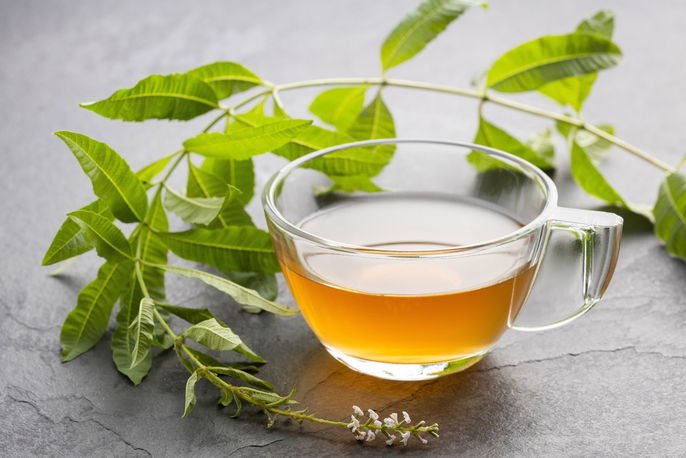
Lemon verbena is a medicinal plant with several health benefits, traditionally used to help with intestinal cramps, diarrhea, and excess gas. It contains anti-inflammatory, antispasmodic, antioxidant, antibacterial, digestive, and calming properties.
The most commonly used parts of lemon verbena, also known as vervain or Indian verbena, are its leaves and flowers. These contain active compounds with medicinal properties and are often used to prepare teas and essential oils.
Lemon verbena (Aloysia citriodora) can be found in some markets, fairs, or health food stores. Its use should always be guided by a doctor or healthcare professional with experience in medicinal plants.
Health benefits
Lemon verbena provides a variety of health benefits and is used for:
1. Relieving diarrhea
Drinking lemon verbena may help reduce episodes of diarrhea thanks to its ability to slow the growth of bacteria that affect the digestive tract. Laboratory studies show that its essential oil has bacteriostatic activity against microorganisms linked to intestinal infections, which may ease symptoms.
2. Supporting digestion
Lemon verbena supports digestion by relaxing the muscles of the gastrointestinal tract, improving bowel movements, and reducing discomfort caused by indigestion. Pre-clinical studies suggest it helps balance gut microbiota and reduce inflammation.
3. Relieving cramps
Lemon verbena may help ease intestinal or menstrual cramps by reducing excessive contractions of the intestines and uterus. This can lead to less pain and fewer spasms.
4. Supporting urinary tract recovery
Lemon verbena may aid recovery from mild urinary tract infections by slowing the multiplication of bacteria that affect the urinary tract. However, more scientific research is needed to confirm this potential benefit.
5. Reducing gas and bloating
Lemon verbena may help decrease excess intestinal gas and bloating by improving digestion and balancing gut microbiota. This reduces the excessive fermentation of food in the intestines, a process that produces gas and causes bloating.
6. Reducing muscle pain
Lemon verbena tea or extract may help reduce muscle pain. Some studies suggest its use may lower the production of compounds related to inflammation and pain, although more research is needed to confirm its effectiveness.
7. Helping with fever
In traditional medicine, lemon verbena has been used to help lower fever. While strong clinical studies are lacking, pre-clinical research suggests its anti-inflammatory activity may contribute to reducing body temperature.
8. Relieving asthma symptoms
Lemon verbena has traditionally been used to ease asthma symptoms. Although direct scientific evidence is limited, its ability to regulate inflammation may explain the relief reported by some people.
9. Improving sleep quality
Lemon verbena may improve sleep quality and reduce the time it takes to fall asleep. One study showed that using lemon verbena for 8 weeks was linked to more restful sleep.
10. Reducing nervousness and restlessness
Lemon verbena may help reduce nervousness and restlessness. Studies indicate that this plant promotes relaxation, possibly by affecting neurotransmitters related to calmness. It can also be combined with other medicinal plants, such as linden and peppermint, for added effect.
11. Relieving migraines
In traditional medicine, lemon verbena is used to ease migraines. Although clinical evidence is limited, this benefit may be due to its ability to reduce muscle tension and regulate inflammation, which lessens the intensity of headache symptoms.
12. Supporting weight control
Lemon verbena extract, especially when combined with hibiscus flower, may help control body weight and reduce body fat. This is because it helps regulate hormones linked to satiety by increasing leptin and cholecystokinin while lowering ghrelin, which reduces appetite.
How to use
Lemon verbena can be used in the following ways:
1. Lemon verbena tea
Lemon verbena tea is made with the dried leaves of the plant.
Ingredients:
-
1 tablespoon of dried lemon verbena leaves
-
1 cup of water
Preparation:
Boil the water and pour it over the dried lemon verbena leaves. Cover and let steep for about 10 minutes, then strain. Drink 1 cup, 2 to 3 times a day after meals, or as directed by a doctor or herbal specialist.
2. Lemon verbena essential oil
Lemon verbena essential oil is rich in citral, cineole, geraniol, and limonene. It can be used in aromatherapy to help relieve anxiety, insomnia, or stress due to its calming and sedative effects.
For aromatherapy, inhale the aroma directly from the bottle, holding the breath for 2 to 3 seconds before exhaling. Repeat 3 to 7 times, several times a day. Another option is to add 2 to 3 drops of the essential oil to water in a diffuser or aromatherapy burner, according to the device’s instructions, to spread the aroma throughout the room.
Possible side effects
Lemon verbena is generally safe when consumed as tea for a short period and in recommended amounts. However, prolonged or excessive use may irritate the stomach. For this reason, it should only be used under medical guidance or with supervision from a healthcare professional experienced in medicinal plants.
Who should not use
Lemon verbena should not be used by pregnant or breastfeeding women or by people with kidney problems. In addition, lemon verbena essential oil should not be taken orally.