


Lateral knee pain, or pain on the outside of the knee, can be caused by injuries, iliotibial band syndrome, ligament tears, tendinitis, meniscus tears, osteoarthritis, stress fractures, bone edema, or other joint conditions.
Depending on the cause, the pain may occur on the outer (lateral) or inner (medial) side of the knee. It may also be accompanied by swelling, stiffness, instability, or difficulty moving the joint.
It’s important to see an orthopedic specialist when lateral knee pain occurs, especially if it is persistent or severe, so the underlying cause can be properly diagnosed and treated.
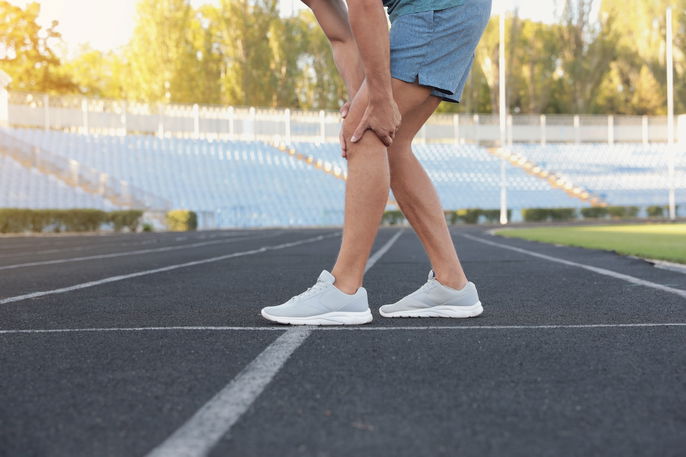
Why do I have pain on the side of my knee?
Lateral knee pain can be caused by:
1. Traumatic injury
Lateral knee pain may occur suddenly after an injury to the knee, such as a fall, contusion, direct blow, twisting motion, dislocation, or fracture.
In these cases, the pain is often intense and may come with swelling and reduced mobility in the joint.
What to do: Rest and apply cold compresses for 15 minutes, 2 to 3 times a day, for minor injuries without fractures. If there is a suspected fracture or dislocation, emergency care is needed. Physical therapy is often recommended to support recovery and help reduce pain, even in less severe cases.
2. Iliotibial band syndrome (ITBS)
Iliotibial band syndrome is one of the most common causes of lateral knee pain in runners. It occurs when the iliotibial band—a thick band of connective tissue along the outer thigh—rubs against the lateral femoral epicondyle, a bony prominence on the thighbone.
This repeated friction leads to inflammation, causing sharp pain on the outside of the knee. ITBS is often linked to weak or tight muscles, improper training techniques, running on uneven surfaces, inappropriate footwear, or poor running form.
What to do: Stop running temporarily and engage in muscle-strengthening exercises and stretching under the guidance of a physical therapist or certified trainer. Anti-inflammatory medications in cream or pill form may be prescribed by an orthopedic doctor. Physical therapy may also help reduce inflammation and improve muscle balance.
3. Ligament tear
A tear in the medial or lateral collateral ligament can cause pain on the inner or outer side of the knee. Other symptoms may include swelling, stiffness, and a feeling of instability.
These tears often happen due to trauma, such as a direct hit or a twisting motion, and are especially common in contact sports like football, basketball, or tennis.
What to do: Treatment should be guided by an orthopedic specialist. It often includes surgery followed by physical therapy and rest. In the early stages, a knee brace may be used to limit movement and promote healing.
4. Knee tendinitis
Tendinitis in the knee may affect the hamstring, popliteus, or pes anserine tendons, leading to lateral knee pain, swelling, or pain when moving the knee.
This condition is commonly caused by overuse or repetitive stress in high-impact sports such as running, cycling, or soccer.
What to do: Rest the joint and avoid repetitive activities. Apply an ice pack to the area for 20 minutes, twice a day. An orthopedic doctor may recommend physical therapy, anti-inflammatory medication, or surgery in more severe cases. Read more about tendonitis treatment and how it can be prevented.
5. Meniscus tear
A tear in the medial meniscus can cause pain on the inner side of the knee, while a lateral meniscus tear leads to pain on the outer side.
Other common symptoms include pain when climbing stairs, squatting, or extending the knee. Meniscus tears can occur with age or during sports that involve pivoting or twisting, such as judo or Brazilian jiu-jitsu.
What to do: Treatment includes rest and physical therapy to strengthen the muscles around the knee. In some cases, corticosteroid or hyaluronic acid injections may be used to reduce inflammation and pain. Surgery might be recommended when conservative treatments are not effective.
6. Patellofemoral pain syndrome (chondromalacia patella)
Chondromalacia patella refers to the softening and breakdown of the cartilage underneath the kneecap. While this usually causes pain in the front of the knee, it can also lead to pain on the lateral side in some cases.
Other signs may include a grinding sensation, popping sounds, or swelling. It is often associated with overuse, improper knee alignment, or repetitive knee strain.
What to do: Treatment is overseen by an orthopedic specialist and may include rest, physical therapy, medications for pain relief, and in some cases, surgical intervention.
7. Stress fracture
A stress fracture is a small crack or microfracture in the bone, usually in the tibia, that can cause lateral knee pain that worsens over time. Pain may also appear during rest, along with swelling.
This condition often results from overuse and is common in high-impact activities like running or track and field.
What to do: Stop the physical activity causing the pain and rest the affected leg. Apply cold compresses for 10 minutes, and see an orthopedic doctor for diagnosis. Treatment may include knee bracing, pain-relieving medications, and, in some cases, crutches or a walking boot.
8. Bone edema
Bone edema is swelling within the bone, often in the femur, tibia, or patella. It may cause pain on the outer or inner side of the knee, as well as pain in the front of the joint, swelling, heat, or stiffness.
This condition usually develops after trauma, falls, or sports injuries. It can make walking difficult or painful.
What to do: Diagnosis is typically made through an MRI. Treatment includes rest, medications to relieve pain, assistive devices such as crutches, and in some cases, surgery.
9. Knee osteoarthritis
Osteoarthritis in the medial or lateral compartment of the knee can cause chronic pain on the inside or outside of the joint. Symptoms may include stiffness, especially in the morning, and worsening pain after long periods of walking, standing, or activity.
Knee osteoarthritis is a degenerative condition that results in the thinning and breakdown of the cartilage, leading to joint pain and reduced mobility.
What to do: Treatment should be guided by an orthopedic specialist and may include pain relievers, anti-inflammatory medications, physical therapy, and in some cases, corticosteroid or hyaluronic acid injections into the joint.