


Lat exercises target the latissimus dorsi, one of the largest muscles of the back involved in shoulder extension, adduction and internal rotation. These movements support posture, pulling strength and overall upper-body stability.
Most lat exercises include vertical pulls, horizontal pulls or controlled shoulder extension. Grip position, shoulder angle and equipment can influence which parts of the muscle work the most.
Evidence indicates that using a full range of motion and including slower eccentric phases can support muscle growth. Moderate loads, repetition ranges of 8 to 12 and consistent weekly training help increase the size and strength of the lats and surrounding upper-back muscles.
Warm-up
A warm-up prepares the lats and shoulders by increasing blood flow and improving mobility before performing lat exercises.
1. Scapular retraction warm-up

This movement activates the muscles around the shoulder blades, which help support pulling exercises.
How to perform: Sit or stand upright and gently squeeze the shoulder blades together. Hold for 2 to 3 seconds, then release.
Sets and duration: 2 sets of 10 to 15 repetitions.
2. Arm circles
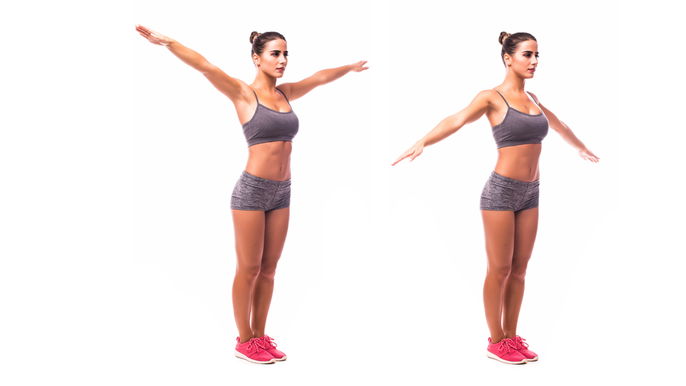
This exercise improves shoulder mobility for rowing and pulling movements.
How to perform: Move the arms in slow forward and backward circles while keeping the shoulders relaxed.
Sets and duration: 2 rounds of 20 to 30 seconds.
List of exercises
These lat exercises can be performed in different settings depending on available equipment. Each movement supports shoulder extension, horizontal pulling or vertical pulling, which are the main actions of the latissimus dorsi.
1. Inverted row

This exercise creates strong activation in the lats with low spinal load.
How to perform: Position a fixed barbell on a sturdy rack at hip height. Hold the bar with a shoulder-width grip and keep the body straight. Pull the chest toward the bar by bending the elbows, then lower with control.
Sets and reps: 3 sets of 8 to 12 repetitions.
2. Pulldown
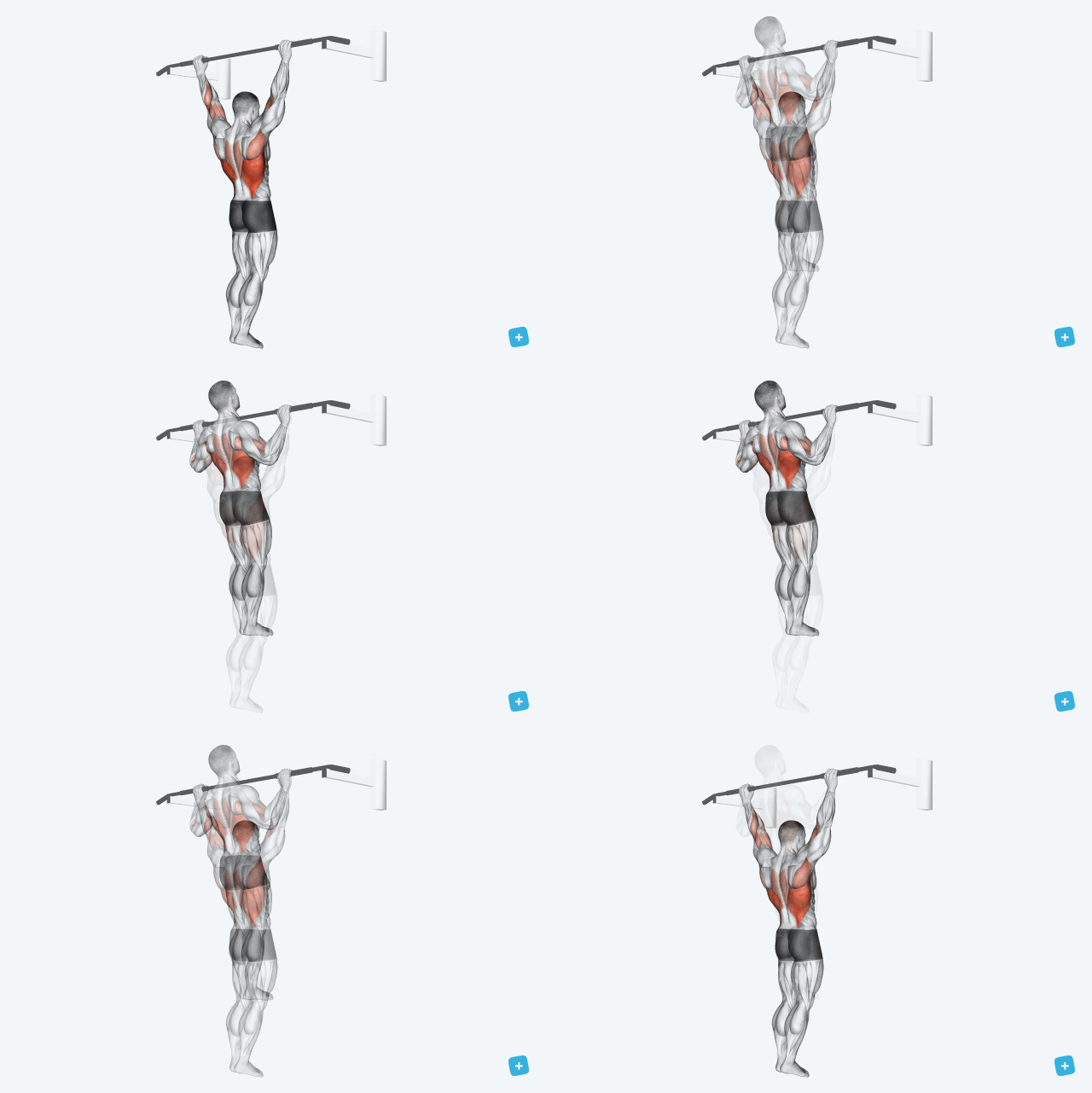
Pulldowns recreate the vertical pulling pattern used in many lat exercises. This exercise is usually done on a cable machine but can be adapted using a resistance band attached overhead.
How to perform: Hold the bar or band overhead with a pronated grip. Pull downward toward the chest while keeping the elbows slightly in front of the body. Slowly return to the starting position.
Sets and reps: 3 sets of 8 to 12 repetitions.
3. Straight-arm pulldown
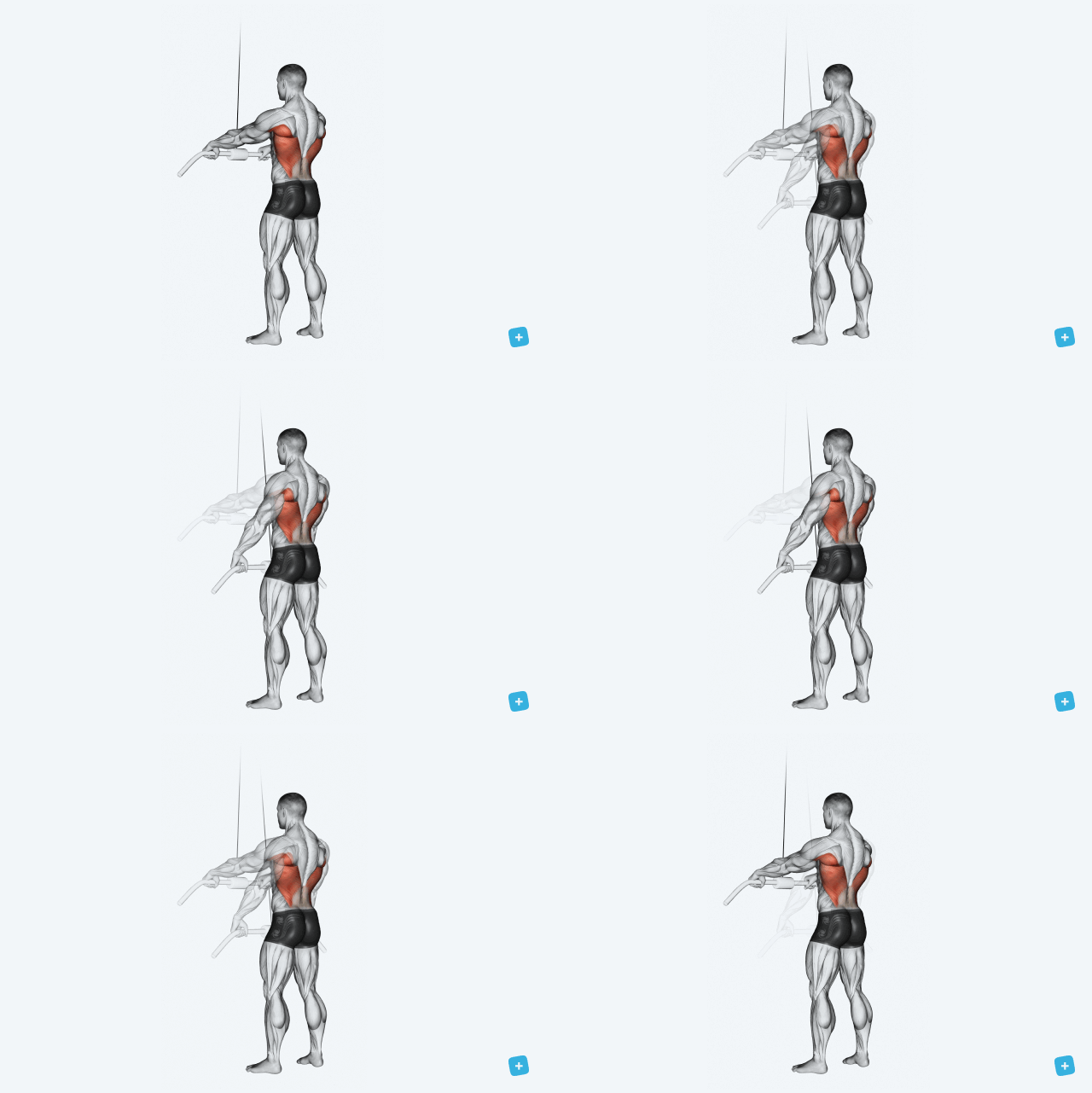
This movement isolates the lats by reducing biceps involvement and maintaining constant tension.
How to perform: Stand facing a cable machine or anchored band with arms extended. Pull the bar or band down toward the thighs by engaging the back. Slowly return to the starting position.
Sets and reps: 3 sets of 10 to 15 repetitions.
4. Pull-up
Pull-ups activate the lats strongly and can be adjusted by changing grip width.
How to perform: Hold the bar with a pronated grip (palms facing away from you). Pull the body upward until the chin reaches the bar, then lower slowly.
Sets and reps: 3 sets of 6 to 10 repetitions.
5. Chin-up

This variation activates the lats while engaging the biceps more heavily.
How to perform: Use a supinated grip (palms facing toward you). Pull the chest toward the bar, then lower with control.
Sets and reps: 3 sets of 6 to 10 repetitions.
6. Seated cable row
Seated rows engage the lats through horizontal pulling and can be enhanced by starting with the shoulder blades slightly protracted.
How to perform: Sit with the feet supported and hold the handles. Pull them toward the torso while keeping the elbows close to the body. Slowly return.
Sets and reps: 3 sets of 8 to 12 repetitions.
7. Bent-over row
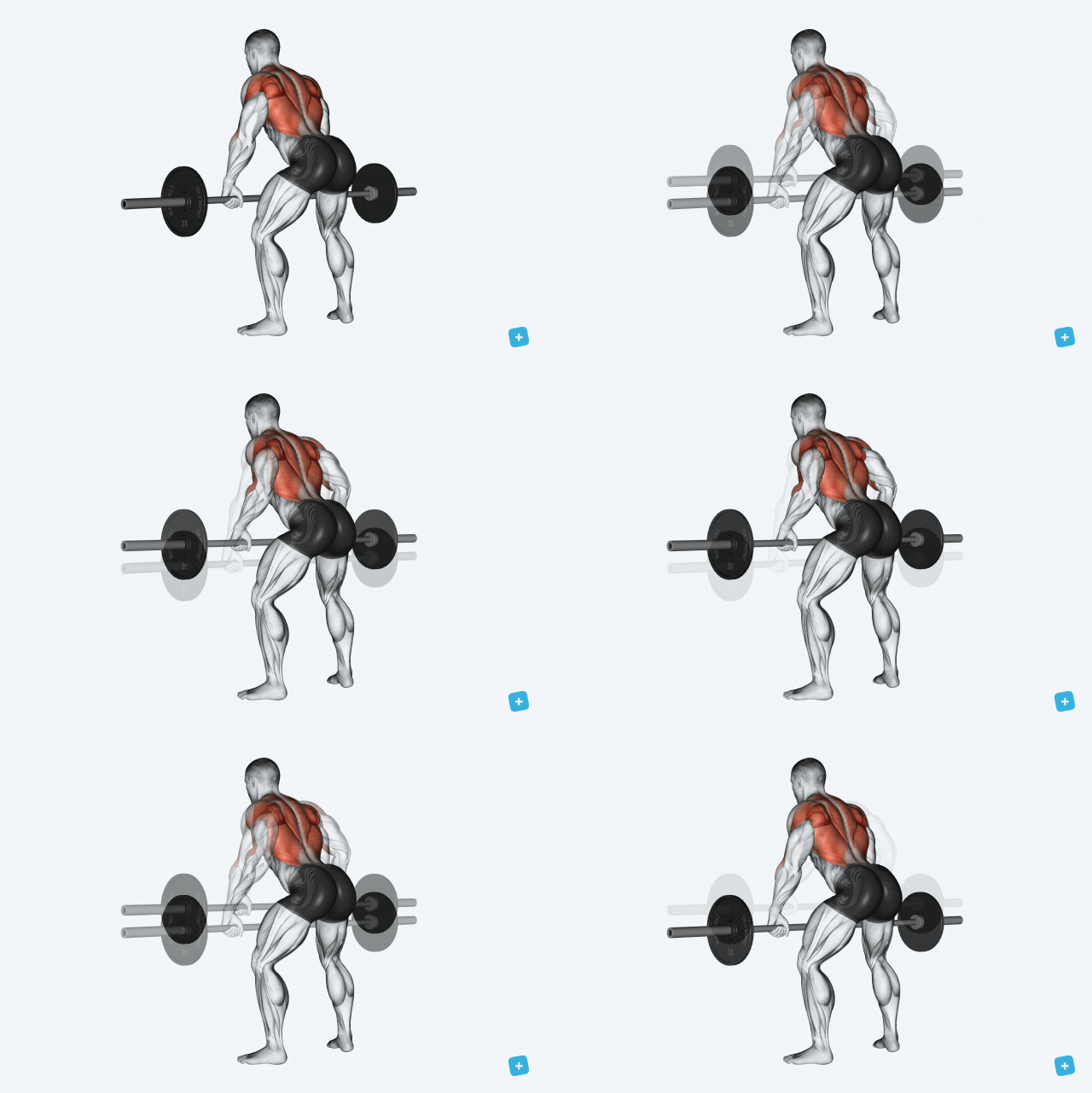
A wide grip increases lat activation, making this a strong option for back development.
How to perform: Lean forward with a flat back and hold a barbell or dumbbells. Pull the weight toward the waist, then lower gradually.
Sets and reps: 3 sets of 8 to 12 repetitions.
Workout plans
Research shows that the latissimus dorsi responds well to being trained two or more times per week because this helps distribute weekly training volume and improves recovery. For these reasons, the following workout plans are organized into two days, to be added to your training plan.
Beginner workout plan
This plan focuses on simple movements with moderate repetitions to help build basic pulling strength.
Day 1:
-
Pulldown (cable or resistance band): 3 sets of 12 reps
-
Seated cable row: 3 sets of 10 reps
-
Straight-arm pulldown: 3 sets of 15 reps
Day 2:
-
Inverted row (fixed barbell): 3 sets of 8 reps
-
Resistance band row: 3 sets of 12 reps
-
Pulldown (cable or band): 3 sets of 15 reps
Advanced workout plan
This plan includes movements with higher difficulty and lower repetitions to support increased strength and muscle activation.
Day 1:
-
Pull-up: 3 sets of 6 reps
-
Lat pulldown (pronated grip): 3 sets of 10 reps
-
Seated cable row: 3 sets of 12 reps
Day 2:
-
Straight-arm pulldown: 3 sets of 12 reps
-
Bent-over row (wide grip): 3 sets of 10 reps
-
Chin-up: 3 sets of 6 reps
These workout plans are general examples. A personal trainer can help create a customized plan based on individual goals, experience level and needs.