


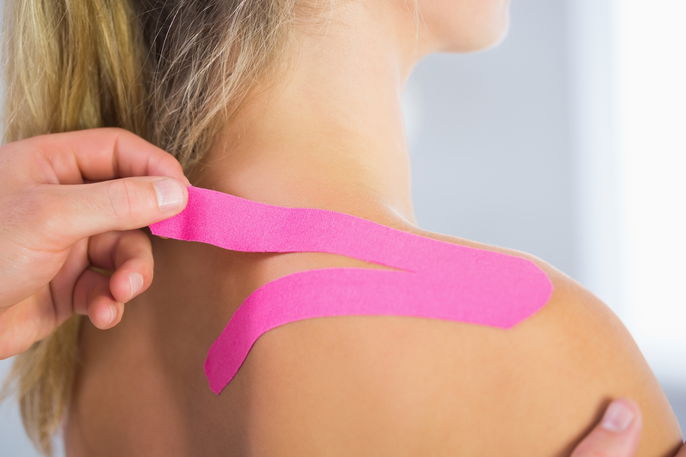
Kinesiology tape is an adhesive strip that can be applied to different parts of the body. It can help relieve pain, prevent injuries, support healing, reduce swelling and treat abdominal diastasis.
The benefits of kinesiology tape, also called elastic therapeutic tape, are linked to how it works on the treated area. This adhesive tape helps improve local blood circulation, promote fluid drainage, stabilize the joints and support the muscles and tendons.
To get its benefits, kinesiology tape should always be part of a broader treatment plan. This plan may also include muscle strengthening, stretching exercises and other techniques.
What it is used for
The main uses of kinesiology tape are:
1. Relieving pain
Kinesiology tape helps relieve pain in different parts of the body, such as the knees, shoulders, lower back, ankles and wrists.
This happens because kinesiology tape reduces muscle tension and pressure on pain receptors in the skin, which helps decrease pain in the area.
2. Preventing injuries
Because it helps stabilize, align and support the joints and muscles, kinesiology tape can help prevent injuries during workouts.
3. Supporting healing
Kinesiology tape helps support healing and fibrosis because it improves blood and lymphatic circulation in the area, reducing swelling and promoting the formation of new tissue.
4. Reducing swelling
By improving blood circulation and supporting fluid drainage where it is applied, kinesiology tape helps reduce swelling after injuries or surgeries, for example.
5. Helping treat abdominal diastasis
Kinesiology tape can help with the treatment of abdominal diastasis during the postpartum period because it supports the abdominal and pelvic floor muscles. It also helps protect the linea alba and prevent strains.
How to apply kinesiology tape
Kinesiology tape strips can be applied to the skin in an X, V, I or H shape, or in a fork or web shape, depending on the treatment goals.
Kinesiology tape should always be applied by a physical therapist, doctor or physical trainer. This is because the direction and tension of the elastic tape vary depending on the treatment goals.
The tape is made with hypoallergenic material and should be changed at least every 3 days. It does not need to be removed for bathing.
Who should not use it
Kinesiology tape is not recommended for people with open wounds, skin cancer, acute infection, deep vein thrombosis, allergy to acrylic adhesive or another material in the tape, diabetes or erysipelas.
In addition, kinesiology tape should not be applied over recently done tattoos.