


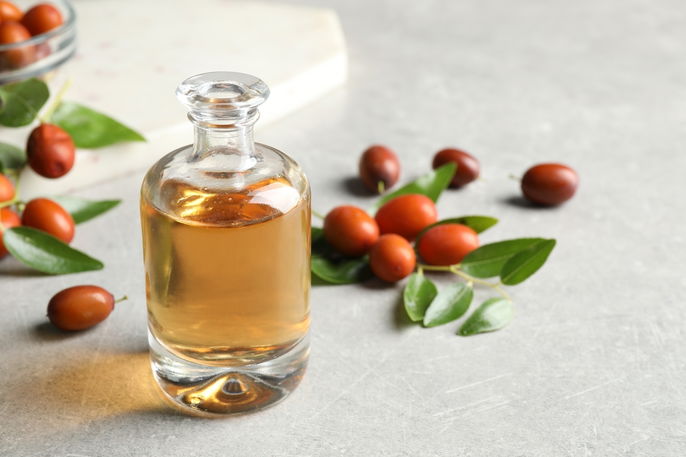
Jojoba oil is a plant-based oil made by pressing the seeds of the Simmondsia chinensis plant. It may be used to help manage oily hair and skin, prevent premature aging, and strengthen hair.
These benefits may be related to the fact that jojoba oil is rich in vitamin E, sterols, and phenolic compounds, which have emollient, antioxidant, and moisturizing effects.
The benefits of jojoba oil may be noticed when it is used on the hair, face, and body. It can be applied on its own or combined with other plant oils and/or essential oils, for example.
Main benefits
The main uses of jojoba oil include:
1. Managing oily hair
Jojoba oil may help control oily hair because its chemical structure is similar to the scalp’s natural oil, which may help balance oil production.
2. Moisturizing and softening the skin
Because it has an emollient effect and forms a protective barrier that helps prevent water loss, jojoba oil may help moisturize the skin. It can be used by people with normal, oily, or dry skin.
3. Strengthening hair
Jojoba oil may help strengthen hair by helping maintain scalp moisture and supporting the integrity of the hair fibers, promoting shine, softness, and elasticity.
For this reason, jojoba oil may help with dryness, hair loss, and hair breakage.
4. Balancing oily skin
Because it has a chemical structure similar to the sebum produced by the body, jojoba oil is easily absorbed by the skin.
In this way, jojoba oil may help moisturize the skin while helping prevent excessive sebum production, which can balance oily skin and may also help prevent acne.
5. Preventing premature aging
Because it is rich in vitamin E, a potent antioxidant, jojoba oil may help reduce damage caused by UV rays and help fight free radicals, which can help prevent premature aging.
In addition, jojoba oil may also stimulate collagen formation, which can help keep the skin firm and soften the appearance of fine lines.
6. Helping soothe sunburn
Jojoba oil may help soothe sunburn because it contains good amounts of vitamin E, which can help moisturize and calm the skin and may also speed up healing.
7. Supporting wound healing
Because it has antioxidant action, jojoba oil may support the healing of scrapes, cuts, and wounds.
This is because jojoba oil may help support collagen production in fibroblasts, which are key cells involved in wound healing.
How to use
Jojoba oil can be used as follows:
1. Jojoba oil for hair
Jojoba oil can be used on the hair in the following ways:
-
To reduce oiliness: with clean hair, apply a few drops of jojoba oil to the scalp, massage well with your fingertips, and distribute it toward the ends;
-
For a deep oil treatment: with washed, damp hair, apply pure jojoba oil from roots to ends. Leave it on for 30 minutes, then wash with your preferred shampoo and conditioner;
-
To moisturize: add a few drops of jojoba oil to your preferred hair mask and apply to washed, damp hair. Leave it on for 15 minutes, then rinse;
-
As a finishing oil: apply 3 drops of jojoba oil to the palms of your hands and spread over the ends of dry or damp hair.
Depending on the goal, jojoba oil can be used with tea tree and rosemary essential oils for oily hair, or with avocado (for example, in cases of dry hair). Check out these DIY hair masks.
2. Jojoba oil for the face
Jojoba oil can be applied on its own to a clean, dry face, massaging until it is fully absorbed. It can be used during the day or as a moisturizing serum before bed.
In general, about 1 to 2 drops are recommended to avoid a greasy look. However, the amount varies by skin type, and it may be adjusted up or down based on individual needs.
Jojoba oil can also be used with a preferred face cream or with essential oils, such as lavender, frankincense, and tea tree, for example.
3. Jojoba oil for the body
On the body, jojoba oil can be used on its own on clean, dry skin with massage, during the day or before bed.
This oil can also be added to body creams or mixed with other plant oils and essential oils.
Side effects
Jojoba oil is hypoallergenic and generally does not cause side effects. However, more rarely, it may cause an allergic reaction in some people, with symptoms such as itching, redness, and swelling of the skin.
Because of this, before using jojoba oil, it is recommended to do a patch test by applying the oil to a small area of skin and observing how the body reacts.
Contraindications for use
So far, there are no absolute contraindications for using jojoba oil. However, jojoba oil is toxic and should not be ingested.
In addition, it is recommended that pregnant or breastfeeding people, as well as children or people with skin conditions, consult a doctor before using jojoba oil.