


IPL laser, or intense pulsed light, is a type of aesthetic treatment similar to laser therapy. It is commonly used to remove skin spots, reduce wrinkles and fine lines, and eliminate unwanted hair on areas such as the face, chest, abdomen, arms, underarms, bikini line, and legs.
IPL laser treatments are considered safe, and several scientific studies have shown that even months after treatment, there is no increase in immune cells associated with disease or cancerous tumors.
It is important that IPL laser treatment be performed by a dermatologist or a licensed aesthetic specialist after assessing the person’s skin and overall health, as there are specific contraindications.
Main indications
IPL laser can be used for several cosmetic and dermatological purposes. The main indications include:
1. Long-term hair removal
IPL laser is effective for long-term hair reduction, as it removes most hairs and causes regrowth to be thinner, lighter, and less visible, making them easier to remove with tweezers if necessary.
This treatment can be performed on the face, underarms, abdomen, back, bikini area, arms, and legs. Around 10 sessions are usually recommended, spaced about one month apart to target hairs in the anagen (growth) phase, which allows for the best results.
2. Reducing wrinkles and fine lines
IPL laser helps reduce fine lines and wrinkles by increasing collagen production and improving the organization of elastin fibers, which support the skin’s structure. Natural collagen production decreases with age, usually starting in the 30s.
Collagen production continues to increase for up to three months after each session, so results are long-lasting but not immediate. Many specialists recommend around five sessions per year to achieve the best anti-aging results.
3. Treating rosacea and telangiectasia
IPL laser can help treat rosacea and telangiectasia (visible small blood vessels) because the light and energy emitted by the device promote better cellular organization and microcirculation.
Typically, three to four sessions spaced one month apart are needed, and a 50% reduction in visible redness or veins can often be seen by the second session.
No serious adverse effects are expected. The skin may appear slightly red for a few hours after treatment but usually does not scar or discolor.
4. Treating acne
IPL laser can also be used to treat acne, especially when the equipment uses green or red light filters.
-
Green light targets and destroys Cutibacterium acnes (formerly Propionibacterium acnes), the bacteria associated with acne.
-
Red light reduces inflammation, helping eliminate bacteria and promote skin healing.
Usually, three to six sessions are required, with noticeable improvement after the third session.
However, IPL laser should not be used by people taking medications such as isotretinoin (Accutane), corticosteroids, aspirin, NSAIDs, or other photosensitizing drugs, or when the skin is tanned.
5. Reducing stretch marks
IPL laser is also beneficial for treating new (red) stretch marks, as it stimulates fibroblasts to produce and reorganize collagen fibers in the skin.
This treatment can reduce both the width and length of stretch marks. Better results are achieved when combined with topical treatments such as tretinoin or glycolic acid, under medical supervision.
6. Reducing dark circles under the eyes
IPL laser can help reduce dark circles, especially those caused by poor blood circulation (vascular congestion). However, hereditary dark circles may not respond as well to treatment.
At least three sessions spaced one month apart are usually needed to achieve noticeable results. After each session, it’s normal for the treated area to appear red for a few hours, and small scabs may form. These should not be picked or removed.
7. Removing skin spots
IPL laser can be used to lighten dark spots on the skin, including melasma.
This treatment brightens the skin, increases collagen and elastin production by about 50%, and improves microcirculation, which helps the skin look firmer, smoother, and more even in tone.
Treatment sessions are generally spaced three to four weeks apart. During this time, sunscreen with SPF 30 or higher must be used daily, and direct sun exposure should be avoided.
Temporary dark spots (post-inflammatory hyperpigmentation) may appear but usually fade with proper skincare and the use of soothing lotions. Applying a skin-brightening cream for about a month before starting treatment can also help reduce the risk of discoloration.
How IPL laser treatment is done
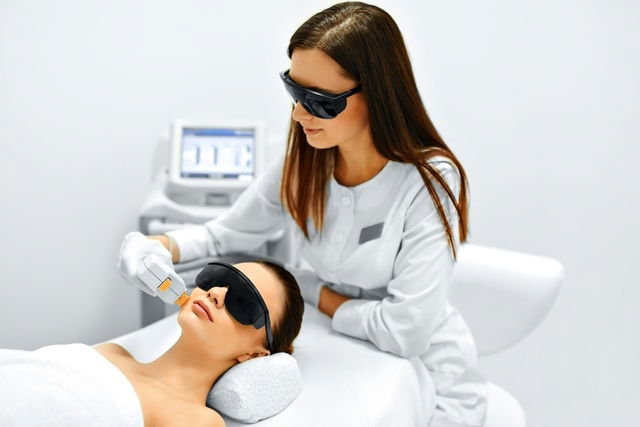
IPL laser treatment is performed by a dermatologist or trained aesthetic professional using pulses of light that are absorbed by skin cells.
Both the practitioner and the patient must wear protective goggles during the procedure. If the treatment area has a tattoo, it should be covered with a white sheet or dressing to prevent burns or color fading.
Each session lasts around 30 minutes, depending on the area being treated and the desired result. Sessions are usually spaced four weeks apart.
IPL is less painful than traditional laser treatments, and most people experience only a mild burning or stinging sensation that fades within 10 seconds.
Aftercare recommendations
After IPL laser treatment, certain care measures are important to protect the skin and ensure proper healing:
-
Apply a healing cream or ointment with sunscreen as directed by the doctor.
-
Avoid sun exposure or tanning for at least one month before and after sessions.
-
Use sunscreen daily (SPF 30 or higher) and reapply as needed.
-
Do not peel off flaking skin or remove small scabs; allow them to fall off naturally.
-
Avoid makeup for at least 24 hours after facial IPL treatment.
-
Avoid hot showers on the same day of treatment.
-
Wear light, loose-fitting clothing that does not rub against treated skin.
If the skin on the face begins to peel, avoid makeup and instead use soothing or moisturizing creams several times a day to help with recovery.
Possible health risks
IPL laser is considered a safe treatment when performed by a qualified dermatologist or professional. However, improper use or device calibration can lead to side effects. The main risks include:
1. Skin burns
Skin burns may occur if the equipment is improperly calibrated, used on tanned skin, or handled incorrectly.
If a burning sensation lasts longer than 10 seconds or feels like a fire burn, the device settings should be adjusted immediately.
If a burn occurs, treatment should be stopped, and a healing ointment for burns should be applied under dermatologic supervision. Many modern IPL devices include a cooling tip to reduce discomfort and minimize the risk of burns.
2. Light or dark skin spots
Changes in skin tone, such as lighter or darker patches, may occur if the wavelength used is not suitable for the person’s skin tone.
This risk is higher in individuals with darker or tanned skin, so the device settings should be adjusted if the skin tone changes between sessions.
If dark spots appear, a dermatologist may recommend a skin-lightening cream.
3. Eye injury
Eye injuries can occur if protective goggles are not worn during the procedure. Proper eye protection eliminates this risk.
Does IPL laser cause cancer?
IPL laser treatment does not cause or increase the risk of cancer. Multiple studies confirm that it is a safe and non-carcinogenic cosmetic procedure.
When IPL laser is not recommended
IPL laser treatment is not recommended in the following situations:
-
Pregnancy or breastfeeding
-
Use of isotretinoin, corticosteroids, anticoagulants, or photosensitizing drugs
-
Tanned skin
-
White or gray hair in the treatment area
-
Skin infections or open wounds
-
Skin cancer
The treatment should also be used with caution in people with oral or genital herpes, as light exposure can reactivate the herpes simplex virus. In these cases, the doctor may prescribe antiviral medications such as acyclovir or valacyclovir to start one day before treatment and continue for up to two weeks afterward.
These contraindications must be carefully evaluated by the dermatologist to prevent complications during or after treatment.
Possible side effects
IPL laser is generally safe when performed by a trained dermatologist or professional.
However, temporary side effects may include redness, itching, or blistering, which can indicate mild skin burns. These effects usually occur when the equipment is not properly adjusted. Treatment should be paused until the skin has fully healed.