


An ingrown beard hair can lead to folliculitis when a shaved hair curls back into the skin, inflaming and potentially infecting the follicle, causing small red bumps, itching, and a burning sensation.
In most cases, it develops after shaving with a razor and can affect the face or neck. Sometimes bacteria can infect the area and lead to pus-filled bumps or abscesses.
Beard folliculitis often responds to simple self-care, like washing the area with cool water and mild or antibacterial soap. See a dermatologist if symptoms persist, recur frequently, or include pus-filled blisters for tailored treatment.
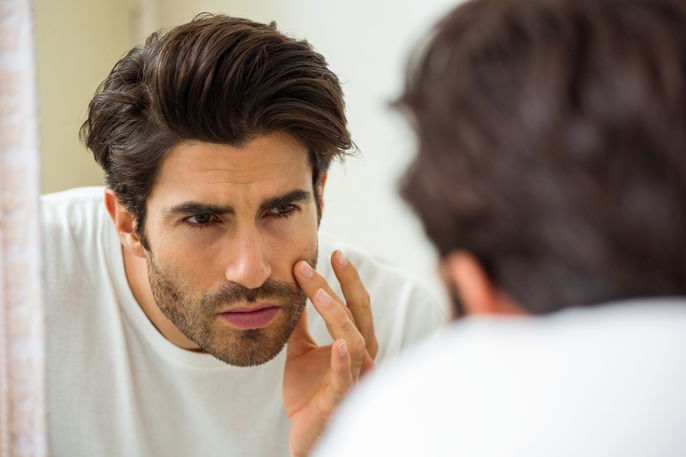
Common symptoms
The main symptoms of beard folliculitis are:
-
Small red bumps on the skin;
-
Redness in the beard area;
-
Intense itching;
-
Increased skin sensitivity;
-
Burning sensation;
-
Small pus-filled blisters, similar to pimples.
Beard folliculitis can affect one or more hair follicles. It may also cause swelling or discomfort in the area and can sometimes lead to dark spots on the skin.
In some cases, a deeper or long-lasting follicle infection can occur, called deep folliculitis barbae (sycosis barbae). This may leave scars or cause permanent hair loss in the affected area.
Symptom quiz
To determine whether you might have beard folliculitis, select your symptoms below:
This symptom quiz is only a tool and should not be used to diagnose any condition or replace a consultation with a healthcare professional.
Confirming a diagnosis
Beard folliculitis is diagnosed by a primary care provider or dermatologist based on symptoms, health history, and a physical exam of the skin on the face and neck.
To diagnose the cause of beard folliculitis (such as a fungal, viral, or bacterial infection), the doctor may collect a sample of fluid from a skin bump for lab analysis.
Possible causes
Beard folliculitis is caused by inflammation of a hair follicle located close to the skin’s surface. In most cases, it is associated with infection by Staphylococcus aureus, a bacterium that can naturally be found on the skin.
Less commonly, beard folliculitis can be caused by a fungal infection (such as Candida albicans) or a viral infection (such as herpes simplex).
Some factors that can increase the risk of beard folliculitis include:
-
Small injuries or cuts in the skin from shaving with a razor or waxing;
-
Using contaminated blades;
-
Ingrown hairs;
-
Using products that can irritate the skin;
-
Having a very long beard, which can make proper cleansing more difficult.
Beard folliculitis may also develop more often in people with a weakened immune system or other health conditions, such as diabetes, infections, or skin damage.
Treatment options
In most cases, beard folliculitis improves over several days with simple measures, such as regularly washing the affected area with cool water and mild or antibacterial soap, and keeping the skin clean and dry.
If symptoms do not improve after 1 to 2 weeks, or if the bumps contain pus and cause pain, a dermatologist may recommend medications such as:
-
Topical antibiotics (ointments, lotions, or gels), such as neomycin, clindamycin, or mupirocin, to treat bacterial infection;
-
Topical corticosteroids, such as hydrocortisone ointment, to relieve redness and itching;
-
Oral antivirals, such as acyclovir, valacyclovir, or famciclovir, for herpes simplex virus infections;
-
Oral antifungals, such as fluconazole or itraconazole, for fungal infections.
In some cases, a clinician may combine topical antibiotic and corticosteroid products. In other cases, oral antibiotics may be prescribed, such as ampicillin, sulfamethoxazole and trimethoprim, or ciprofloxacin.
Laser hair removal may also be a good option for people who have beard folliculitis regularly. The laser uses a wavelength that damages the hair, which can reduce inflammation and ingrown hairs.
Also recommended: How to Get Rid of an Ingrown Hair: Treatment & Home Remedies tuasaude.com/en/how-to-get-rid-of-an-ingrown-hairPrevention tips
Some tips that can help prevent beard folliculitis include:
-
Shaving only once a week;
-
Using a new blade each time you shave;
-
Shaving in the direction of hair growth;
-
Avoiding going over the same area twice with the blade;
-
Applying a moisturizer after shaving;
-
If there is inflammation, avoiding popping any blisters, and not trying to pull out the hair.
Exfoliation may also help remove dead skin cells and reduce the risk of ingrown hairs.
Pseudofolliculitis can also occur in women, especially in areas with thicker, coarser hair that have been shaved with a razor, such as the bikini line and underarms.