


Hip bursitis is inflammation of the trochanteric bursa, which is a small fluid-filled sac located on the outer side of the hip. Symptoms include pain on the outside of the hip that worsens with climbing stairs, standing up, or lying on your side.
The bursa serves as a cushion to reduce friction between the most prominent part of the femur (called the greater trochanter) and the lateral thigh muscle and helps absorb impact from movement. The bursa can become inflamed due to muscle weakness, intense physical exercise, or falls.
Treatment of hip bursitis, also known as trochanteric bursitis, is managed by an orthopedic specialist and may involve the use of medications like anti-inflammatories in addition to physical therapy. Surgery may be recommended in the most severe cases.

Common symptoms
The main symptoms of hip bursitis are:
- Pain on the outside of the hip;
- Pain that starts gradually and worsens over time;
- Pain that worsens with prolonged standing or side-lying;
- Tenderness to the touch;
- Localized swelling;
- Pain that radiates to the thigh, glutes, or knee;
- Pain that worsens when standing up from a chair or climbing stairs.
It is important to consult your primary care provider or an orthopedic specialist for symptoms of hip bursitis. Left untreated, hip bursitis can become chronic and more difficult to manage.
Confirming a diagnosis
The diagnosis of hip bursitis is made by an orthopedic specialist based on an evaluation of symptoms, medical history, high-impact activities, and injury or trauma to the area.
Your provider should also perform a physical exam to check for tenderness in the area and assess the strength of the muscles related to the hip.
A doctor may also order imaging tests such as pelvic and hip x-rays, an ultrasound, or an MRI (magnetic resonance imaging) to confirm inflammation of the bursa.
Also recommended: Hip Pain: 8 Possible Causes (w/ Online Symptoms Quiz) & What to Do tuasaude.com/en/hip-painPossible causes
Hip bursitis is caused by inflammation of the trochanteric bursa located between the most prominent part of the femur bone (the greater trochanter) and the lateral muscle of the thigh.
Risk factors for developing hip bursitis include:
- Intense physical activity or repetitive microtraumas related to certain forms of exercise, such as running or cycling;
- Muscle weakness or overuse of the glute muscles;
- Injury or trauma to the hip from a fall or direct impact;
- Scoliosis or a bone spur in the hip;
- Rheumatoid arthritis, gout, or knee arthritis;
- Legs that are different in length;
- Diseases like psoriasis or diabetes;
- History of hip surgery or replacement;
- Ankle sprains;
- Staphylococcus aureus (staph) infection.
Hip bursitis can also be caused by a sedentary lifestyle or prolonged bedrest, which can result in constant pressure on the greater trochanter leading to inflammation of the trochanteric bursa.
Treatment options
Bursitis treatment is managed by an orthopedic specialist with the goal of reducing inflammation and alleviating symptoms.
Treatments that may be recommended by a provider include:
- Resting the hip joint by avoiding contact sports and repetitive exercises;
- Applying cold compresses to the hip for 5 to 20 minutes two to three times a day;
- Taking nonsteroidal anti-inflammatory drugs (NSAIDs), such as ibuprofen or naproxen;
- Receiving corticoid injections, such as cortisone, directly into the hip joint;
- Undergoing surgery, which may be recommended in the most severe cases to remove the inflamed bursa, release the soft tissues of the lateral hip, and repair damaged tendons.
Treatment of bursitis should also involve physical therapy exercises to lengthen and strengthen the hip muscles, increasing flexibility and improving the stability of the hip joint to help decrease inflammation, relieve pain, and reduce strain on the inflamed bursa.
Physical therapy should be done with a certified physical therapist and may include extracorporeal shock wave therapy (ESWT) along with exercises to help speed up recovery.
Recommended exercises
Exercises for hip bursitis focus on the affected muscles and are recommended to strengthen the muscles of the gluteal region as well as the leg muscles.
1. Glute bridges

Glute bridges help strengthen the hip flexors, glutes, hamstrings, and quads, which are essential for stabilizing the hip joint.
Start by lying on your back with your arms in line with your sides. Bend your knees and place your feet on the ground with heels directly underneath your knees. Contract your abs and glutes as you lift your hips off the ground to form a straight line from your knees to your shoulders. Hold this position for 5 to 10 seconds then lower back to the floor. Do 5 sets of 20 reps each.
To make this exercise more challenging, try doing 5 sets with more repetitions.
2. Lateral leg raise

This exercise helps strengthen and develop the iliotibial band on the outside of the thigh and also helps strengthen the glutes.
To do this exercise, start by lying on your left side with your right hand placed in front of you for support. Lift your right leg up as high as it will go and then lower back to the starting position. The recommendation is to perform 4 sets of 15 reps each on both sides.
3. Leg circles
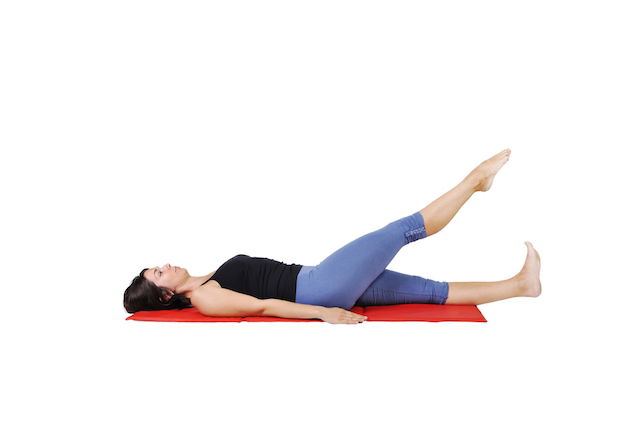
This exercise helps improve range of motion, flexibility, and strength in all of the muscles responsible for hip and leg rotation, such as the hip flexors and glute muscles.
To perform this exercise correctly, start by lying on your back with your legs out straight. Next, raise your right leg off the floor and draw tiny circles while making sure to keep the leg straight. Repeat on the other side. Do 3 sets of 5 rotations with each leg.
4. Standing knee raise
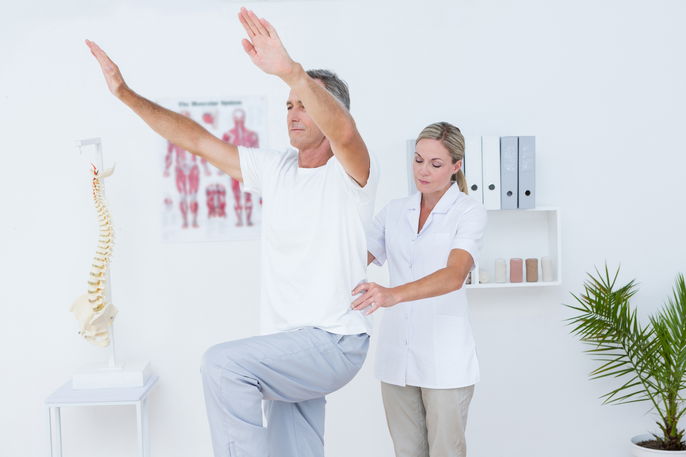
Start in a standing position. Using a chair or support person for balance, bend the right leg and lift the knee up while keeping the left leg straight. Lower to the starting position and repeat on the other side, continuing to alternate legs. Do 3 sets of 15 reps each.
To obtain the desired results, these exercises should be done 4 to 5 times a week.