


Heterochromia is a condition in which a person’s eyes are different colors. It may affect both eyes or appear as two different colors within the same eye.
When each eye is a different color, it is called complete heterochromia. When the color difference occurs within one eye, it is known as sectoral heterochromia.
In most cases, heterochromia is a harmless genetic trait that does not require treatment. However, it can sometimes develop because of an eye condition or injury.
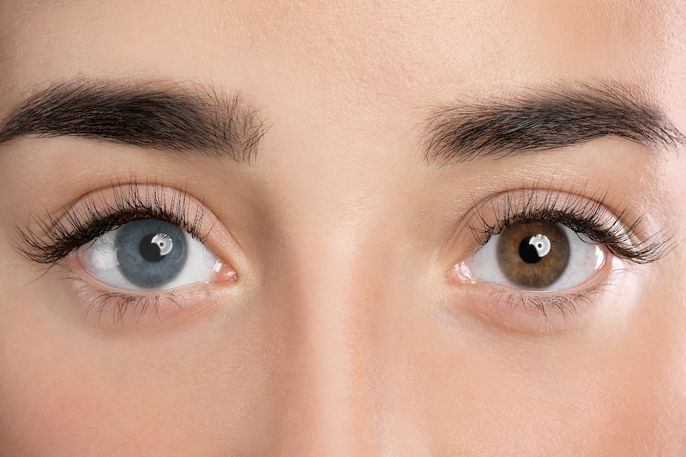
Types of heterochromia
Heterochromia can be classified into different types based on how the eye colors appear. The main types are:
-
Complete heterochromia: each eye is a completely different color, such as one brown eye and one blue eye. This is considered a less common type of heterochromia.
-
Central heterochromia: this type usually affects both eyes. Each eye has two different colors, such as brown around the pupil, which is the black center of the eye, and another color toward the outer edge, such as green or blue.
-
Sectoral or partial heterochromia: this is the most common type of heterochromia and may affect one or both eyes. It causes two different colors within the same eye, which may appear as a slice, wedge, or one color on each half of the eye.
Heterochromia usually does not cause symptoms and is often present from birth. It is generally considered a harmless condition.
Possible causes
Heterochromia is usually caused by a genetic variation that results in different amounts of melanin in each eye. Melanin is the pigment that gives color to the eyes and skin, and higher amounts of melanin result in darker eye color.
The condition is usually congenital, meaning it is present from birth, and is generally harmless. However, differences in eye color can also be caused by certain health conditions, including:
-
Nevus of Ota
-
Neurofibromatosis
-
Horner syndrome
-
Waardenburg syndrome
-
Parry-Romberg syndrome
-
Sturge-Weber syndrome
-
Oculodermal melanocytosis
-
Iridocorneal endothelial syndromes
-
Neuroblastoma or paravertebral schwannoma
-
Eye trauma
-
Fuchs heterochromic iridocyclitis
-
Siderosis or hemosiderosis
-
Iris tumor
Other possible causes of heterochromia include glaucoma, diabetes, inflammation or bleeding in the iris, eye injuries, or a foreign object in the eye.
When to see a doctor
When differences in eye color are present from birth, they are usually caused by a genetic variation that does not affect the baby’s eye health. However, a medical evaluation is recommended to rule out diseases or genetic syndromes that may also cause this characteristic.
