


- Hernia repair treats different types of hernias by returning the organ to its normal position and strengthening the weakened muscle area.
- The procedure can be done with open surgery or laparoscopy, with recovery typically taking about 4 to 6 weeks.
- Persistent or worsening pain at the surgical site after one week may be a warning sign of infection or another complication.
Hernia repair is a surgery used to treat a hernia by strengthening or fixing the weak area in the muscle. A hernia occurs when part of an organ or tissue pushes through this weakened area, causing a bulge.
This surgery may be recommended for different types of hernias, such as inguinal, abdominal, or umbilical hernias. During the procedure, the doctor places the organ back in the correct position and repairs the weak spot in the muscle.
Before hernia repair, the surgeon may order blood tests and imaging tests to evaluate the person’s overall health, the size of the hernia, and whether other conditions are present. Depending on these findings, the procedure may be done as open surgery or with laparoscopy.
Indications for the procedure
Hernia repair may be performed to treat the following types of hernias:
- Inguinal hernia
- Abdominal hernia
- Umbilical hernia
- Epigastric hernia
In some cases, hernia repair must be done as an emergency, especially when intestinal strangulation occurs, cutting off blood flow to the herniated tissue and causing symptoms such as vomiting and severe cramping.
According to the National Institute of Diabetes and Digestive and Kidney Diseases (NIDDK), a strangulated hernia can lead to intestinal obstruction and tissue death if not treated promptly.
Preparing for surgery
Preparation for hernia surgery includes talking with the surgeon about any questions you have about the procedure and recovery. It is also important to tell your doctor about all medications, vitamins, and supplements you are taking.
Before hernia repair, the doctor may order tests such as a complete blood count (CBC), coagulation tests, blood glucose testing, kidney function tests, and a surgical risk evaluation. These tests help assess a person's overall health.
According to the American Society of Anesthesiologists, healthy patients undergoing elective procedures may usually have clear liquids up to 2 hours before anesthesia, so fasting instructions should follow the surgical and anesthesia team’s guidance rather than a fixed rule for everyone.
Procedure types
Before surgery begins, IV fluids and medications are given through a vein. Hernia surgery may be done under general anesthesia or epidural anesthesia.
Hernia repair can be performed in two ways, depending on the person’s health and the severity of the hernia:
1. Open hernia repair
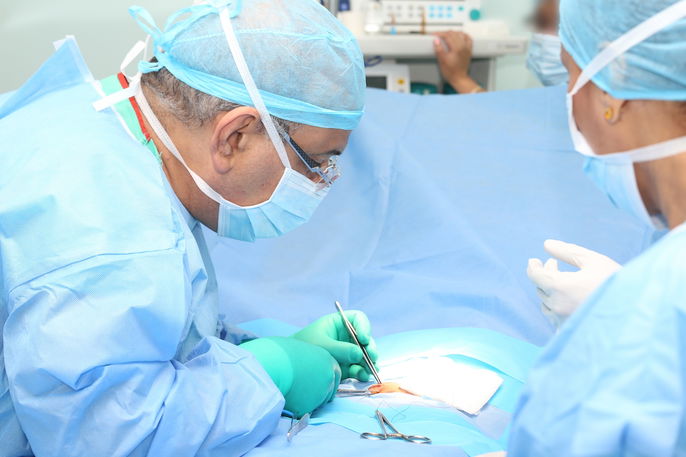
Open hernia repair is a conventional surgery in which the surgeon makes an incision in the area of the hernia and places the part of the organ that is protruding back into its normal position. The doctor then stitches the weak area in the muscle and closes the skin incision.
In some cases, the surgeon may reinforce the muscle with a synthetic mesh to help prevent the hernia from coming back in the same area. This mesh is made of polypropylene and is generally well accepted by the body, with a very low risk of rejection.
2. Laparoscopic hernia repair
Laparoscopic hernia repair is performed under general anesthesia. In this technique, the surgeon makes small cuts in the abdomen, introduces carbon dioxide into the abdominal cavity, and then inserts a thin tube with a video camera attached.
Using the images shown on a monitor, the surgeon uses instruments such as very fine forceps and scissors to repair the hernia, placing a support mesh at the end of the procedure. Recovery from this type of surgery is usually shorter than with open surgery.
People who have laparoscopic surgery generally have a slightly shorter recovery time. However, the doctor may decide that laparoscopic surgery is not the best option if the hernia is very large or if the person has had pelvic surgery.
Recovery time
Recovery during the first 1 to 2 days after surgery usually takes place in the hospital, where the person is monitored by the surgeon, anesthesiologist, and nursing staff.
Right after hernia repair, it is common to feel pain or discomfort at the surgical site, and medications are typically given to help relieve this pain.
Care after surgery
Some measures that help with recovery and prevent complications include:
-
Resting for the amount of time recommended by the doctor, which may range from 1 to 2 weeks
-
Taking medications at the correct times and as prescribed
-
Avoiding driving during the first few weeks after surgery and being careful not to place the seat belt over the surgical scar
-
Avoiding physical activity for the first 4 to 6 weeks and being careful when going up and down stairs or working, for example
-
Not lifting heavy objects for at least 4 to 6 weeks
-
Applying an ice pack to the area twice a day for 10 minutes during the first 48 hours after inguinal hernia surgery
In addition, the doctor may recommend using abdominal binders or support garments to help prevent the hernia from returning until the area is fully healed.
Recovery from hernia surgery may take about 4 to 6 weeks. It is important to follow all medical recommendations to ensure good healing and avoid complications.
Possible complications
The main complications of hernia repair are often related to the mesh, such as adhesions, bowel obstruction, or fibrosis. Complications can also result from injury to nerves in the area where the surgery was performed.
Another complication that may occur, especially with inguinal hernia repair, is urinary retention, which means not being able to fully empty the bladder. This risk can vary depending on the type of anesthesia and the surgical technique used.
Although rare, complications from general or epidural anesthesia can also occur, such as nausea, vomiting, low blood pressure, chills, tremors, fever, or infection.
Warning signs
It is important to contact the surgeon or go to the nearest emergency room if any of the following symptoms occur after hernia repair:
-
Fever
-
Redness or increased warmth around the incision
-
Fluid drainage or bleeding from the wound
-
Persistent or worsening pain at the surgical site after one week
According to the CDC, symptoms such as redness or pain at the surgery site, drainage, or fever may be signs of a surgical site infection and require prompt medical attention.
