


Hand, foot and mouth disease treatments mainly focus on relieving symptoms with medications like fever reducers, anti-inflammatory drugs and antihistamines. These options help ease discomfort from fever, skin irritation and painful mouth sores. Ointments and mouth sore treatments can also offer relief.
Hand, foot and mouth disease is a contagious viral infection, most often caused by coxsackievirus. It typically leads to low-grade fever, red spots on the hands, feet and buttocks, and uncomfortable sores inside the mouth.
Whenever this condition is suspected, it’s important to have the child evaluated by a pediatrician so the most appropriate treatment can be started.
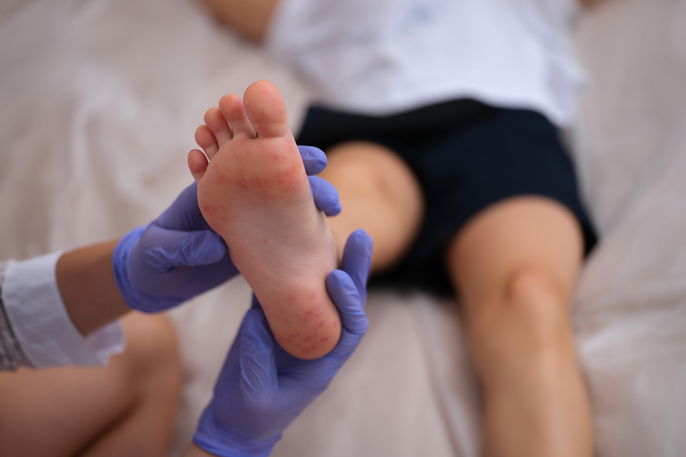
Main treatment options
The main treatment options for hand, foot and mouth disease are:
1. Antipyretics
Fever reducers like acetaminophen may be recommended by a pediatrician when a child has a temperature above 100.4 °F (38 °C).
2. Anti-inflammatory drugs
Non-steroidal anti-inflammatory drugs such as ibuprofen are commonly used to help relieve pain from mouth sores and may also help reduce fever.
3. Antihistamines
If itching is present, antihistamines like hydroxyzine or dexchlorpheniramine may be recommended to ease skin irritation caused by the rash.
4. Mouth ulcer treatments
Products used for mouth sores, such as triamcinolone acetonide or lidocaine, may be recommended to reduce pain and discomfort. These are applied directly to the mouth lesions.
However, it is important to follow the pediatrician’s instructions, as some medications may not be appropriate for young children depending on age.
Also recommended: 11 Natural Ways to Cure Mouth Ulcers Fast tuasaude.com/en/mouth-ulcers5. Ointment
Ointments are used only to ease symptoms, as no topical medication can eliminate the virus that causes hand, foot and mouth disease.
A doctor may suggest neutral moisturizing creams to soothe and protect the skin, zinc oxide ointment to create a protective barrier, or panthenol-based ointments to support skin healing.
When inflammation or pain is more intense, an ointment containing triamcinolone acetonide may be recommended due to its anti-inflammatory action.
Care during treatment
Some care strategies that should be followed during treatment include:
-
Resting at home and avoiding school or daycare to prevent spreading the infection;
-
Eating cold foods like natural juices, mashed fresh fruit, gelatin or ice cream;
-
Avoiding salty or acidic foods like soda or salty snacks that can worsen throat pain (learn more about what to eat with a sore throat);
-
Gargling with warm salt water to help soothe a sore throat;
-
Staying well-hydrated by drinking water or natural juices;
-
Washing hands after using the bathroom to prevent spreading the virus, as it can be shed in stool for up to 4 weeks after recovery;
-
Changing diapers carefully, using gloves and washing hands afterward, both at home and in daycare settings, even after symptoms improve.
These precautions are important because the virus can spread through coughs, sneezes, saliva, contact with fluid from burst blisters or infected stool.
When to see a doctor
Hand, foot and mouth disease usually improves on its own within one to two weeks.
However, emergency care is recommended if a child has symptoms such as fever that does not improve with medication, weight loss, decreased urination, excessive sleepiness or difficulty breathing.
These warning signs may indicate a more serious infection or dehydration. In such cases, hospitalization may be needed for proper treatment and to prevent the condition from worsening.
Signs of improvement
Signs of improvement include fewer mouth sores, blisters and red patches on the skin, along with reduced fever and less throat pain.
Signs of worsening
Signs of worsening may include higher fever, intense redness with pus in blisters or sores, increased sleepiness, confusion, and signs of dehydration such as dry mouth or low urine output.