


- A new breast lump should be checked by a doctor, even if it feels round, movable, and painless.
- A fibroadenoma can grow during pregnancy, breastfeeding, or around your period.
- Complex fibroadenomas or a family history of breast cancer may slightly raise cancer risk.
A fibroadenoma is a benign breast lump that most often develops in women between the ages of 20 and 30. It may feel soft or firm, move easily under the skin, and usually does not cause pain or discomfort.
Although the exact cause of fibroadenomas is not known, they are thought to be related to increased sensitivity of breast tissue to estrogen, which helps explain why their size can change at different stages of life.
In most cases, a breast fibroadenoma does not turn into cancer. However, certain types may be linked to a slightly higher risk of breast cancer, so regular follow-up with a gynecologist, primary care provider, or breast specialist is important.
Main symptoms
The main sign of a breast fibroadenoma is a breast lump that:
-
Is round.
-
Feels firm or rubbery.
-
Moves easily.
-
Does not cause pain or discomfort.
Fibroadenomas can increase in size during times of hormonal change, such as pregnancy, breastfeeding, and around the menstrual period. After menopause, they often become smaller, although they may stay the same size or grow if a woman is using hormone therapy.
If you feel a lump during a breast self-exam, it is recommended to see your primary care provider or gynecologist for an evaluation.
Is a fibroadenoma painful?
Fibroadenomas usually don't hurt. However, some people may feel mild breast discomfort in the days before their period, during pregnancy, or while breastfeeding.
Can a fibroadenoma turn into cancer?
A fibroadenoma is a benign (noncancerous) breast tumor, and it almost never turns into cancer. Malignant change is very rare, with estimates generally below 0.3% of fibroadenomas.
People with a complex fibroadenoma, which may contain calcified tissue, and those with a family history of breast cancer may have a slightly higher risk of developing this type of tumor.
Confirming a diagnosis
A breast fibroadenoma is usually diagnosed by a gynecologist or breast specialist using the person’s symptoms, a physical examination, and a review of their medical history.
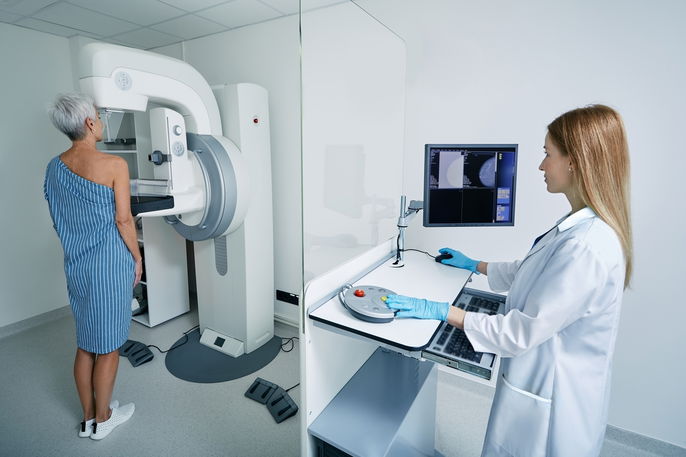
To confirm the diagnosis, the doctor may also order imaging tests such as an ultrasound and a mammogram, and mammography may include a BI-RADS classification, which, according to the American College of Radiology, is a standardized system used in breast imaging reports to describe findings and guide follow-up.
BI-RADS classification
The table below shows the BI-RADS classification based on imaging results:
BI-RADS stands for Breast Imaging Reporting and Data System. It is the American College of Radiology’s standardized framework for breast imaging terminology, assessment, and management recommendations.
This reporting system helps classify breast lesions and supports a more accurate diagnosis and more appropriate medical treatment.
Possible causes
Breast fibroadenomas do not have a clearly defined cause, but they are thought to be related to increased sensitivity to estrogen.
Because of this, women who use birth control pills may seem to have a higher likelihood of developing fibroadenomas, particularly if they start using them before age 20. The FDA regulates and approves birth control pills that have been shown to be safe and effective.
Different types
The two different types of breast fibroadenomas are:
-
Simple fibroadenomas: usually smaller than 3 cm, contain only one type of cell, and do not increase the risk of cancer.
-
Complex fibroadenomas: contain more than one type of cell and may slightly increase the risk of breast cancer, according to the National Cancer Institute.
A doctor may also describe a fibroadenoma as juvenile or giant, meaning it is larger than 5 cm. This is more common after pregnancy or during hormone replacement therapy (HRT).
Treatment options
Treatment for a fibroadenoma should be guided by a breast specialist. In most cases, it involves yearly mammograms and ultrasounds to monitor the lump, which may disappear on its own after menopause.
If the doctor is concerned that the lump might be cancer, surgery may be recommended to remove the fibroadenoma and obtain a breast biopsy.
After surgery, the lump may come back. For this reason, surgery is usually reserved for cases in which breast cancer is suspected, since it is not considered a cure for breast fibroadenomas.