


A female condom is a contraceptive method that can be used as a birth control option instead of birth control pills to help prevent an unplanned pregnancy. It also helps reduce the risk of sexually transmitted infections such as HPV, syphilis, and HIV.
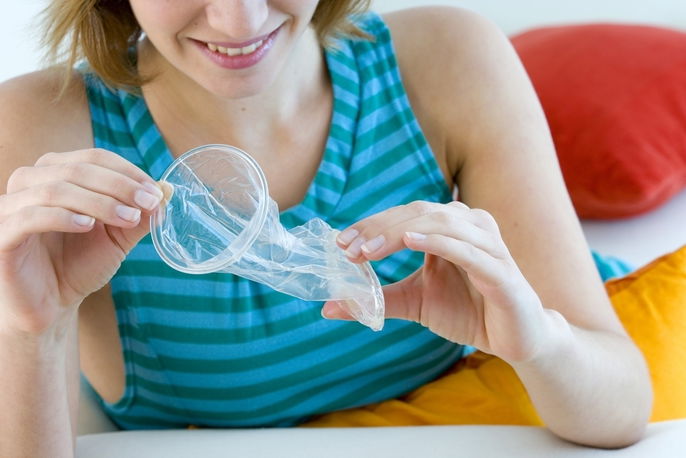
A female condom is about 6 inches (15 cm) long. It is made of two rings of different sizes connected by a soft, tube-like pouch.
The side with the smaller ring is the part that goes inside the vagina. This end is closed, which helps keep sperm from reaching the uterus and reduces contact with male sexual fluids.
How to insert
To insert a female condom correctly and avoid discomfort, you should:
- Hold the condom with the opening facing downward
- Squeeze the smaller inner ring in the middle, forming an “8” shape so it is easier to insert into the vagina
- Choose a comfortable position, such as squatting or standing with one leg bent
- Insert the “8”-shaped ring into the vagina, leaving about 1 inch (3 cm) outside
To remove the condom after sex, hold and twist the larger outer ring that stays outside the vagina so fluids do not leak out, then gently pull the condom out. After that, tie a knot in the middle of the condom and throw it in the trash.
Why use a female condom?
According to the CDC and WHO, using female condoms correctly every time can reduce the risk of sexually transmitted infections (STIs), including HIV, and help prevent unplanned pregnancy.
However, if the goal is only to prevent pregnancy, there are other birth control options that can also be used.
Tips for correct use
Some precautions that should be considered when using a female condom include:
1. Insert the condom before sex
It is recommended to insert the female condom before sex begins. According to the American College of Obstetricians and Gynecologists (ACOG), a female (also called internal) condom may be put in place up to 8 hours before sex.
2. Check the package before opening
The package of any condom should be checked before use to confirm the expiration date and make sure there are no holes or damage that could affect how well the condom works.
3. Insert the condom correctly
Although the open end is usually easy to identify, in some situations a person may get confused and insert the female condom backwards. When this happens, the open end stays inside the vagina, and the penis may not enter the condom properly.
In these cases, the penis may slip between the condom and the vaginal wall, which reduces the intended protection.
4. Leave part of the condom outside
After inserting the condom, it is very important to leave part of it outside. This helps keep the condom in place and reduces direct contact between the penis and the external genital area (vulva).
When the condom is not positioned correctly, it may allow direct contact between the penis and the vulva or vagina, which can increase the risk of STIs or pregnancy.
After inserting the condom into the vagina, about 1 inch (3 cm) should remain outside to help protect the external area.
5. Use lubricant during sex
Lubricant helps reduce friction during sex, making penetration easier. When there is not enough lubrication, the movement of the penis can create too much friction, which may cause the condom to tear.
