


Erythrasma is a bacterial infection that affects the superficial layers of the skin and is caused by Corynebacterium minutissimum. It can cause pink, red, or brown patches, along with peeling or mild itching.
Corynebacterium minutissimum normally lives on the skin without causing problems, but it can multiply excessively in warm, moist areas. Erythrasma is especially common in skin folds, such as the armpits and underneath the breasts, and occurs more often in adults, particularly those with obesity or diabetes.
Treatment for erythrasma is prescribed by a dermatologist and usually involves topical or oral antibiotics. Medications such as mupirocin, clindamycin, erythromycin, or clarithromycin may be used depending on the location and extent of the infection.
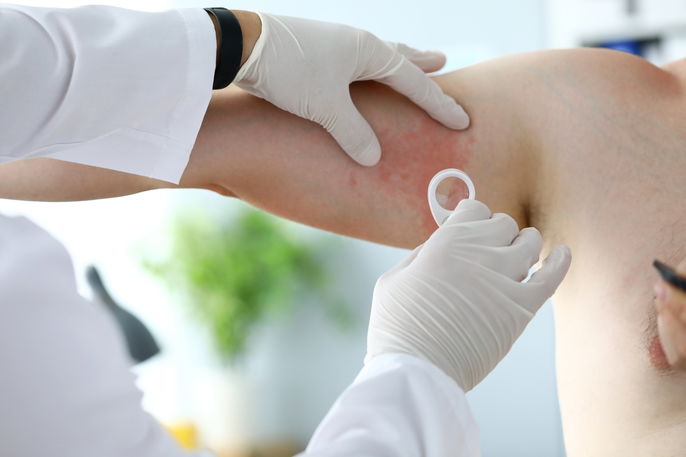
Main symptoms
The main symptoms of erythrasma are:
-
Pink, red, or brown patches on the skin
-
Irregularly shaped patches with clearly defined borders
-
Peeling skin
-
Mild itching
-
Wrinkled-looking skin in the affected area
-
Cracks in the skin
The lesions most commonly appear in areas where skin rubs against skin, such as underneath the breasts, in the armpits, between the toes, around the belly button, in the groin, and on the buttocks.
Confirming a diagnosis
Erythrasma is diagnosed by a dermatologist based on symptoms, medical history, and an examination of the skin lesions and affected areas.
The doctor may also examine the skin patches using a Wood's lamp, a device that emits ultraviolet light. Erythrasma lesions typically produce a characteristic coral-red fluorescence under this light, which can help confirm the diagnosis.
A Wood's lamp examination can also help rule out other conditions that may cause similar symptoms, such as seborrheic dermatitis, candidiasis, or tinea versicolor, allowing the doctor to recommend the most appropriate treatment.
Possible causes
Erythrasma is caused by Corynebacterium minutissimum, a bacterium that is part of the normal microbiota of the skin and urinary tract and usually does not cause symptoms.
However, certain factors can increase the risk of developing erythrasma, such as:
-
Older age
-
Excessive sweating
-
Poor hygiene habits
-
Diabetes
-
Being overweight or having obesity
-
Conditions that affect the immune system
These factors can promote excessive bacterial growth on the skin, especially in warm, moist skin folds, resulting in erythrasma symptoms.
Treatment options
Treatment for erythrasma should follow a dermatologist's recommendations. Topical antibiotics, such as mupirocin, clindamycin, or erythromycin, may be prescribed.
When lesions affect larger areas of skin, the doctor may recommend oral antibiotics, such as clarithromycin or erythromycin. These medications should be taken for the full length of time prescribed by the doctor.
During treatment, an antibacterial cleanser may also be recommended for washing the affected area. Products containing chlorhexidine may be used for this purpose.
