


Down syndrome symptoms can include specific physical traits, such as upward-slanting eyes, short stature, or a larger tongue. These features are present at birth and can vary from one child to another.
Down syndrome can also be associated with a higher risk of health problems, such as congenital heart defects and hypothyroidism. It may also cause delays in intellectual development, including difficulty walking, speaking, learning, or using the hands.
However, some Down syndrome symptoms and characteristics can also be seen in newborns without the condition. Therefore, the best way to confirm the diagnosis is through genetic testing to identify changes in chromosome 21.
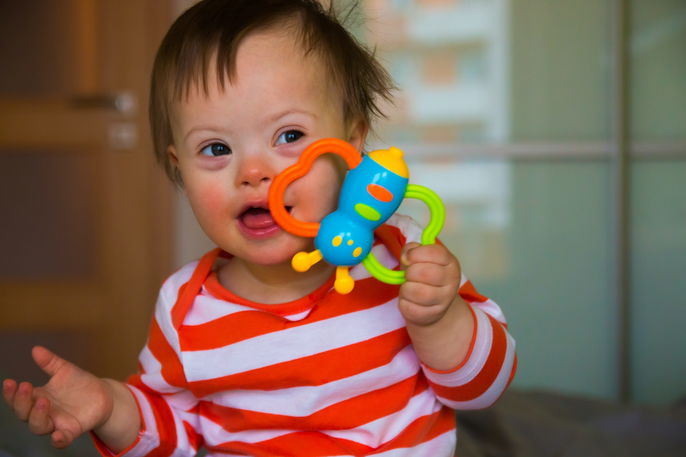
Main characteristics
The characteristics of Down syndrome can be divided into three categories, which include:
1. Physical characteristics
Children with Down syndrome are usually identified shortly after birth due to physical characteristics such as:
-
Rounded face
-
Almond-shaped eyes that slant upward
-
White spots in the colored part of the eyes
-
Small, slightly flattened nose
-
Small mouth with a larger-than-normal tongue
-
Ears that are lower than normal
-
Short neck
-
A single crease across the palm of the hand
-
Wide hands with short fingers
-
Increased space between the big toe and the other toes
-
Muscle weakness, which can make the baby feel more “floppy”
In addition, children with Down syndrome are usually born with an average length but grow more slowly. For this reason, they tend to be shorter than other children.
2. Developmental characteristics
Children with Down syndrome may have delays in cognitive and intellectual development, especially with skills such as:
-
Walking
-
Holding objects
-
Paying attention
-
Sitting
-
Speaking and learning
The degree of difficulty can vary from child to child. However, children with Down syndrome can develop these skills, although they may take longer than children without the condition.
3. Behavioral characteristics
Children with Down syndrome usually have a gentle temperament and are often sociable and outgoing. They may also have characteristics such as:
-
Impulsivity
-
Learning difficulties
-
Difficulty paying attention
-
Obsessive behaviors
As adults, people with Down syndrome can learn to make decisions on their own. However, they may need support with more complex tasks, such as managing money or making decisions about sexual and reproductive health.
In addition, some people with Down syndrome may attend college, while others may need more support with daily care.
Common health issues
People with Down syndrome have an increased risk of certain health conditions, including congenital heart defects and thyroid disorders, such as hypothyroidism.
Eye conditions may also occur, including strabismus, difficulty seeing far away or up close, and, in some cases, cataracts.
Because many of these conditions are not easy to identify in the first days of life, the pediatrician may order several tests during childhood. These may include an ultrasound, echocardiogram, or blood tests to check for associated complications.
According to the American Academy of Pediatrics, children with Down syndrome should receive regular health supervision to help check for associated conditions and guide referrals to specialists when needed.
Follow-up care
Follow-up care for a child with Down syndrome is very important for their development.
To support communication and development, a child with Down syndrome may attend speech therapy sessions with a speech-language pathologist. This can encourage earlier communication and help support speech development.
In addition, the pediatrician may recommend physical therapy, occupational therapy, or behavioral therapy, for example. These therapies can help develop self-care skills, manage emotions, and improve posture and balance.
Also recommended: Down Syndrome Treatment: 8 Care & Support Strategies tuasaude.com/en/down-syndrome-treatment