


Diastasis recti is a condition where the abdominal muscles separate along the midline, creating a gap that can make the belly appear bulged or saggy. It most often occurs during or after pregnancy but can also affect newborns and people with obesity.
This condition develops when the abdominal muscles and connective tissue weaken due to factors like pregnancy, rapid weight gain, or repeated abdominal strain. Common symptoms include lower back pain, poor posture, and difficulty with daily movements.
Treatment for diastasis recti involves targeted exercises and physical therapy to strengthen the abdominal wall and close the muscle gap. In more severe cases, when the separation is larger or symptoms persist, surgery may be recommended to restore muscle alignment.
Main symptoms
The main symptoms of diastasis recti include:
-
A bulge or protrusion in the abdomen, above or below the belly button
-
Excessive sagging or flaccidity in the belly
-
Weakness of the abdominal muscles
-
Difficulty maintaining core firmness
-
Poor posture and body imbalance
-
Pain in the lower back, pelvis, or hips
-
Discomfort or pain during sexual intercourse
In addition, diastasis recti can cause urinary incontinence during physical effort, such as coughing, sneezing, or lifting heavy objects. Constipation may also occur due to weakened abdominal muscles that interfere with normal bowel function.
The separation between the abdominal muscles can reach up to 10 cm. It is important to be evaluated by a doctor, who can recommend the most appropriate treatment.
Diastasis recti in men
Diastasis recti can also occur in men and may develop whenever the abdominal wall is under excessive strain. This condition can result from intense or repetitive physical activity, constipation, rapid weight changes, obesity, aging, or performing exercises incorrectly.
How to know if I have diastasis recti
To assess whether you have diastasis recti at home, you can follow these steps:
- Lie down on your back.
- Place two fingers of one hand approximately 2 cm above your belly-button and two fingers of your other hand about 2 cm below.
- Contract your abdomen, as if you were going to perform a sit-up.
When you contract your abdomen, your fingers jump up a little, however with cases of diastasis recti, the fingers will not show any movement. With this condition, it is possible to place 3 or 4 fingers side by side without noting any movement with abdominal contractions.
Confirming a diagnosis
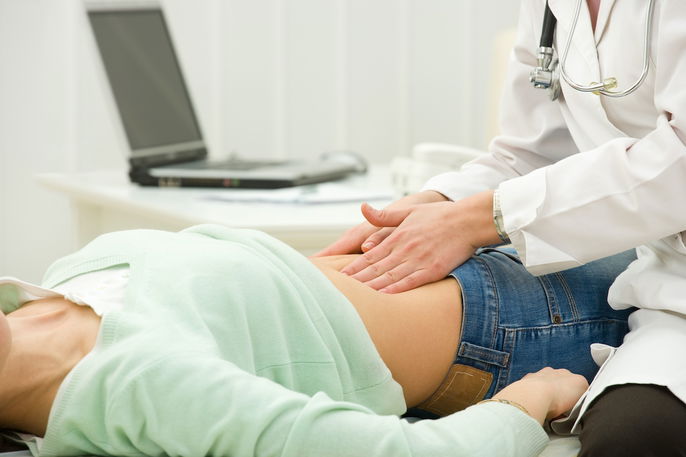
The diagnosis of diastasis recti is confirmed by a gynecologist or general surgeon. The doctor will start by performing a physical examination, and evaluating the characteristics of the abdominal muscles as well as any other symptoms.
In some cases, the doctor may order imaging tests, such as an ultrasound or CT scan to visualize the abdominal muscles in more detail and confirm a diagnosis.
Possible causes
Diastasis recti is caused by weakness of the rectus abdominis muscles that leads to a separation of the abdominal muscles.
Some factors that can contribute to the appearance of diastasis recti include:
- More than one pregnancy, in short intervals
- Twin pregnancy
- Pregnancy after 35 years of age
- Giving birth to a baby weighing more than 4 kg, especially in small-framed women
- Abdominal obesity, in men and women
- Multiple abdominal surgeries
Furthermore, although it is rarer, abdominal diastasis can also be present from birth. This condition is referred to congenital abdominal diastasis and is generally caused by premature birth, as the abdominal muscles may not yet be completely developed and closed.
How to fix diastasis recti
Some ways that diastasis recti can be treated include:
1. Physical therapy
Physical therapy for diastasis recti can be prescribed by a doctor and should be guided by a physical therapist, who may advise stretching and strengthening exercises of the rectus abdominis, as well as pelvic floor and lumbar muscle exercises.
A physical therapy plan should be developed by a physiotherapist on a case-by-case basis. He or she may use equipment, such as functional electrical stimulation (FES), which promotes muscle contraction. This device can be done for 15 to 20 minutes and is very efficient in strengthening the rectus abdominis.
2. Surgery
Surgery for diastasis recti is normally recommended by the doctor when:
- The separation of the rectus abdominis muscles is greater than 5 cm;
- Exercise or physical therapy were not effective in reducing muscle separation;
- Presence of symptoms such as low back pain or stress urinary incontinence;
- Cosmetic reasons.
Diastasis recti surgery consists of approximating and sewing the rectus abdominis muscles, which can be performed conventionally or laparoscopically. In addition, the doctor may also suggest liposuction or abdominoplasty to remove excess fat or skin.
Diastasis recti exercises
Exercises to treat diastasis recti can usually begin 6 to 8 weeks after childbirth, once approved by a doctor. They should always be performed under the supervision of a physical therapist or fitness professional and may include the following:
1. Bridge
The bridge exercise strengthens the core, glutes, and lower back, helping stabilize the abdominal wall and reduce the separation between muscles.
How to do it: Lie on your back with your knees bent and feet flat on the floor, hip-width apart. Slowly lift your hips until your body forms a straight line from your shoulders to your knees, contracting your glutes and abdominal muscles at the same time. Hold for 5 to 10 seconds, then lower your hips back down.
2. Isometric abdominal and pelvic contraction
This isometric exercise strengthens the deep abdominal and pelvic floor muscles, improving core stability and helping reduce diastasis recti.
How to do it: Lie on your back with your knees bent and place a small pillow between them. Gently press the pillow by tightening your inner thigh muscles. Then engage the pelvic floor muscles as if trying to stop urination while also contracting your deep abdominal muscles. Keep your posture steady, hold for 5 to 10 seconds, and then relax.
3. Modified plank
The modified plank strengthens the abdominal, core, and pelvic floor muscles, improving posture and abdominal stability without putting excess pressure on the area affected by diastasis recti.
How to do it: Support your forearms and knees on the floor, keeping your body aligned from your shoulders to your knees. Engage your deep abdominal and pelvic floor muscles, gently tightening your abdomen. Hold this position for 5 to 10 seconds while breathing steadily, then relax. As your strength improves, gradually increase the time you hold the position.
4. Hypopressive abdominal breathing
Hypopressive abdominal breathing focuses on controlled breathing and activating the deep abdominal muscles without putting too much pressure on the rectus abdominis, making it a good option for treating diastasis recti.
How to do it: Take a deep breath in, then exhale while pulling your abdomen inward as if drawing your belly button toward your spine. Hold the contraction for about 10 seconds, then exhale and rest.
Exercises to avoid
Some exercises can make diastasis recti worse and should be avoided, including:
-
Traditional sit-ups
-
Full planks or push-ups without modification
-
Yoga poses such as Downward Dog or Boat Pose
-
Pilates movements like Double Leg Lifts and Scissors
It is important to avoid any exercise or movement that pushes the abdomen outward. Extra care should be taken when lifting objects, and heavy lifting should be avoided—especially lifting anything heavier than a baby during the first six weeks after childbirth.
Care during treatment
When treating diastasis recti, you can also speed-up recovery by:
- Maintaining good posture when standing and sitting
- Maintaining the transverse abdominal muscle contracted throughout the day, by pulling the belly button into the spine when sitting and throughout the day
- Avoiding bending your body forward as much as possible, as this can worsen diastasis
- Whenever you need to bend down to pick up something from the floor, bend your legs, and squat your body to avoid leaning forward
- Changing the baby's diaper on a high surface such as a changing table, or if you need to change it in bed, get on your knees on the floor to avoiding bending your body forward;
- Wearing a postpartum belt, if approved by your doctor, for most of the day and even to sleep, but don't forget to keep your belly tucked in to strengthen the transversus abdominis during the day;
Furthermore, it is important not to avoid performing traditional abdominal exercises or oblique abdominal exercises to prevent worsening.
Possible complications
The main complication of diastasis recti is the appearance of back pain in the lumbar region. This pain can be felt as the abdominal muscles act as a natural brace that protects the spine when walking, sitting and exercising. When this muscle is very weak, the spine becomes overloaded and there is a greater risk of developing a herniated disc.
Therefore, it is important to carry out treatment for diastasis recti to promote the union and strengthening of separated abdominal muscles.