


Dermatosis papulosa nigra is a common, harmless skin condition that causes small, dark bumps to appear on the skin. It is considered a variant of seborrheic keratosis and most often affects people with darker skin tones.
These bumps usually develop on the face, neck, and upper body and tend to increase with age. Although they are not dangerous or contagious, they can affect appearance and sometimes lead people to seek treatment for cosmetic reasons.
Dermatosis papulosa nigra is typically diagnosed through a simple skin exam, and treatment is optional. When desired, several procedures can remove the lesions, but care is needed to avoid skin discoloration or scarring.
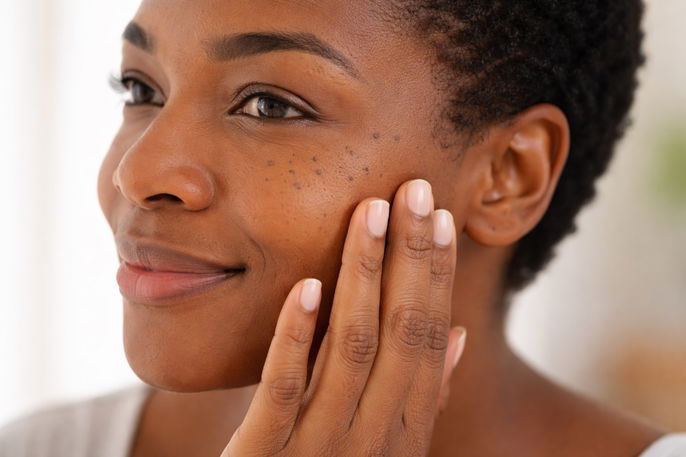
Main symptoms
Dermatosis papulosa nigra causes visible skin changes that are usually painless. It typically presents with symptoms like:
-
Small, dark brown or black bumps on the skin
-
Smooth or slightly rough surface
-
Round or dome-shaped growths
-
Lesions that may be flat or slightly raised
-
Common appearance on the face, especially cheeks and around the eyes
-
Gradual increase in number over time
These lesions are benign and typically do not cause itching, pain, or other physical symptoms.
Possible causes
Dermatosis papulosa nigra is not caused by an infection and cannot be spread from person to person. It is often related to:
- Genetic predisposition: A strong genetic tendency is associated with this condition, and it often runs in families.
- Variant of seborrheic keratosis: It is considered a subtype of seborrheic keratosis, a common non-cancerous skin growth.
- Skin type and ethnicity: It occurs more frequently in people with darker skin tones, including individuals of African and Asian descent.
- Age-related changes: Lesions often begin in adolescence or early adulthood and become more numerous with age.
Diagnosis
Diagnosis is usually made through a clinical evaluation of the skin. A healthcare provider examines the size, color, and location of the lesions to confirm the condition.
In most cases, no additional tests are needed. A skin biopsy may be performed only if the appearance is unusual or if there is uncertainty about the diagnosis.
Treatment options
Treatment for dermatosis papulosa nigra is not medically necessary, as the condition is benign. However, removal may be done for cosmetic reasons using the following techniques:
- Electrodessication: This method uses electrical current to remove the lesions. It is one of the most commonly used treatments.
- Curettage: A small instrument is used to gently scrape off the bumps from the skin.
- Cryotherapy: Liquid nitrogen is applied to freeze and destroy the lesions, although this method may increase the risk of skin color changes.
- Laser therapy: Laser treatments, such as Nd:YAG laser, can remove lesions with precision and may reduce the risk of scarring when performed correctly.
All procedures carry some risk of side effects, including hyperpigmentation, hypopigmentation, or scarring, especially in darker skin types.
When to see a doctor
Medical evaluation is recommended if:
-
A lesion changes in size, color, or shape
-
There is bleeding, pain, or rapid growth
-
The diagnosis is uncertain
A healthcare provider can confirm whether the lesions are benign and discuss safe treatment options if needed.