


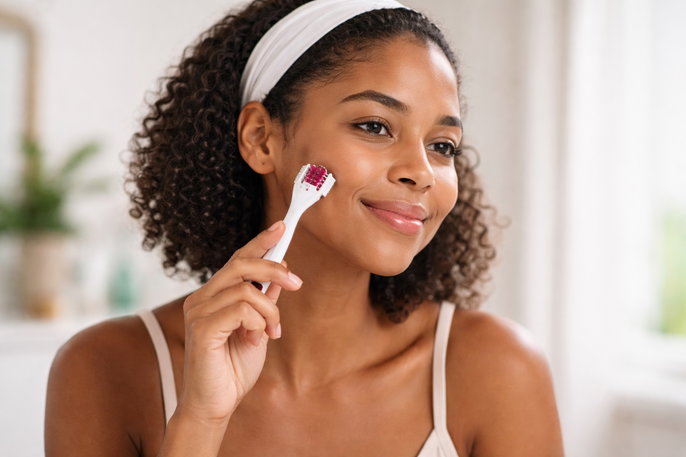
A derma roller is a handheld device covered with tiny needles that is rolled over the skin to create small, controlled micro-injuries. This process is known as microneedling and is used to stimulate natural skin repair and collagen production.
When rolled across the skin, these needles create tiny punctures that trigger a healing response and stimulate collagen and elastin production. This can improve the appearance of acne scars, fine lines, and uneven skin tone, and may also be used for hair loss and pigmentation.
Although the derma roller is widely available for home use, it requires careful handling to reduce the risk of infection or skin damage. Proper technique, hygiene, and awareness of side effects are important to ensure safe use.
Benefits and uses
A derma roller may be beneficial for:
1. Skin rejuvenation
Microneedling can improve skin texture by stimulating collagen production, which helps make the skin firmer and smoother. Over time, this may reduce the appearance of fine lines and wrinkles. It can also help improve overall skin tone and give the skin a more even and refreshed look.
2. Acne scars and other scars
The derma roller is commonly used to treat atrophic acne scars by promoting skin remodeling. The tiny micro-injuries encourage the production of new collagen, which can gradually fill in depressed scars. With repeated sessions, the skin may appear smoother and more even.
Also recommended: How to Get Rid of Acne Scars: 10 Effective Treatments tuasaude.com/en/how-to-get-rid-of-acne-scars3. Hyperpigmentation and melasma
Microneedling may help improve uneven skin tone by supporting skin renewal and allowing better absorption of topical treatments. This can make treatments for melasma and dark spots more effective. Over time, it may help reduce the appearance of discoloration and improve skin brightness.
4. Hair loss
Some studies suggest that microneedling can support hair growth in people with androgenetic alopecia. It may stimulate hair follicles and increase blood flow to the scalp. When combined with treatments like topical medications, it may improve overall results.
Choosing the right needle size
The needle size of a derma roller determines how deeply it penetrates the skin and what type of concern it can help treat. Choosing the correct size is important to balance effectiveness and safety.
Selecting the appropriate needle size helps reduce the risk of complications and ensures better results for each specific skin concern.
Hygiene and maintenance
Proper hygiene is essential to reduce the risk of infection when using a derma roller. The device should always be disinfected before and after each use with an appropriate antiseptic solution to remove bacteria and other contaminants.
After cleaning, it should be stored in a clean, dry container to prevent exposure to dirt and moisture that could lead to contamination. It is also important not to share the device with others, as this increases the risk of infection.
Over time, the needles can become dull or damaged, which may irritate the skin and reduce effectiveness. For this reason, the derma roller should be replaced regularly to ensure safe and proper use.
Side effects
Common side effects of using a derma roller include redness, mild swelling, and skin sensitivity after use. These effects are usually temporary.
More serious complications can include infection, persistent redness, scarring, and changes in skin pigmentation, especially if the device is used incorrectly or without proper hygiene.
Contraindications
The use of a derma roller is not recommended in certain situations, as it may increase the risk of irritation, infection, or other complications. It should be avoided on areas of the skin with active acne, infections, eczema, psoriasis, or open wounds, as the needles can worsen these conditions and delay healing.
People with a tendency to develop keloid scars or those with weakened immune systems may also be at higher risk of adverse effects and should avoid this treatment. In addition, recent use of certain medications, such as isotretinoin, can make the skin more sensitive and increase the likelihood of complications, making microneedling unsafe in these cases.
When to see a dermatologist
Medical evaluation is recommended if there are signs of infection, such as increasing redness, pain, swelling, or discharge.
A dermatologist should also be consulted if there is unexpected scarring, allergic reactions, or worsening skin conditions after using a derma roller.
Professional guidance is important for deeper treatments or when treating more severe skin concerns, as improper use may lead to long-term skin damage.