


Cutaneous larva migrans is a skin infection caused by a parasite that enters the human body by burrowing through the skin. This condition often results in itchy, red, winding tracks on the skin that resemble a map or snake-like pattern.
Transmission typically occurs when skin comes into direct contact with soil or sand contaminated by animal feces. These droppings contain eggs that hatch into larvae, which then wait for a host to enter their environment.
If you suspect you have this infection, you should consult a dermatologist for a proper evaluation. While the larvae usually die off on their own within several weeks, medical treatment helps relieve itching and prevents secondary infections.
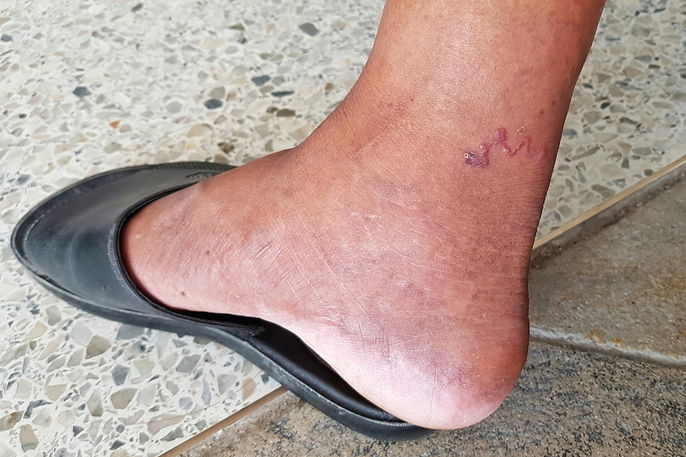
Symptoms of cutaneous larva migrans
The primary symptoms of cutaneous larva migrans include:
-
A small red dot or bump at the site of penetration;
-
Intense itching that often feels worse at night;
-
Red, winding, or wavy lines on the skin;
-
Swelling in the affected area.
These symptoms may appear within hours or a few days of exposure. As the parasite migrates through the skin, the tracks typically grow about 1 to 2 cm per day, forming a visible path.
The most common areas for these symptoms to appear are the feet, hands, knees, and buttocks. These body parts are more likely to touch contaminated ground, allowing the infectious larvae to enter.
How a diagnosis is confirmed
A primary care physician, dermatologist, or pediatrician can diagnose cutaneous larva migrans. They will examine the physical characteristics of the skin lesions and ask about recent travel or contact with soil in areas where cats and dogs are present.
In most cases, diagnostic tests are not required because the appearance of the tracks is very specific. However, a doctor might occasionally order a complete blood count (CBC) or a skin biopsy if the diagnosis is unclear or to check for signs of a related infection.
How transmission occurs
The infection is spread through contact with soil contaminated with parasite larvae. These larvae hatch from eggs that are passed in the feces of infected dogs and cats.
Transmission happens when a person walks barefoot or handles soil without gloves. This allows the larvae to penetrate the skin surface and begin moving through the tissue.
Life cycle of cutaneous larva migrans
Cats and dogs serve as the definitive hosts for these parasites, specifically Ancylostoma braziliensis or Ancylostoma caninum. Once inside the animal's intestine, the larvae grow into adults and release eggs that are shed back into the environment.
When these eggs hatch in the soil, the young larvae can accidentally penetrate human skin upon contact. Because humans are not the natural hosts, the larvae cannot complete their life cycle and remain trapped in the skin, causing the characteristic lesions.
Treatment options
Treatment for cutaneous larva migrans focuses on killing the parasite and managing discomfort:
-
Applying ice packs to the skin to temporarily reduce itching and swelling;
-
Prescription topical creams or ointments applied to the affected area for 5 to 10 days;
-
Oral medications like Albendazole or Ivermectin for severe cases or multiple lesions.
Although the larvae eventually die within 5 to 6 weeks without intervention, treatment is recommended to speed up recovery. Quick treatment also reduces the risk of secondary bacterial skin infections caused by scratching.
Symptoms generally begin to improve within 2 to 3 days of starting medication. It is essential to complete the full course of treatment as prescribed to ensure the parasite is fully eradicated.
Prevention of cutaneous larva migrans
The most effective way to prevent infection is to avoid walking barefoot on soil, grass, or sand. While this can be challenging at the beach or in parks, try to avoid areas known to be frequented by stray dogs or cats.
Pet owners can help break the cycle of infection by giving their cats and dogs antiparasitic medications every year. Keeping pets dewormed ensures they do not release eggs into the environment, protecting both animals and people.