


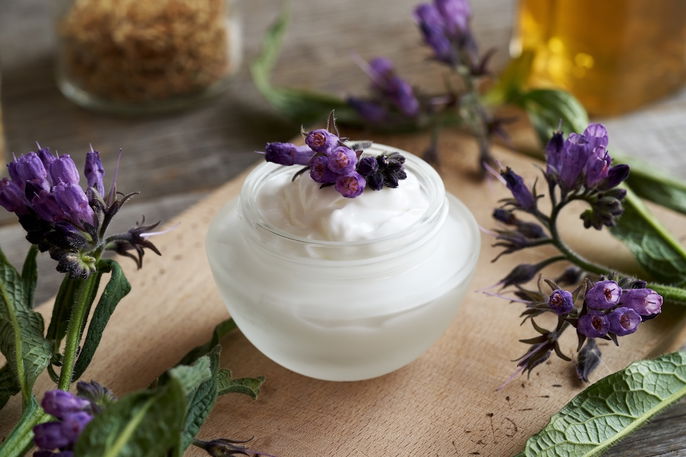
Comfrey is a medicinal plant from the species Symphytum officinale L. It is used topically to help manage arthritis, bruises, fractures, skin inflammation, and muscle pain.
Comfrey, also known as knitbone or Russian comfrey, is most commonly made from its root or leaves and used externally as a compress, ointment, or poultice.
Comfrey should only be used under the supervision of a healthcare professional or a qualified herbalist. It is available in some natural product stores and compounding pharmacies for external use only. Comfrey must not be taken by mouth, as it can be toxic.
Comfrey benefits
Comfrey may be indicated for:
1. Relieving symptoms of arthritis
Comfrey contains allantoin, tannins, and mucilaginous compounds that have anti-inflammatory effects. This may help relieve symptoms linked to arthritis, such as inflammation, swelling, or joint pain.
2. Relieving muscle pain
Because it may reduce inflammation and support local blood circulation, comfrey can help ease muscle pain or strain. It may also help reduce discomfort related to back pain.
3. Healing bruises
Comfrey may help relieve pain from bruises or sprains after injuries or sports accidents. It may also help reduce skin bruising by improving local circulation, supporting cell regeneration, and promoting tissue healing.
4. Supporting recovery after a dislocation
Comfrey contains allantoin, mucilage, saponins, tannins, and pyrrolizidine alkaloids. When used as part of medical care, it may support recovery from a dislocation by helping speed the healing process.
5. Relieving symptoms of a fracture
Because of its anti-inflammatory and wound-healing properties, comfrey applied to the skin over the fracture area may help with pain or bruising caused by bone fractures. It should only be applied to intact skin.
6. Reducing skin inflammation
Allantoin and tannins in comfrey have anti-inflammatory and astringent effects. This may help reduce skin inflammation and support treatment of dermatitis, acne, psoriasis, boils, or eczema.
7. Speeding healing
Comfrey has wound-healing properties and may support skin cell renewal. It can be used to help speed healing of closed wounds on the skin.
How to use
For therapeutic use, comfrey leaves and roots are applied externally and are usually harvested when the plant is dry. Comfrey should never be taken orally, as it is toxic.
1. Comfrey tea
Comfrey “tea” can be used as a compress to support care for closed wounds on the skin, mild and small fractures, or bruises.
Ingredients
-
10 g comfrey leaves;
-
500 mL water.
Directions
Bring the comfrey leaves and water to a boil. Turn off the heat, strain, and let it cool until warm. Soak a clean, dry compress in the liquid and apply to the affected area.
2. Comfrey poultice
A comfrey poultice can be used for fractures, bruises, sprains, or dislocation.
Ingredients
-
110 g chopped comfrey root;
-
500 mL water.
Directions
Place the ingredients in a pot and bring to a boil, then simmer for about 20 minutes. Strain and let the solution cool until warm.
Soak gauze or a clean, dry cloth in the solution and apply to the skin over the affected area. Do not apply to skin with open wounds.
2. Comfrey ointment
Comfrey ointment may be found in conventional pharmacies or compounding pharmacies and is used for muscle pain, joint pain, post-traumatic pain, sprains, or back pain.
To use, apply a small amount of ointment to the skin over the affected area 2 to 4 times per day, as directed by a healthcare professional or qualified herbalist.
Side effects
According to the U.S. Food and Drug Administration (FDA), comfrey contains pyrrolizidine alkaloids that have been associated with liver damage and other health hazards. For this reason, the FDA advises against using comfrey as an ingredient in dietary supplements.
The most serious side effects of comfrey involve the liver and may include liver damage, cirrhosis, or liver cancer. These risks are caused by pyrrolizidine alkaloids, which can be absorbed through the skin, particularly when comfrey is applied to large areas, used in excessive amounts, or used for prolonged periods.
If taken by mouth, comfrey can also cause stomach irritation, liver injury, or miscarriage.
Contraindications for use
Comfrey should not be used by children, older adults, people who are pregnant or breastfeeding, or anyone with an allergy to this plant.
It should also not be used by people with liver disease, kidney disease, or cancer.
Comfrey should not be taken by mouth, used over large areas of skin, or applied to open wounds.