


- A colostomy creates an opening in the abdominal wall to redirect waste from the large intestine into an external pouch, often to treat conditions like colorectal cancer or diverticulitis.
- Proper maintenance involves keeping the skin around the stoma clean and dry while ensuring the pouch opening is precisely sized to prevent irritation from waste.
- Managing daily life with a pouch includes adjusting your diet to control gas and odor, though most activities like swimming and exercise can still be enjoyed safely.
A colostomy is a surgical procedure that connects the large intestine directly to the abdominal wall to allow waste to exit into a pouch. It is typically recommended to treat serious intestinal conditions, such as colorectal cancer or severe cases of diverticulitis.
While many colostomies are temporary to allow the bowel to heal after surgery, some may be permanent. This is usually necessary when a large section of the intestine must be removed, making it impossible to reconnect the colon to the anus.
Following the procedure, it is normal for the surgical site, known as the stoma, to appear red and swollen. These symptoms generally improve within the first week as the area heals under the care of a medical professional.
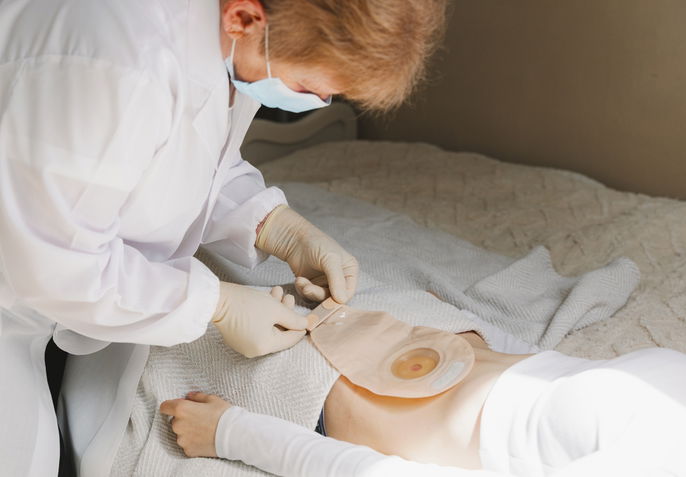
What it is for
A colostomy is used to redirect the flow of waste or decompress the colon, specifically the ascending, transverse, descending, or sigmoid sections. It is performed when the natural passage of stool is obstructed or medically restricted.
By creating this bypass, a colostomy allows both stool and gas to be safely eliminated into an external collection pouch attached to the abdomen.
When a colostomy is indicated
A gastroenterologist may recommend a colostomy when stool cannot be passed normally through the anus. Common indications include:
-
Colorectal cancer
-
Congenital defects, such as imperforate anus
-
Partial or complete intestinal obstruction
-
Inflammatory bowel diseases, like Crohn’s disease
-
Complicated diverticulitis
-
Perineal fistulas
Additionally, a colostomy may be necessary in the event of intestinal perforations or significant trauma to the large intestine or rectum.
Types of colostomy
Colostomies are classified by the portion of the large intestine involved: ascending, transverse, descending, or sigmoid. They are further categorized as temporary or permanent, depending on whether the affected portion of the bowel is removed for good.
Because a colostomy involves the large intestine, the stool produced is typically soft or solid. This differs from an ileostomy, which connects the small intestine to the abdominal wall and results in more acidic, liquid waste.
How to care for a colostomy bag
To change your colostomy bag, follow these steps:
-
Remove the bag: Gently peel the adhesive away from the skin to avoid irritation. Applying a little warm water to the area can help the adhesive release more easily.
-
Clean the area: Wash the stoma and the surrounding skin with a clean, soft cloth and warm water. While soap is not required, you may use a mild, fragrance-free soap as long as it is thoroughly rinsed off before applying a new bag.
-
Dry the skin: Ensure the skin around the stoma is completely dry so the new bag adheres properly. Avoid using unprescribed creams or lotions, as they can interfere with the adhesive.
-
Prepare the new bag: Cut an opening in the new pouch that matches the exact size of your stoma.
-
Apply the pouch: Secure the new bag firmly onto the skin in the correct position.
Disposable bags should be emptied into the toilet and then discarded in the trash to prevent infection. If you use a reusable system, follow the manufacturer’s specific instructions for cleaning and disinfection.
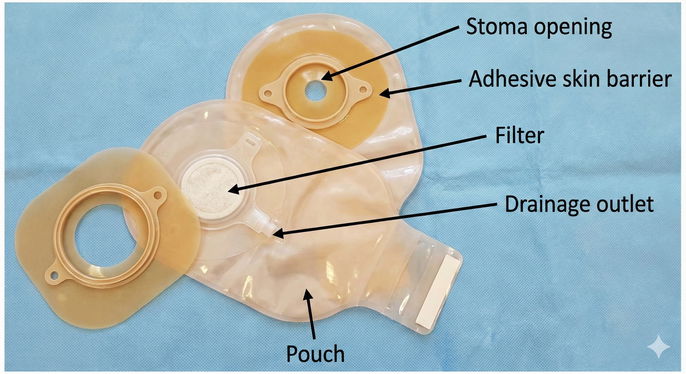
Some systems use two pieces: a skin barrier (wafer) that stays on the body and a detachable pouch. While the pouch can be changed frequently, the skin barrier should generally be replaced every 2 to 3 days.
When should the bag be changed?
The frequency of changes depends on your individual bowel habits. However, it is best to empty or change the bag once it is about 1/3 to 2/3 full to prevent leaks or skin irritation.
Is it safe to use the bag in daily life?
A colostomy bag is designed for all daily activities, including bathing, swimming, and exercise. The system is water-resistant and secure. For hygiene reasons, most users prefer to empty or change the bag before entering a pool or the ocean.
If you feel self-conscious about wearing a bag constantly, there are stoma caps or plugs available. These can temporarily block the exit of stool for short periods, though you must understand your bowel transit time well to avoid complications.
How to care for the skin around the stoma
The most effective way to prevent skin irritation is to ensure the bag opening is cut to the precise size of the stoma. This prevents stool from touching and irritating the skin.
Always clean the skin thoroughly after removing a bag. Using a mirror can help you check the underside of the stoma for any remaining residue or signs of redness. If the skin becomes severely irritated, consult a dermatologist or your gastroenterologist about using a medical-grade barrier cream that is compatible with adhesives.
Dietary considerations
Everyone reacts differently to food after surgery. It is important to monitor which foods cause constipation, strong odors, or excessive gas. Try introducing new foods in small amounts to see how your body responds.
While you can eventually return to a normal diet, you should be mindful of the following:
Foods that can help neutralize stool odor include carrots, chayote, spinach, yogurt, and parsley. If odor remains a concern, consider FDA-approved internal deodorants.
Remember that skipping meals can actually increase gas production. Eating regular, balanced meals is the best way to maintain healthy colostomy function.