


- Severe belly pain, a hard swollen abdomen, or nonstop vomiting needs urgent medical advice.
- Heavy rectal bleeding, dizziness, fainting, or marked weakness is urgent.
- After colonoscopy, worsening pain, fever, trouble breathing, or persistent bleeding needs prompt care.
Colonoscopy is a test that lets a doctor look closely at the inside of the large intestine (colon) and rectum. It helps diagnose conditions such as intestinal polyps, Crohn’s disease, colitis, and diverticulitis.
It is also used for colorectal cancer screening starting at age 45. Screening may start after age 40 for people with a family history of colon cancer.
A gastroenterologist performs colonoscopy using sedation. Before the procedure, a special prep is needed, including diet changes and laxatives to clean out the intestines.
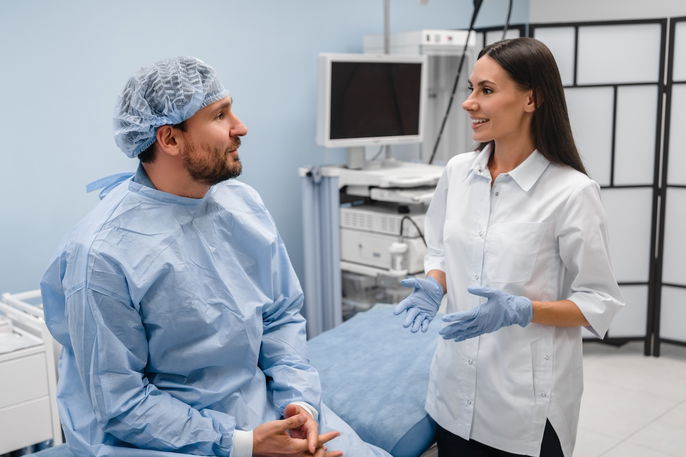
What is a colonoscopy?
Colonoscopy helps a doctor evaluate the colon and rectum to diagnose, prevent, or treat intestinal conditions.
During the exam, the doctor may also take biopsy samples, remove suspicious lesions, or cauterize blood vessels that are bleeding.
How long does a colonoscopy take?
A colonoscopy is performed by a gastroenterologist under sedation and usually takes about 30 to 60 minutes.
To perform a colonoscopy, the doctor typically follows these steps:
- Asks the person to put on a gown;
- Asks the person to lie on their side on the exam table, with their knees bent toward the chest;
- Gives sedation through a vein to reduce discomfort during the exam;
- Performs a digital rectal exam and applies lubricant to the area;
- Inserts the colonoscope into the rectum, which is a flexible tube with a light and camera at the tip;
- Views the inside lining of the intestine on a computer monitor;
- Removes polyps in the colon, treats bleeding, or performs a biopsy if needed;
- Slowly withdraws the colonoscope to examine all parts of the colon.
During the colonoscopy, small amounts of air may be pumped into the intestine to improve visibility.
After the exam, it is recommended to stay in recovery for about 2 hours before going home.
Virtual colonoscopy
Virtual colonoscopy also evaluates the colon, but it is done using computed tomography (CT).
This test has limitations, including trouble detecting small polyps and the inability to perform a biopsy. If polyps or other abnormal growths are found during a virtual colonoscopy, a standard colonoscopy usually needs to be done to remove them, according to the National Cancer Institute.
When should you get a colonoscopy?
Colonoscopy may be recommended to:
-
Look for the cause of symptoms such as bleeding, rectal bleeding, or chronic diarrhea;
- Screen for colon or rectal cancer, according to the U.S. Preventive Services Task Force (USPSTF);
-
Find and remove intestinal polyps;
-
Identify causes of blood in the stool;
-
Diagnose intestinal diseases such as diverticulosis, diverticulitis, colitis, intestinal tuberculosis, ulcerative colitis, or Crohn’s disease;
-
Evaluate persistent diarrhea or other unexplained changes in bowel habits;
-
Investigate anemia with no clear cause.
Colonoscopy can also be used to treat bleeding lesions, intestinal narrowing (strictures), remove foreign objects, relieve intestinal volvulus, and monitor colorectal cancer.
It may also be recommended after abnormal results on tests such as a fecal occult blood test or if X-rays show suspicious findings.
Colonoscopy prep
To prepare for a colonoscopy, it is usually recommended to:
-
Take the laxatives prescribed by the doctor the day before the exam to fully clear the intestines;
-
Drink plenty of water to help prevent dehydration from the laxatives;
-
Tell the doctor about all medications being taken, especially aspirin (ASA), blood thinners (anticoagulants), and diabetes medications, since the doctor may recommend stopping them or adjusting doses a few days before the exam;
-
Have someone accompany you, since sedation can cause sleepiness.
In addition, 2 to 3 days before the colonoscopy, a low-fiber colonoscopy prep diet is typically recommended, and the day before, a liquid diet.
On the day of the exam, complete fasting is required.
Is shaving necessary for a colonoscopy?
Shaving is not necessary for a colonoscopy, since hair around the anus does not affect the exam.
What matters most is following the prep instructions exactly as provided by the doctor.
Possible risks
Colonoscopy is generally considered a safe procedure with few risks.
Still, allergic reactions to sedatives, bleeding at the biopsy site or where a polyp was removed, or perforation of the colon or rectum can occur.
Post-polypectomy electrocoagulation syndrome can also occur when a polyp is removed using electrocautery.
Contraindications for the procedure
Colonoscopy is contraindicated during acute inflammation, such as:
-
Toxic megacolon;
-
Fulminant colitis;
-
Severe flares of ulcerative colitis or Crohn’s disease;
-
Acute diverticulitis.
In these cases, colonoscopy is usually delayed until the inflammation improves.
Colonoscopy should also be postponed if the person has recently had a heart attack, has peritonitis, or has hemodynamic instability.
Recent intestinal surgery or refusal to undergo the exam are absolute contraindications to colonoscopy.