


Chemosis in the eye is swelling of the conjunctiva, the tissue that lines the inside of the eyelid and covers the surface of the eye. This swelling can cause symptoms such as itching, watery eyes, or blurry vision and, in some cases, difficulty closing the eye.
Ocular chemosis is most commonly caused by allergies, but it can also happen due to a viral or bacterial infection. It may also occur as a complication after blepharoplasty surgery to remove excess eyelid skin.
Treatment for chemosis is managed by an ophthalmologist and depends on the cause. Depending on the situation, the doctor may recommend cold compresses or prescribe antibiotics in the form of eye drops or ophthalmic ointments.
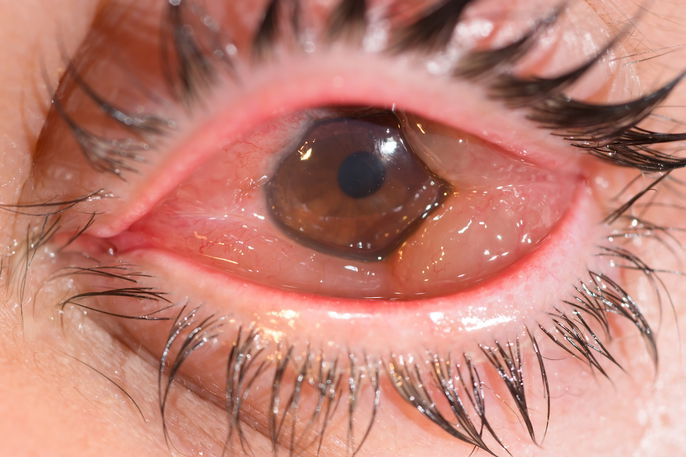
Main symptoms
The main symptoms of ocular chemosis are:
-
Eye redness;
-
Eye pain or itching;
-
Eyelid swelling;
-
Excess tearing;
-
Increased sensitivity to light;
-
A gritty or “something in the eye” feeling.
Swelling can also make it hard to fully close the eye. It is important to see an ophthalmologist as soon as possible, because closing the eyes helps lubricate the eyeball and protects the eyes from dust and other irritating substances.
How long does chemosis last?
Chemosis can last a few days or even months, depending on the cause and severity of the conjunctival swelling.
Confirming a diagnosis
The diagnosis of chemosis is made clinically by an ophthalmologist, based on the patient’s symptoms, the time of onset, medical history, and an examination of the affected eye.
No additional tests are needed to diagnose ocular chemosis.
Possible causes
The main causes of conjunctival chemosis are:
-
Allergy to substances such as pollen, dust, animal dander, foods, or medications;
-
Viral or bacterial conjunctivitis;
-
Eye surgery, such as blepharoplasty;
-
Angioedema;
-
Hyperthyroidism.
Other causes of chemosis include autoimmune diseases, eye injuries, exposure to chemicals, or simply rubbing the eyes.
What is the difference between conjunctivitis and chemosis?
Conjunctivitis is inflammation of the conjunctiva, while chemosis is swelling of the conjunctiva.
In some cases, a person can have conjunctivitis and chemosis at the same time, since one cause of chemosis is viral or bacterial conjunctivitis.
Treatment options
Treatment for chemosis should be done under the guidance of an ophthalmologist and varies depending on symptom severity and the underlying cause.
The main treatments for chemosis are:
1. Applying cold compresses
Cold compresses for chemosis may be recommended to help reduce swelling, inflammation, and eye discomfort.
The compress should be wrapped in a clean, dry towel and applied over closed eyes for the amount of time recommended by a doctor.
2. Using medications
Medications for chemosis may be recommended to reduce inflammation, allergic reactions, or eye infections.
The main medications used for chemosis are:
-
Antihistamines such as loratadine or fexofenadine, when chemosis is caused by an allergy. In these cases, avoiding contact with the substance that triggered the allergy is also recommended to help reduce the allergic reaction;
-
Antibiotics in the form of prescription eye drops or ophthalmic ointments, when chemosis is caused by a bacterial infection.
In addition, the doctor may recommend artificial tears to help keep the eyes hydrated.
3. Surgery
In more severe cases of chemosis after blepharoplasty, the doctor may perform surgery to drain fluid in the eye.
During treatment for ocular chemosis, it is important to stop using contact lenses for a few days.