


Caraway is a medicinal plant used to relieve gas, prevent stomach ulcers, and regulate blood sugar levels. It’s also commonly used in cooking to season dishes due to its mildly spicy flavor.
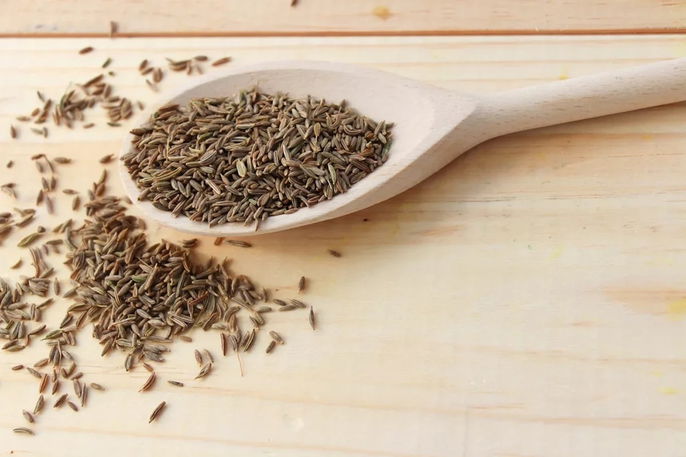
The scientific name for caraway is Carum carvi, and it’s also known as meridian fennel or Persian cumin. The most commonly used part of the plant is its fruit, which is often mistakenly referred to as seeds. These fruits are used in culinary preparations and are similar in taste and appearance to cumin.
Caraway can be consumed as a tea or used as an essential oil, which may be ingested, applied to the skin, or used in aromatherapy diffusers.
Health benefits
Caraway offers several health benefits and is typically used for:
1. Relieving gas and bloating
Caraway helps prevent the formation of gas in the intestines, stimulates the production of gastric juices, and improves digestion. It also reduces stomach motility due to a compound called carvone, which acts on the intestinal muscles to regulate bowel movements.
Additionally, it may help relieve stomach pain and the feeling of fullness. One study found that applying caraway topically to the abdomen helped relieve abdominal cramps in people with irritable bowel syndrome (IBS).
Check out other home remedies for gas that you can use to relieve bloating and fullness.
2. Preventing stomach ulcers
Caraway has antimicrobial properties that help fight Helicobacter pylori, a bacteria linked to the development of stomach ulcers.
It also appears to protect the stomach lining from damage such as inflammation, erosion, or bleeding.
3. Acting as a natural antimicrobial
Caraway essential oil has antibacterial effects against several types of bacteria, including Bacillus cereus, Pseudomonas aeruginosa, Escherichia coli, Bacillus subtilis, Salmonella typhi, and Helicobacter pylori. These effects are mainly due to active compounds like carvacrol.
4. Regulating blood sugar levels
Caraway may help lower blood sugar by reducing glucose production in the liver and enhancing glucose uptake by peripheral tissues, especially muscle and fat tissue.
Learn more about symptoms of hypoglycemia and how they can present.
5. Repelling insects
Caraway has insect-repellent properties due to compounds like limonene and carvone. It can help deter pests such as Sitophilus zeamais, Sitophilus oryzae, and Tribolium castaneum, which commonly infest stored foods.
Limonene also has molluscicidal properties and may help eliminate snails such as Lymnaea acuminata.
6. Reducing water retention
Caraway has diuretic properties that promote urine production, helping to eliminate excess fluids as well as sodium and potassium from the body.
Also recommended: Water Retention: Symptoms, 11 Causes & What to Do tuasaude.com/en/water-retention7. Providing antioxidant effects
Caraway contains oxygenated monoterpenes, flavonoids, and vitamins A, C, and E, which act as antioxidants. These compounds help fight oxidative stress and may reduce the risk of diseases like colon cancer.
8. Lowering cholesterol
Thanks to its antioxidant content and high fiber levels, caraway may help reduce total cholesterol, LDL (bad) cholesterol, and triglycerides. It may also slightly increase HDL (good) cholesterol, supporting heart health and preventing conditions like atherosclerosis.
How to use
Caraway can be used in several ways:
1. Caraway tea
Caraway tea is suitable for adults and children over 10 years old.
Ingredients:
-
1 to 2 teaspoons of crushed caraway fruits
-
150 mL (about 5 oz) of boiling water
How to prepare:
Boil the water, then remove from heat and add the crushed caraway. Cover and steep for 10 to 15 minutes. Strain and drink warm. You can drink 1 to 4 cups per day between meals.
2. Caraway essential oil
Caraway essential oil can be used in the following ways:
-
Orally: Add 4 drops to 150 mL of boiling water.
-
Topically: Dilute 1 or 2 drops in a carrier oil (like almond oil) and apply to the skin 2 to 3 times per day.
-
Aromatherapy: Add 3 to 4 drops to a diffuser and inhale.
Caraway essential oil should only be used under the guidance of a doctor or a trained herbalist.
3. As a spice
Caraway fruits (seeds) are used to season meat, stews, couscous, salads, and vegetables. They’re also used to flavor cheeses, breads, and liqueurs like kümmel.
In baking, caraway can be used in cookies, muffins, and cakes for added aroma and flavor.
Possible side effects
When consumed in large amounts, caraway may cause side effects such as itching, skin redness, headaches, or dizziness.
It may also lower blood sugar too much, increasing the risk of hypoglycemia.
Who should avoid it
Caraway should not be used by people who are allergic to the plant or to related herbs like celery, coriander, or fennel.
Pregnant or breastfeeding women, as well as children, should consult a doctor before using caraway tea or essential oil, since these forms are more concentrated than culinary use.
People taking oral diabetes medications should consult their endocrinologist before using caraway, especially as a tea or essential oil, due to potential interactions.
Caraway should also be avoided by individuals with epilepsy or those taking medications such as:
-
Anticonvulsants
-
Lithium
-
Antibiotics
-
Antifungals
-
Antispasmodics
-
Diuretics
-
Central nervous system depressants