


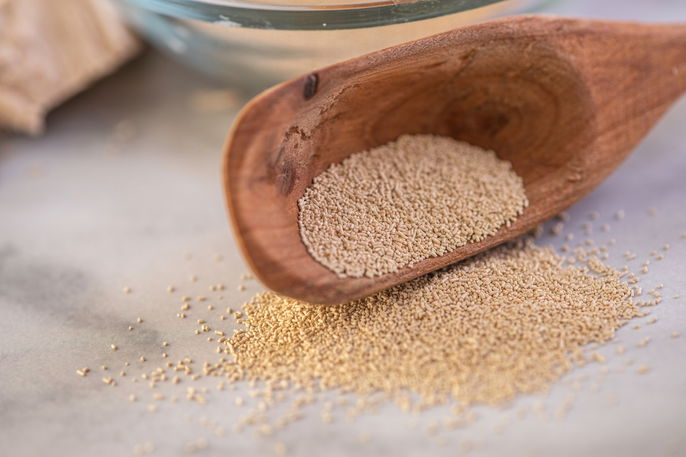
Brewer’s yeast is a natural yeast rich in B-complex vitamins, protein, and minerals like potassium, magnesium, and phosphorus. These nutrients help strengthen the immune system, improve energy levels, and support muscle growth.
Known scientifically as Saccharomyces cerevisiae, brewer’s yeast also acts as a probiotic that supports gut health by improving digestion and helping to manage constipation, diarrhea, and irritable bowel syndrome. It can also contribute to lower cholesterol and balanced blood sugar levels.
Because of its high nutritional value, brewer’s yeast is often used to support weight management, skin health, and even milk production during breastfeeding. Available in powder, capsule, or tablet form, it can be easily added to foods and drinks as part of a healthy lifestyle.
Health benefits
The main benefits and uses of brewer's yeast include:
1. Maintaining gut health
Brewer's yeast contains great amounts of beta-glucan, a fiber that helps to add volume to the stool and promotes easy bowel movements.
Because it is considered to be a probiotic, brewer's yeast can also be used to maintain intestinal flora health. It can improve digestion and help to manage certain health conditions, like constipation, diarrhea, irritable bowel syndrome, colitis and lactose intolerance.
2. Helping to prevent diabetes
This type of yeast is rich in chromium, a mineral that increases the sensitivity of insulin cells, which are responsible for regulating blood sugar levels.
In addition, brewer's yeas has great amounts of fiber, which reduce how quickly sugar is absorbed and balanced blood sugar levels. People with diabetes should consult their doctor, however, before using brewer's yeast.
3. Strengthening the immune system
Because it contains B-complex vitamins and minerals, brewer's yeast can help to strengthen the immune system and prevent the development of illnesses like the flu, allergies, Crohn’s disease and psoriasis.
4. Helping to reduce cholesterol
The beta-glucan present in brewer's yeast helps to reduce the absorption of cholesterol at an intestinal level. this ban help to regulate LDL cholesterol levels in the blood.
5. Promoting muscle gains
Due to its quantity of carbohydrates and protein, Brewer's yeast can boost physical performance and increase muscle production, leading to more muscle mass gains.
Brewer's yeast also contains high amounts of magnesium, potassium and calcium, minerals that participate in the contraction and formation of muscle tissue.
6. Facilitating weight loss
Because it contains great amounts of protein and fiber, brewer's yeast can keep you full and reduce overeating throughout the day, which can lead to weight loss.
In addition, brewer's yeast is low in fat, making it a great supplement for weight loss.
7. Improving skin health
Brewer's yeast contains B-complex vitamins and minerals (like chromium, selenium and zinc) which can facilitate the treatment of acne, eczema and psoriasis. The minerals present in brewer's yeast can also stimulate collagen production, which can keep skin firm and elastic.
8. Combating fatigue
Because it has great amounts of carbohydrates and protein, Brewer's yeast can help to combat mental and physical fatigue.
9. Supporting breastfeeding
Brewer’s yeast may help support breastfeeding by promoting milk production in some women. Its nutrients, like B-complex vitamins, beta-glucans, and chromium, can support hormone balance and energy metabolism, potentially stimulating prolactin, the hormone involved in milk synthesis.
Some studies suggest it may improve perceived milk supply, though results vary and it should be used only alongside healthy breastfeeding practices.
How to consume
Brewer’s yeast can be consumed in powder, flake, capsule, or tablet form. The amount to take depends on individual needs and the desired benefit.
General health and nutritional support
Brewer’s yeast powder can be added to foods and beverages like smoothies, yogurts, juices, soups, sauces, or baked goods. The typical amount ranges from 1 to 2 tablespoons (5 to 10 g) daily, preferably taken with meals to reduce stomach discomfort.
Breastfeeding support
Studies suggest that 5 to 30 g per day (about 1 to 3 tablespoons) may help increase perceived milk supply. Lower doses are recommended initially to assess tolerance. Brewer’s yeast may be taken once or divided into smaller doses throughout the day, mixed with smoothies, oatmeal, or lactation cookies.
Capsules and tablets
For capsules or tablets, recommended doses vary by brand, but are often between 500 and 1000 mg per capsule, taken up to 6 times daily with meals.
It is best to start gradually and increase intake as tolerated. Brewer’s yeast should complement a balanced diet rich in whole grains, fruits, and vegetables, and should not replace medical advice. Pregnant and breastfeeding women should consult a doctor before using any supplement.
Nutritional information
The following table outlines the nutrients in 100 g of brewer's yeast, which is equivalent to 6.5 tablespoons of powdered brewers yeast:
It is important to keep in mind that to obtain all the health benefits brewer's yeast has to offer, it should be incorporated to a healthy, active lifestyle.
Side effects
Excess consumption of brewer's yeast can cause stomach discomfort, gas, bloating and headache.
Contraindications for use
Diabetics should consult their doctor before starting brewer's yeast supplementation, as this substance can greatly reduce blood sugar levels and cause hypoglycemia.
People with a gluten intolerance should avoid consuming Brewer's yeast, as it is a sub-product of beer and may contain traces of gluten that is used in beer production.
People who are allergic to yeast, who take medications for for depression, who have Crohn’s disease or have a compromised immune system should consult their doctor before taking brewer's yeast.