


Blue sclera is a condition where the whites of the eyes take on a bluish, blue-gray, or blue-purple color. It can be present at birth or develop later in life and is often linked to underlying health issues or natural changes in the eyes.
This change in color can be associated with congenital conditions like osteogenesis imperfecta or Ehlers-Danlos syndrome, as well as acquired causes such as iron-deficiency anemia, aging, or long-term use of certain medications. In some cases, benign pigmentation disorders like ocular melanocytosis may also be responsible.
Blue sclera treatment depends on the underlying cause and can involve diet changes, supplements, medications, or physiotherapy. In some cases, regular eye exams and monitoring are recommended, especially when conditions like ocular melanocytosis or genetic disorders are present.
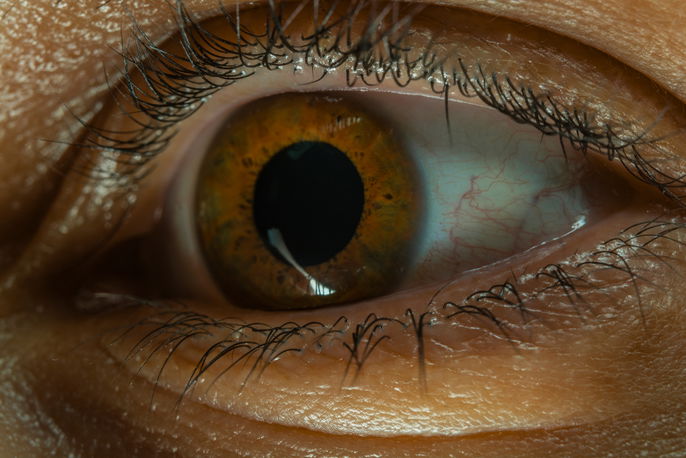
What it looks like
Blue sclera is described as blue coloration of the white part of the eye, which in some cases can be blue-gray or blue-purple.
Depending on its cause, blue sclera can affect just one eye or both eyes.
Possible causes
The main causes of blue sclera are:
1. Natural physiological causes
Infancy, especially in premature babies, can cause the sclera to appear bluish because it is thinner at birth. This usually resolves by around 6 months as the sclera thickens.
Older adults can also naturally develop a bluish tint because the sclera becomes thinner and more translucent with age.
What to do: These changes are considered normal and usually do not require treatment. However, if other symptoms arise or the bluish color worsens, an ophthalmologist can perform a detailed eye exam.
2. Iron-deficiency anemia
Iron-deficiency anemia is caused by low iron levels, which lead to reduced hemoglobin and red blood cell production.
Hemoglobin is essential for the transport of oxygen throughout the body, and low hemoglobin also leads to low oxygen levels. Due to decreased oxygen levels, patient may experience symptoms like weakness, headaches, abnormal periods, excessive fatigue and and blue sclera.
Also recommended: Iron Deficiency Symptoms: Common Signs Plus Treatment Options tuasaude.com/en/iron-deficiency-symptomsWhat to do: Treatment for iron deficiency anemia should be guided by your doctor, any typically involves taking iron supplements and increasing your intake of iron-rich foods like lentils, parsley, beans and red meat, for example.
3. Osteogenesis imperfecta
Osteogenesis imperfecta, also known as brittle bone disease, is a congenital disease that causes bone fragility due to genetic mutations associated with type 1 collagen.
The symptoms of this disease begin to appear in childhood, with one of the symptoms being the presence of blue sclera. It also presents with bone deformities in the skull and spine, as well as loose bone ligaments.
What to do: You should consult your pediatrician or orthopedic surgeon to begin the most appropriate treatment, which may involve physiotherapy and the use of bisphosphonate medications to strengthen the bones.
4. Marfan syndrome
Marfan syndrome is a rare hereditary disease caused by a mutation in the fibrillin-1 gene, which is responsible for producing proteins that are important for proper heart, eye, muscle and bone functioning.
This syndrome causes eye symptoms, such as blue sclera, retinal detachment, glaucoma and cataracts, in addition to abnormal bones (like a spine that curves more to one side) and abnormal heart functioning.
What to do: This syndrome can be diagnosed in the fetus during pregnancy, however, if there is suspicion of the condition after birth, the pediatrician may recommend genetic testing and blood or imaging tests to check which parts of the body are affected. Since Marfan syndrome has no cure, treatment is aimed at managing abnormal organ functioning.
Families with cases of this syndrome are advised to undergo genetic assessments and counseling to identify other possible cases in the family and to ensure adequate treatment is undergone.
5. Ehlers-Danlos syndrome
Ehlers-Danlos syndrome is a group of hereditary diseases characterized by a defect in collagen production. It is characterized by a loss of skin and joint elasticity, as well as problems with blood vessel wall integrity.
The symptoms of this syndrome vary and may include dislocations in the body, muscle contusions, and thinner-than-normal skin on the nose and lips, which can make injuries more likely to occur.
What to do: Treatment is done in a multi-disciplinary approach, and can involve a team of a cardiologist, ophthalmologist, dermatologist, or rheumatologist. The treatment plan will vary depending on the organ affected.
6. Use of medications
Some medications, such as minocycline or prednisone, can also cause blue sclera.
Mitoxantrone is another medication that can cause blue sclera, as well as nail depigmentation that gives them a grayish color. This medication is usually indicated for the treatment of breast cancer, leukemia or lymphoma.
What to do: These side-effects are very rare, however, if blue sclera are noted at any point during treatment with this medications, it is important to inform the prescribing doctor. The doctor can assess the need to discontinue this medication, change the dose or switch to another medication. Under no circumstances should the treatment or use of the medication be disrupted spontaneously.
7. Hyperhomocysteinemia
Hyperhomocysteinemia is an increase in homocysteine in the blood, an amino acid that participates in cell metabolism and protein synthesis. It is caused by a high-protein diet and particularly a high red meat intake, but it can also be related to low levels of thyroid hormones, or low intake of foods with vitamin B6, B12 or folic acid.
High homocysteine levels can cause blue sclera, and can also increase the risk for a pulmonary embolism, stroke or heart attack.
What to do: Treatment for hyperhomocysteinemia is guided by a general practitioner or cardiologist, and usually involves diet changes and/or the use of supplements. It is important to maintain regular follow-ups and to monitor homocysteine levels in order to prevent cardiovascular diseases.
8. Pigmentation disorders
Ocular melanocytosis (Nevus of Ota) is a benign but not extremely rare condition where increased pigment in the eye tissues causes a blue‑gray appearance in the sclera.
What to do: This condition should be monitored by an ophthalmologist, as people with ocular melanocytosis have a higher risk of developing glaucoma or melanoma in the affected eye.