


Bikini laser hair removal can significantly reduce hair growth in about 4 to 6 sessions. However, the total number of sessions varies depending on skin tone, hair color, and hair thickness.
People with lighter skin and darker hair generally see faster results because the laser more easily targets the pigment in the hair. After the initial treatment sessions, 1 or 2 maintenance sessions may be needed about a year later to treat any new hair growth.
Bikini laser hair removal may cause some discomfort because hair in this area tends to be thicker. Thicker, darker hair typically responds well to laser treatment, which may reduce the number of sessions needed to achieve long-lasting hair reduction.
Treatment options
Bikini laser hair removal is used for long-term hair reduction and can treat all or part of the bikini area, including:
- Bikini line
- Extended bikini
- Full bikini or Brazilian, which may include the external genital and perianal areas
The type of laser used depends on factors such as skin tone, hair color, and hair thickness. Treatment should be performed by a qualified professional who is trained and legally authorized to provide laser hair removal in that state.
What to expect
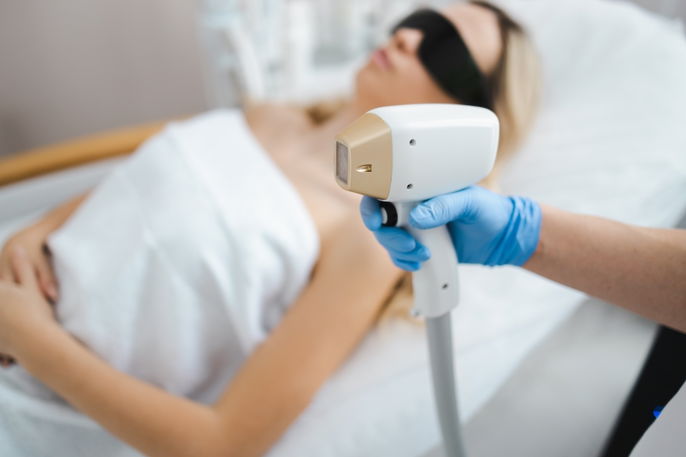
Bikini laser hair removal is performed using a laser device that delivers light energy to the treatment area. The pigment in the hair absorbs this energy, which damages the hair follicle and reduces future hair growth.
During the procedure, each laser pulse may cause a stinging, tingling, or pinprick sensation. Because hair in the bikini area is often thick and dark, it may respond well to laser treatment, although several sessions are usually needed to achieve long-term hair reduction.
When to expect results
Results may be noticeable after the first bikini laser hair removal session. Treated hairs typically begin to shed over the next 1 to 3 weeks and may fall out on their own or with gentle washing or exfoliation.
The next session is usually scheduled 4 to 6 weeks later. During this time, avoid waxing or tweezing because removing hair from the root can interfere with subsequent laser treatments.
Hair can be shaved between sessions when necessary.
How many sessions are needed?
Most people need about 4 to 6 sessions to achieve long-term hair reduction in the bikini area. Treatments are typically scheduled every 4 to 6 weeks at first, although the interval between sessions may increase as hair growth slows.
Multiple sessions are needed because not all hair follicles are in the active growth phase at the same time. The laser is most effective on hairs that are actively growing, while follicles in other stages of the growth cycle are treated during later sessions.
New hair growth may appear in the months after the initial treatment series. For this reason, many people benefit from 1 or 2 maintenance sessions about 8 to 12 months after completing their initial treatments.
Aftercare instructions
After bikini laser hair removal, the treated area may appear red, and mild swelling may develop around the hair follicles. These reactions are common and usually improve within several hours to a few days.
Recommended care includes:
- Wear loose-fitting clothing to reduce friction against the treated skin
- Choose breathable cotton underwear
- Apply a soothing moisturizer if recommended by the treatment provider
- Avoid direct sun exposure until the skin has healed
- Do not use tanning beds or sun lamps
- Avoid self-tanner on the treated area until the skin has completely healed
According to the American Academy of Dermatology, treated skin should be protected from direct sunlight after laser hair removal, and the treatment provider’s aftercare instructions should be followed.
Following these precautions can help reduce irritation, support healing, and lower the risk of skin discoloration and other side effects.
Contact a dermatologist or healthcare provider if redness, swelling, or discomfort lasts longer than a few days, worsens, or is accompanied by blistering or other unexpected skin changes.
