


The best skincare for oily skin involves using products designed for this skin type that help control and reduce excess oil. It is also recommended to wash the face no more than twice a day with cold water and use creams with astringent properties.
It is also recommended to use an oil-free sunscreen with an SPF of at least 30. Makeup and moisturizers should be avoided on the oiliest areas of the face.
It is important to see a dermatologist for a skin evaluation. This helps identify the most appropriate products to control sebum production and reduce shine.
Main treatments
To treat oily skin, the following are recommended:
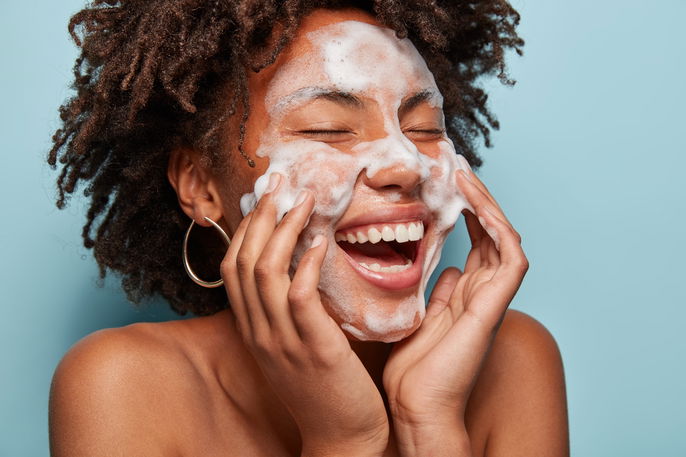
1. Cleansing
Oily skin should be cleansed at least twice a day, once in the morning and once at night, using products made specifically for oily skin.
These cleansers should ideally contain an acid such as salicylic acid, which, according to the American Academy of Dermatology, can help reduce oiliness by unclogging pores and removing excess oil and impurities from the skin.
First, the skin should be rinsed with cold or lukewarm water, and then a cleansing gel or cleansing bar should be gently applied.
2. Skin toning
Toning is important because it helps remove impurities that were not fully cleared away during cleansing. It also promotes a deeper clean, removes traces of dead skin cells or makeup, and may help prevent inflammation that can worsen oiliness.
It is important to use a toner made for oily skin. It should contain astringent ingredients and be alcohol-free so it can work effectively.
3. Moisturizing
Oily skin should not be moisturized more than once a day. It is also very important to use moisturizers that do not contain oil and do not clog pores.
A good option is a moisturizer for oily skin that already includes UVA and UVB protection. In addition to hydrating the skin, it helps protect against sun exposure. According to the FDA, broad-spectrum products with SPF 15 or higher provide protection against both UVA and UVB rays.
4. Exfoliation
Exfoliation helps clear away dead skin cells and excess oil, unclogs pores, and leaves the skin feeling softer. It is usually recommended about once a week.
The best exfoliating ingredient for oily skin is salicylic acid because it works not only on the surface of the skin, but also inside the pore lining. This allows oil to move more easily to the surface instead of building up and clogging the pores.
Another benefit of salicylic acid is that it has anti-inflammatory properties. This helps reduce irritation and may help calm excess oil production.
Exfoliation can also be done using mixtures like lemon, cornmeal, and sugar, applied to the skin with gentle circular motions.
5. Avoid using too much makeup
It is important not to wear too much makeup, because it can clog pores and make the skin even oilier. When makeup is used, the skin should be cleansed and toned first, and an oil-free foundation is recommended.
6. Drink water
Drinking at least 2 liters of water a day is essential for skin health. It may also help control oiliness, especially in the T-zone, which includes the forehead and nose and is usually oilier.
Diet also plays an important role in controlling and treating oily skin. It is important to avoid foods high in unhealthy fats and increase intake of vegetables, leafy greens, and fruits.
