


The BCG vaccine helps prevent severe forms of tuberculosis, such as miliary tuberculosis and tuberculous meningitis. It works by stimulating the immune system to develop protection against Mycobacterium tuberculosis, the bacterium that causes tuberculosis.
The vaccine contains a live, weakened form of Mycobacterium bovis known as Bacillus Calmette-Guérin. Because the bacteria are weakened, the vaccine does not cause tuberculosis and is generally considered safe.
In the United States, the BCG vaccine is not routinely given because tuberculosis is relatively uncommon. It may be considered in specific situations when a person has a high and ongoing risk of exposure to tuberculosis.
What it's for
The BCG vaccine helps prevent severe forms of tuberculosis, including miliary tuberculosis and tuberculous meningitis.
The vaccine contains live, weakened bacilli of Mycobacterium bovis. When these weakened bacteria enter the body, they stimulate the immune system to develop an immune response against Mycobacterium tuberculosis, the bacterium that causes tuberculosis.
The BCG vaccine may also provide partial protection against leprosy, an infectious disease that can cause pale or reddish skin patches, loss of sensation in the skin, and muscle weakness.
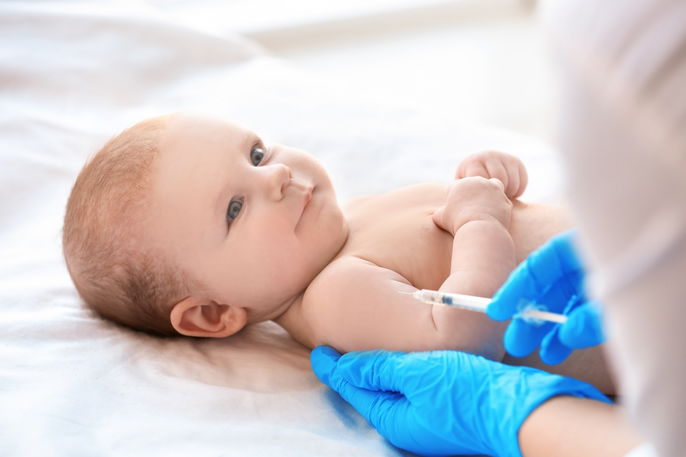
BCG vaccine in newborns
The BCG vaccine is not routinely given to newborns in the United States. It may be considered for certain children who have a high and ongoing risk of exposure to tuberculosis.
Because a baby's immune system is still developing, vaccination may help protect high-risk children against severe forms of tuberculosis when BCG vaccination is considered appropriate.
When to get it
In the United States, the BCG vaccine is not part of the routine childhood vaccination schedule.
It may be considered for certain children who:
-
Have a negative tuberculosis test;
-
Are continually exposed to an adult with untreated or ineffectively treated infectious tuberculosis;
-
Cannot be separated from that person or given appropriate preventive treatment.
BCG vaccination should be considered in consultation with a tuberculosis expert.
How long does protection last?
There is no single established duration of protection from the BCG vaccine. However, the vaccine is especially effective at protecting babies and children against severe forms of tuberculosis.
Protection can decrease over time because the immune response produced by the vaccine may not remain strong enough to provide long-lasting protection into adulthood.
For this reason, BCG has variable effectiveness against pulmonary tuberculosis in adults and is not routinely recommended for adults in the United States.
How it's administered
The way the BCG vaccine is administered depends on the vaccine product. It should always be given by a doctor, nurse, or other properly trained health care professional.
The FDA-approved BCG vaccine used for tuberculosis prevention in the United States is administered through the skin using a multiple-puncture device.
A local skin reaction normally develops after BCG vaccination. A small raised red area may appear and later develop into a small sore before gradually healing and leaving a scar.
Care after the vaccine
After BCG vaccination, the vaccination site should generally be left uncovered and allowed to heal naturally. Bandages or adhesive dressings should not be routinely placed over the area unless recommended by a health care professional.
Ointments, medications, or other substances should not be applied to the site unless specifically recommended by a health care professional. The area should be kept clean while it heals.
Possible adverse reactions
Common reactions to the BCG vaccine include redness, tenderness, and swelling at the vaccination site. A small bump may develop and later become a small ulcer before gradually healing and leaving a scar.
Although uncommon, some children may develop swollen lymph nodes, skin lesions, swelling in the armpit, or a larger ulcer that takes longer than expected to heal. If these reactions occur, a pediatrician or other health care professional should be consulted.
BCG vaccine scar
A scar after BCG vaccination is a normal local reaction and shows that the body responded to the vaccine.
The size of the scar and the time it takes to develop can vary. The local reaction may take several weeks or months to heal and can leave a small scar.
However, not developing a scar does not necessarily mean that the vaccine did not work. Revaccination solely because a scar did not form is generally not recommended.
Who should not get it
The BCG vaccine should not be given to people for whom the vaccine is contraindicated. A health care professional should determine whether vaccination is appropriate.
Because BCG is a live vaccine, it should not be given to people with significantly weakened immune systems.
BCG vaccination should not be given to people with HIV or other significant immunodeficiencies, people receiving immunosuppressive treatment, or anyone with a serious allergy to a component of the vaccine. BCG vaccination is also not recommended during pregnancy.