


Atopic dermatitis is a long-term inflammation of the skin that can cause dryness, itchy patches, and itchy blisters. Scratching can lead to open sores, and while it can affect anyone, it’s most common in babies and children up to 5 years old.
Atopic dermatitis is also called eczema, and it can be triggered by a mix of factors. It is not contagious, meaning it does not spread from person to person. The areas most often affected can change with age. It commonly shows up in the folds of the arms and knees, on the cheeks and around the ears in babies, or on the neck, hands, and feet in adults.
Atopic dermatitis has no cure, but it can be effectively managed. A dermatologist may recommend anti-inflammatory ointments or tablets, alongside daily moisturizing and trigger identification to minimize flare-ups.
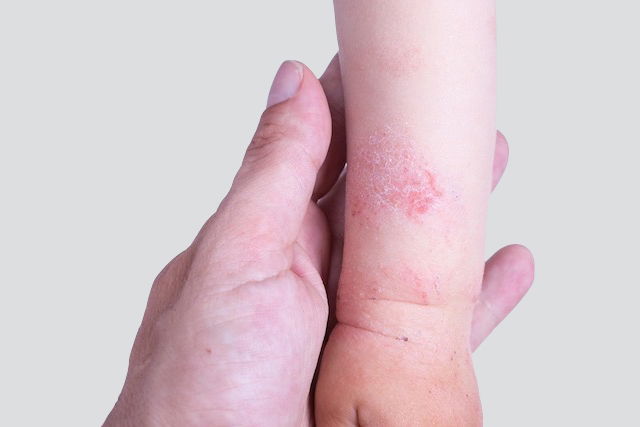
Common symptoms
The main symptoms of atopic dermatitis (eczema) are:
-
Itching;
-
Swelling of the skin;
-
Redness;
-
Skin peeling due to dryness;
-
Small bumps;
-
Sores caused by frequent scratching;
-
A change in skin color in one area, which may look lighter or darker than usual.
Skin changes like these can occur at any age and typically flare up intermittently. They often improve or resolve within a few days.
Because atopic dermatitis can cause dryness, itching, and open sores, the risk of skin infection is higher. Infections can be caused by bacteria, viruses, or fungi, and they can worsen inflammation, make symptoms more intense, and complicate treatment.
Symptom quiz
To assess the possibility of having atopic dermatitis, please select the symptoms you are experiencing:
This test serves only as a guidance tool and is not intended to diagnose conditions or replace a consultation with a dermatologist.
Confirming a diagnosis
A dermatologist diagnoses atopic dermatitis primarily by assessing your visible signs and symptoms.
Your healthcare provider should review your medical history, including symptom frequency and triggers. For instance, symptoms might worsen during stress or with allergic rhinitis.
It’s important to get evaluated as soon as the first symptoms appear so treatment can start right away. Early care can help prevent complications, especially skin infections.
Possible causes
The causes of atopic dermatitis are not fully understood. However, it is believed to be linked to changes in how the immune system works or in the skin itself.
Factors that may contribute to symptoms include:
-
Changes in climate;
-
Smoke;
-
Pollution;
-
Detergents;
-
Highly concentrated laundry products;
-
Contact with synthetic fabrics.
Pay attention to whether symptoms appear after exposure to any of these factors. If so, avoiding the trigger may help prevent flare-ups.
Is it contagious?
Atopic dermatitis is not contagious, and, according to the American Academy of Dermatology, cannot spread from person to person. This is because atopic dermatitis is not caused by microorganisms, but by a combination of factors that lead to skin inflammation and symptoms.
Treatment options
According to the American Academy of Pediatrics (AAP), the usual way to treat eczema flare-ups is with steroid creams on the skin, combined with daily moisturizer to help protect and strengthen your skin barrier.
Some everyday habits can also help reduce inflammation and manage flare-ups, such as:
-
Using urea-based moisturizers and avoiding products with added color or fragrance;
-
Avoiding hot showers;
-
Not taking more than one shower per day;
-
Avoiding foods that are more likely to trigger allergies, such as shrimp, peanuts, or milk.
In some cases, oral medicines may also be needed, such as antihistamines or corticosteroids prescribed by a dermatologist. These are used to help reduce itching flare-ups and severe inflammation.