


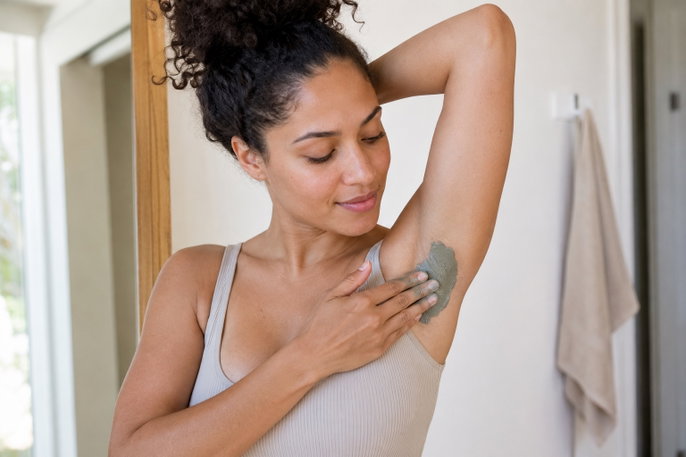
Armpit detox is a popular term for using masks, scrubs, or product changes to “clean out” the underarm area. However, the armpits do not detox the body, and there is no good scientific evidence that these methods remove toxins or prevent disease.
The liver and kidneys are the main organs that process and remove waste from the body. Some people notice odor changes when stopping antiperspirants or switching to natural deodorants, but this is more likely related to sweat, skin bacteria, and product changes rather than toxins leaving the body.
An armpit detox may involve gentle washing, stopping products that irritate the skin, or using cosmetic masks made with ingredients like clay, charcoal, vinegar, or baking soda. These methods may help some people feel cleaner for a short time, but they can also cause burning, rash, dryness, or dark marks in the underarm area.
What is an armpit detox?
An armpit detox is a non-medical practice that usually involves applying a mask or scrub to the underarms. It is often promoted as a way to remove “toxins,” reduce odor, or make the switch from regular deodorant or antiperspirant to a natural deodorant easier.
There is no strong evidence that an armpit detox removes toxins from the body. Sweat can contain some substances, but detoxification mainly happens through the liver and kidneys, not through the armpits.
The underarm area has sweat glands and many types of bacteria. These bacteria can interact with sweat and skin oils, which can affect body odor. For this reason, changes in odor during an “armpit detox” are more likely related to changes in bacteria, sweat, and product use.
Antiperspirants work by reducing sweat. Deodorants mainly help control odor. Natural deodorants usually do not block sweat, so the underarms may feel wetter or smell different after making the switch.
Benefits of an armpit detox
There is no proven medical benefit to an armpit detox. It has not been shown to remove toxins, prevent cancer, improve lymph drainage, or cure body odor.
Possible benefits are mostly cosmetic and temporary. These may include:
-
A cleaner feeling after washing the underarms
-
Less buildup from deodorant, sweat, or skin oils
-
Short-term odor improvement after gentle cleansing
-
Less irritation if a product that was causing a reaction is stopped
-
A better understanding of which products work well for the skin
Some people believe an armpit detox is needed after using aluminum-containing antiperspirants. However, available evidence does not show a clear link between antiperspirant or deodorant use and breast cancer. Detox masks also do not remove aluminum from the body in a medically meaningful way.
If odor improves after an armpit detox, this may happen because of washing, exfoliation, or stopping an irritating product. It does not mean that toxins were pulled out through the skin.
How to do an armpit detox at home
The safest way to approach an armpit detox at home is to focus on gentle underarm care instead of harsh masks or strong ingredients.
Gentle underarm care
A simple routine can include:
-
Washing the underarms once daily with mild soap and water
-
Drying the area well after bathing
-
Wearing loose, breathable clothing
-
Changing sweaty clothes soon after exercise or heavy sweating
-
Avoiding deodorants, antiperspirants, or fragrances that cause burning, itching, or rash
-
Giving the skin time to adjust after changing products
This approach may help reduce odor and irritation without damaging the skin barrier.
Using masks or scrubs
Clay, charcoal, vinegar, baking soda, and essential oils are common in DIY armpit detox recipes. However, these ingredients do not have proven detox effects.
Some of these products can irritate the thin underarm skin. Vinegar and baking soda can change the skin’s natural pH, while essential oils and fragrances can trigger allergic reactions. Scrubs can also cause small skin injuries, especially after shaving or waxing.
Masks or scrubs should not be used on broken, freshly shaved, painful, or inflamed skin. If a mask causes burning, stinging, redness, or swelling, it should be washed off right away and not used again.
What to avoid
It is best to avoid:
-
Lemon juice, strong vinegar, or undiluted essential oils
-
Rough scrubbing
-
Applying detox masks after shaving or waxing
-
Leaving acidic or drying ingredients on the skin for a long time
-
Using several new products at once
-
Covering a rash with deodorant, perfume, or detox masks
These habits can worsen irritation and make it harder to identify which product caused the reaction.
Potential side effects
The main side effect of an armpit detox is skin irritation. The underarm skin is thin, moist, and often exposed to friction from clothing, shaving, and deodorants, which can make it more sensitive.
Possible side effects include:
-
Redness
-
Itching
-
Burning or stinging
-
Dryness or peeling
-
Rash
-
Swelling
-
Tenderness
-
Dark marks or hyperpigmentation after irritation
-
Worsening odor during product changes
-
Allergic contact dermatitis
Irritant contact dermatitis can happen when an ingredient damages the skin barrier. Allergic contact dermatitis can happen when the immune system reacts to an ingredient, such as fragrance, preservatives, essential oils, or other cosmetic ingredients.
Strong odor can also happen temporarily after stopping antiperspirant. This is because antiperspirants reduce sweat, and product changes can affect the balance and amount of bacteria in the underarm area. This odor change does not mean the body is releasing toxins.
Tips for transitioning to natural deodorants
Switching to a natural deodorant may take time because most natural deodorants do not reduce sweating. They usually focus on odor control instead.
Helpful tips include:
-
Change one product at a time so reactions are easier to identify.
-
Choose fragrance-free or low-fragrance products if the skin is sensitive.
-
Avoid applying deodorant right after shaving if the skin feels irritated.
-
Wash the underarms with mild soap and water instead of using harsh detox masks.
-
Wear breathable fabrics to reduce trapped sweat.
-
Allow time for odor changes to settle after stopping antiperspirant.
-
Stop using any product that causes burning, rash, swelling, or peeling.
Some people may prefer antiperspirants because they reduce sweat. Others may prefer deodorants because they only target odor. Neither choice requires a detox, and the best option depends on sweat level, odor, skin sensitivity, and comfort.
If natural deodorant does not control odor well, this does not mean the detox failed. It may simply mean the product is not strong enough for that person’s sweat and skin bacteria.
When to see a doctor
A dermatologist or healthcare provider should be consulted if underarm symptoms do not improve or if they are severe.
Medical care is recommended for the following warning signs:
- Rash that lasts more than a few days or keeps coming back
- Severe itching, burning, pain, swelling, warmth, pus, or other signs of infection
- Blisters, open sores, bleeding, or dark patches that do not fade
- A lump or nodule in the armpit
- Strong odor or excessive sweating that continues despite regular hygiene
A doctor may check for contact dermatitis, infection, excess sweating, swollen lymph nodes, or other skin conditions. Patch testing may be recommended if an allergy to deodorant, fragrance, or another cosmetic ingredient is suspected.