


- 1 year old milestones can include sitting without help, pulling up to stand, cruising, and taking a few steps without support.
- At 12 months, babies may copy gestures, wave “bye,” shake their head “no,” and say simple words like “mama” or “dada.”
- A 1-year-old baby’s routine should include balanced meals, good sleep habits, and simple activities that support development.
1 year old milestones include important physical, social, and communication skills, such as sitting without help, pulling up to stand, taking first steps, waving goodbye, and saying simple words. At this age, babies also develop better coordination and may be able to hold a cup, move objects between containers, and imitate gestures.
Growth and nutrition remain important parts of development at 12 months. Breast milk, infant formula, or whole milk may still be included in the diet, along with balanced meals that contain fruits, vegetables, grains, and protein to support healthy growth.
A typical 1-year-old also needs enough sleep, routine vaccines, and regular play to support learning and development. Growth, feeding habits, sleep patterns, and developmental milestones can help show how the baby is progressing at this stage.
Average weight
The following table shows the ideal weight range, height, and head circumference for a 12-month-old baby, according to the World Health Organization (WHO).
If the baby’s measurements are above or below these ranges, it is best to see a pediatrician to check their growth and development.
Developmental milestones
A 12-month-old baby may still crawl, but can usually sit without help and hold on to furniture or people to stand and walk. Some babies may also be able to stand and take a few small steps on their own without support. For this reason, soft, flexible shoes are important at this stage to help with walking and support healthy foot development.
At this stage, babies communicate well by shaking their head to say “no,” waving to say “bye,” copying gestures from other people, and saying short words such as “mama” and “dada.”
A 12-month-old baby also has better motor coordination. They may be able to take objects out of a box and put them back in, hold a cup to drink water, or comb their hair, for example.
Feeding and nutrition
According to the American Academy of Pediatrics (AAP), breastfeeding can continue for 2 years or longer, as mutually desired by the mother and child. For children who are not breastfed, infant formula or another milk option should be offered according to the pediatrician’s guidance.
A baby should have 6 meals per day. This includes fresh fruit at breakfast and during morning and afternoon snacks, as well as 2 savory meals for lunch and dinner. These savory meals should include vegetables, grains or tubers, legumes, and protein, as explained below:
- Breakfast: 1 serving of fresh fruit + breast milk, 200 mL of whole cow’s milk, or infant formula
- Morning and afternoon snacks: 1 serving of fresh fruit + breast milk, 200 mL of whole cow’s milk, or infant formula
- Lunch and dinner: 1 tablespoon of grains, such as rice, corn, and quinoa, or tubers, such as yam and sweet potato + 2 tablespoons of vegetables, such as squash or spinach + 2 tablespoons of legumes, such as black-eyed peas and chickpeas + 1 tablespoon of protein, such as meat, fish, or egg
- Bedtime snack: breast milk, 200 mL of whole cow’s milk, or infant formula
According to the AAP, children ages 12 to 24 months can be offered whole cow’s milk, which provides calcium, vitamin D, protein, vitamin A, and zinc to support healthy growth and development. Intake should usually be limited to about 16 to 24 oz per day, or 2 to 3 cups, as drinking too much milk can reduce appetite for iron-rich foods and may increase the risk of iron deficiency.
Cow’s milk is not recommended in some situations, such as intolerance or allergy. Therefore, before offering cow’s milk or choosing a milk alternative, it is best to talk to the pediatrician.
The AAP recommends offering water and plain milk as the main drinks for young children. For 1-year-olds, water can be offered throughout the day, especially with meals and snacks.
Normal sleep
Sleep is essential for strengthening the immune system and also helps with the baby’s growth and memory. A 12-month-old baby usually sleeps around 13 hours per day, which may be divided into 9 to 10 hours at night and two naps of up to 3 hours during the day.
Some measures can help the baby fall asleep and sleep well through the night. These include keeping the environment calm and lowering the lights and noise in the house 1 hour before bedtime.
Routine vaccines
As part of the recommended childhood immunization schedule, a 12-month-old baby should receive:
-
1st dose of the MMR vaccine, which protects against measles, mumps, and rubella
-
1st dose of the chickenpox vaccine, also called varicella
-
1st dose of the hepatitis A vaccine, which protects against hepatitis A
-
4th dose of the pneumococcal conjugate vaccine, which protects against pneumococcal disease, including infections that can cause pneumonia, meningitis, and bloodstream infections
-
3rd or 4th dose of the Hib vaccine, depending on the vaccine brand used, which protects against Haemophilus influenzae type b
-
Annual flu vaccine, if the baby has not already received it for the season
Some vaccines, such as IPV, which protects against polio, and meningococcal vaccines, may be recommended at this age in specific catch-up schedules or for children with certain risk factors.
Play and activities
Play and activities are essential for a 1-year-old baby because they help with speech development, social interaction, and a sense of community. Play also stimulates the baby’s curiosity and communication.
During playtime, it is important to talk to the baby, as communication supports child development. Some games and activities that can be done with a 1-year-old baby include:
-
Pointing a flashlight at a plain wall in a dimly lit room. Place your hands between the wall and the flashlight to create fun, different shadows on the wall.
-
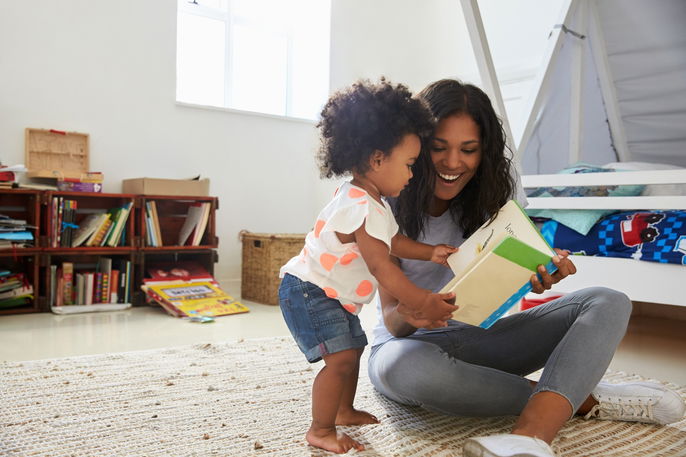
Reading books or magazines, talking to the baby and showing them the pictures and illustrations.
-
Making a sensory bottle by placing pieces of colored paper, bottle caps, and colorful fabric inside a plastic bottle. Fill the bottle with water, close it tightly, and show the baby how to play with the different colors and shapes.
Another activity that can support 1 year old milestones is going for walks in parks or public squares. However, outings should be done before 10:00 a.m. or after 4:00 p.m., and sunscreen should always be applied to the baby 30 minutes before leaving home. Using a sunshade is also recommended.