


Xerosis, also called xerosis cutis, xeroderma or asteatosis, is a condition in which the skin becomes unusually dry because the outer skin barrier contains less water and lipids. Xerosis is not contagious and cannot be passed from one person to another.
Common symptoms include rough, scaly or tight skin, itching and cracks in the skin. Xerosis is more common with increasing age and may also be associated with environmental conditions, frequent bathing, certain skin care products, medications or health conditions.
Treatment usually focuses on restoring moisture to the skin with creams, ointments or other moisturizers and avoiding factors that make dryness worse. Medical evaluation may be needed when dryness is persistent, worsening or possibly related to another health condition.
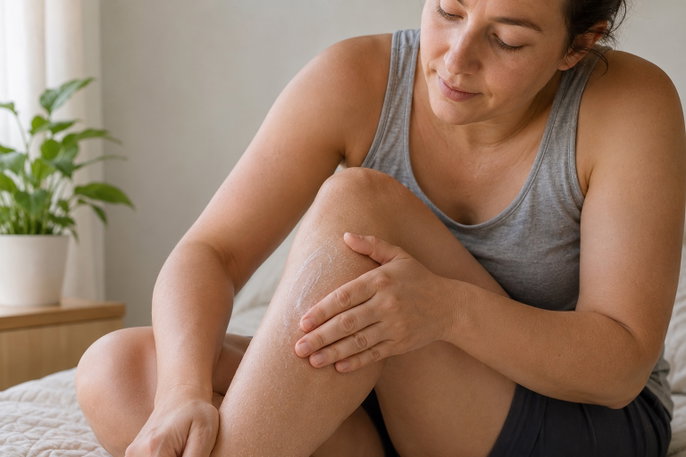
Main symptoms
Xerosis can affect the appearance and texture of the skin and may cause uncomfortable symptoms such as:
-
Rough or coarse skin
-
Scaling or flaking
-
A feeling of tightness
-
Itching
-
Cracks or fissures in the skin
-
Redness
-
Scratch marks, particularly when itching is present
The severity of these symptoms can vary, and significant dryness or scratching can further damage the skin barrier.
Causes
Xerosis develops when the skin loses too much water or does not have enough lipids to maintain an effective protective barrier. This can occur with the following conditions:
1. Aging
Xerosis becomes more common as people get older. Research in the general population has found that increasing age is associated with a greater likelihood of developing xerotic skin.
Age-related changes can reduce the skin's ability to retain moisture and maintain its normal protective barrier. As a result, older adults may experience dryness more frequently.
2. Cold or dry weather
Cold temperatures and low humidity can reduce moisture in the skin. Xerosis may therefore become more noticeable during winter or in climates where the air is consistently dry.
Indoor heating can also lower humidity and contribute to skin dryness. Air conditioning may have a similar drying effect.
3. Frequent bathing
Frequent bathing or prolonged exposure to water can contribute to xerosis. Bathing habits may remove some of the natural lipids that help keep water inside the outer layer of the skin.
Dryness may become worse when frequent washing is combined with other irritating skin care practices.
4. Soaps and detergents
Some soaps and detergents can remove oils from the skin and weaken its protective barrier. Repeated exposure may therefore contribute to persistent dryness.
Reducing contact with irritating cleansing products may be part of the management and prevention of xerosis.
5. Medications
Certain medications can contribute to dry skin. When xerosis develops after starting a medication, the medication history may be considered during the medical evaluation.
A doctor can determine whether a medicine or another factor could be contributing to the dryness.
6. Skin conditions
Xerosis may occur alongside skin conditions such as atopic eczema and psoriasis. These conditions can affect the skin barrier and may make dryness more noticeable or persistent.
Xerosis itself is different from eczema, psoriasis, scabies and fungal infections, although these conditions may sometimes cause similar skin changes.
7. Other health conditions
Dry skin can also be associated with conditions such as diabetes, hypothyroidism and Sjögren syndrome. In these cases, treating the underlying health problem may form part of the overall management.
Because several medical conditions can cause or worsen xerosis, persistent or unexplained dryness may require further assessment.
Confirming a diagnosis
Xerosis is usually diagnosed clinically, meaning that a doctor or dermatologist generally identifies it by examining the skin and reviewing the symptoms. Features such as scaling, roughness, cracks, redness, itching and scratch marks may help support the diagnosis.
The doctor may also ask how long the dryness has been present, what seems to trigger or worsen it, which treatments have already been tried and whether there is a personal or family history of conditions such as eczema. Exposure to soaps, skin care products, environmental conditions and medications may also be reviewed.
Additional testing is not always necessary. However, tests may be considered when another health condition is suspected as the cause of persistent dry skin.
Treatment options
Treatment for xerosis aims to restore moisture, support the skin barrier and reduce exposure to factors that worsen dryness. The most appropriate approach depends on the severity of the condition and whether an underlying disease is present.
1. Moisturizers and emollients
Moisturizers are a main part of xerosis treatment and should generally be used regularly. They help increase skin hydration and reduce water loss from the outer skin barrier.
Ingredients used in moisturizers for dry skin may include urea, ceramides, glycerol or lactic acid. Evidence from studies of foot xerosis has also examined ingredients such as urea and ammonium lactate, although available research does not establish that one moisturizer ingredient or formulation is clearly best for everyone.
2. Creams, ointments and lotions
The texture of a moisturizer may be selected according to how dry the skin is. More lipid-rich ointments can be useful for very dry skin, while lighter creams or lotions may be more suitable for milder xerosis.
Creams and ointments generally retain moisture more effectively than lotions. Choosing a product that is comfortable to use regularly can also be important because consistent application affects treatment results.
3. Treatment of foot xerosis
Moisturizers may also help when xerosis affects the feet. In a randomized clinical trial involving people with diabetes and foot xerosis, twice-daily use of a glycerol-and-paraffin emollient for about four weeks improved xerosis severity, skin hydration and roughness compared with the vehicle treatment.
Research into moisturizers for foot xerosis has included several different formulations. However, the quality and consistency of the available evidence are not strong enough to identify one ingredient as clearly superior.
4. Treatment of underlying conditions
When xerosis is related to another medical condition, treatment may also need to address that underlying cause. Conditions associated with dry skin can include diabetes, hypothyroidism, Sjögren syndrome, eczema and psoriasis.
A medical evaluation can help distinguish uncomplicated xerosis from other skin diseases that may require different treatment.
Prevention measures
Measures that protect the skin barrier and reduce moisture loss may help prevent xerosis or keep it from becoming worse. These include:
-
Using moisturizers regularly
-
Applying creams or ointments to help retain moisture
-
Limiting exposure to products that irritate or dry the skin
-
Avoiding excessive or frequent bathing
-
Reducing exposure to harsh soaps and detergents
-
Protecting the skin from very dry air and low humidity
-
Managing medical or skin conditions that contribute to dryness
Regular skin care is particularly important when xerosis is likely to recur. Guidelines also support early moisturizer use when significant scaling or scratch marks are expected, even before itching becomes noticeable.
When to see a doctor
Medical evaluation may be appropriate when xerosis does not improve with regular skin care or continues to worsen. Persistent dryness can sometimes be related to an underlying skin disorder, medication or medical condition.
A dermatologist can examine the skin, look for signs of another condition and recommend an appropriate moisturizer or other treatment. Evaluation may also help distinguish xerosis from conditions such as eczema, psoriasis, scabies or fungal infections.