


Witch hazel (Hamamelis virginiana) is a medicinal plant traditionally used to help treat hemorrhoids, varicose veins, skin wounds, acne, or sore throat. It has astringent, anti-inflammatory, and anti-hemorrhagic properties.
The parts of the plant used for medicinal purposes are the leaves and bark, which can be prepared as tea, ointment, extract, capsules, or tincture. Witch hazel is also known as spotted alder or winter bloom.
Witch hazel can be found at health food stores or pharmacies, and should be used under the guidance of a doctor or herbalist.
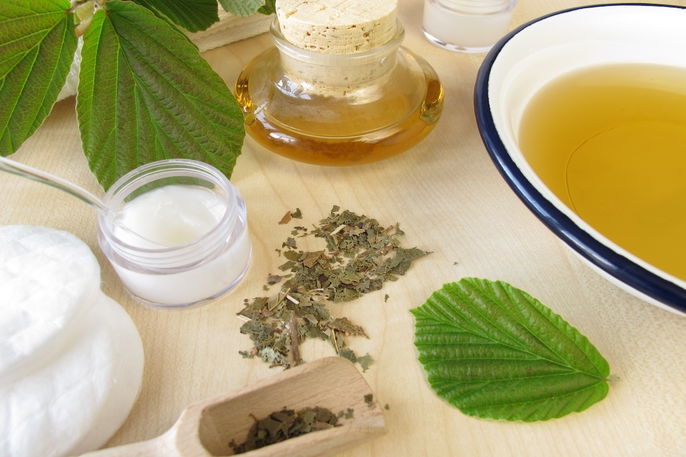
Health benefits
The health benefits of witch hazel include:
1. Relieving hemorrhoid symptoms
Witch hazel is rich in tannins, which have astringent, hemostatic, and soothing effects. It can help relieve external hemorrhoid symptoms like irritation, burning, itching, or bleeding.
Its anti-inflammatory action can also reduce hemorrhoid swelling.
Witch hazel may also be helpful for treating anal fissures.
2. Supporting varicose vein treatment
Witch hazel contains flavonoids with venotonic and peripheral vasoconstrictive effects. These help improve blood circulation and support the return of blood from the legs back to the heart.
It may be used to support treatment of varicose veins, venous ulcers, poor circulation, or phlebitis, helping reduce pain and heaviness in the legs.
3. Combating acne
Witch hazel is high in tannins, like hamamelitannin, with anti-inflammatory, antioxidant, and antibacterial effects. It may help prevent the spread of Propionibacterium acnes bacteria and reduce acne and pimples.
Its astringent properties also help tighten pores, which can prevent and treat breakouts.
4. Promoting wound healing
With its astringent and anti-inflammatory effects, witch hazel may help heal minor skin wounds like cuts or insect bites.
5. Soothing sore throat
Witch hazel has antibacterial properties that help eliminate bacteria in the mouth and throat. Its anti-inflammatory action may help relieve sore throat and reduce bad breath.
6. Calming scalp irritation
Witch hazel may help reduce scalp inflammation and irritation caused by skin conditions like scalp psoriasis or dandruff, easing itching.
7. Managing menstrual disorders
Due to its anti-hemorrhagic effect, witch hazel may help regulate heavy menstrual bleeding or bleeding outside of the menstrual cycle.
8. Supporting herpes treatment
The bark of witch hazel is rich in tannins and proanthocyanidins with antiviral activity. These compounds may help prevent the spread of the herpes simplex virus type 1, making witch hazel useful in managing cold sores.
This benefit is especially associated with alcoholic extracts used orally or topically.
9. Relieving sunburn pain
The anti-inflammatory and astringent effects of witch hazel can help reduce skin pain and sensitivity caused by mild sunburns.
10. Reducing skin redness
Witch hazel may help decrease skin redness caused by atopic dermatitis, rosacea, diaper rash, or sunburn, thanks to its anti-inflammatory and skin-soothing properties.
11. Minimizing bruising
Its anti-hemorrhagic, anti-inflammatory, and astringent effects may help reduce bruising from bumps or contusions.
12. Relieving vaginal dryness
Witch hazel may help relieve vaginal dryness in menopausal women who are unable or unwilling to undergo hormone replacement therapy.
Witch hazel cream is rich in water, which hydrates the vaginal mucosa and helps prevent water loss, reducing dryness.
This treatment is usually short-term and can last up to 30 days.
How to use
The medicinal parts of witch hazel are its bark and leaves. These can be used in several forms:
1. Witch hazel tea
Witch hazel tea can be used to improve circulation, help with varicose veins, or relieve sore throat.
Ingredients
-
1 tsp of witch hazel bark or 1 to 4 tsp of dried leaves
-
150 mL of water
Instructions
Boil the water, remove from heat, then pour over the bark or leaves in a cup. Let steep for 5 to 10 minutes. Strain, allow to cool, and drink 2 to 3 cups per day. This tea can also be used as a gargle.
2. Witch hazel compress
Witch hazel compresses can be used for hemorrhoids, skin wounds, bruises, burns, rosacea, atopic dermatitis, or scalp irritation.
Ingredients
-
2 to 4 tsp of witch hazel bark or 3 to 6 tsp of dried leaves
-
250 mL of water
Instructions
Place the water and witch hazel bark or leaves in a pot and bring to a boil. Turn off heat and let steep for 15 minutes. Strain and allow to cool slightly. Soak a clean cloth or gauze in the liquid and apply to the hemorrhoids or affected area.
3. Witch hazel ointment
Witch hazel ointment may be used for external hemorrhoids, varicose veins, skin cuts, or bruises.
Ingredients
-
4 tbsp of witch hazel bark
-
60 mL of liquid paraffin
-
60 mL of glycerin
Instructions
Add the paraffin and witch hazel bark to a saucepan and simmer for 5 minutes. Strain and mix in 60 mL of glycerin. Store in a clean, dry, lidded container in the refrigerator. Apply 3 times per day for up to 1 month.
Witch hazel ointment can also be purchased at pharmacies or natural health stores.
4. Witch hazel capsules
Witch hazel capsules may help with varicose veins, hemorrhoids, or phlebitis.
The typical adult dose is one 200 mg capsule, twice a day, for 2 weeks, or as advised by a healthcare provider.
5. Witch hazel tincture
Witch hazel tincture may help treat varicose veins or hemorrhoids.
Ingredients
-
200 g of chopped witch hazel bark
-
1 liter of grain alcohol
Instructions
Place the bark and alcohol in a sterilized dark glass container. Seal and store in a cool, ventilated, dark place for 7 to 10 days, shaking gently once a day. Strain and store the tincture in a clean, dry, dark glass bottle.
To use, mix 20 mL of tincture with 100 mL of water. Apply directly to varicose veins or soak a clean compress and apply to external hemorrhoids.
Witch hazel tincture is also available at pharmacies or natural health stores.
Possible side effects
When taken orally, witch hazel may cause side effects like nausea, vomiting, drowsiness, excessive salivation, liver or kidney damage, and stomach irritation, especially if consumed in large amounts.
When applied to the skin, it may cause itching, irritation, or allergic reactions.
Who should avoid it
Witch hazel should not be taken orally by children, pregnant women, or breastfeeding women. For skin or hemorrhoid use, it should only be used under medical supervision.
It should also be avoided by people allergic to witch hazel or plants from the Compositae family, such as chamomile or yarrow.