


Wild lettuce is a group of plants from the Lactuca genus, which belongs to the Asteraceae family. The name is most often used for Lactuca virosa, but it may also refer to related wild species, such as Lactuca serriola and Lactuca canadensis.
Lactuca virosa is sometimes called “lettuce opium” because its dried latex, known as lactucarium, has been used in traditional medicine for pain, sleep and cough. However, this name can be misleading, as wild lettuce is not an opioid and its effects in humans are not well proven.
Wild lettuce contains bitter plant compounds, including lactucin and lactucopicrin, that have shown sedative and pain-relieving effects in animal studies. Even so, there is not enough high-quality human research to confirm that wild lettuce is safe or effective as a treatment for pain, insomnia, anxiety or other health conditions.
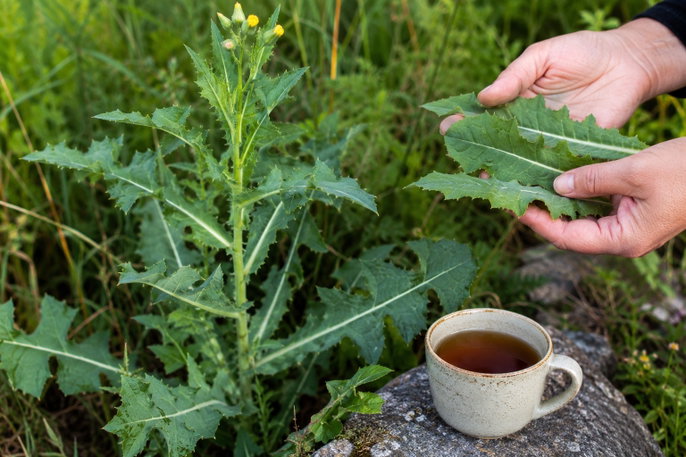
Health benefits
Wild lettuce has been studied mainly in laboratory and animal research, so its possible benefits should be considered unproven in humans.
1. May help relieve pain
Wild lettuce contains sesquiterpene lactones, such as lactucin and lactucopicrin. These compounds have shown pain-relieving effects in animal studies, which may help explain why lactucarium was historically used for pain.
However, there is not enough clinical research in humans to confirm that wild lettuce works as a safe or reliable pain reliever. It should not be used as a replacement for prescribed pain medication or medical care.
2. May have sedative effects
Some compounds found in wild lettuce have shown sedative effects in animal studies. This is one reason wild lettuce has traditionally been used for sleep problems and restlessness.
These effects have not been well tested in humans. Because wild lettuce can affect the nervous system and has been linked to toxicity when misused, it should not be used as a sleep aid without medical guidance.
3. May have anti-inflammatory activity
One animal study using Lactuca canadensis leaf extract found anti-inflammatory activity in an experimental model. This suggests that some wild lettuce species may contain compounds that affect inflammation.
However, this evidence is still early and does not prove that wild lettuce reduces inflammation in people. More human studies are needed before it can be recommended for inflammatory conditions.
4. May contain antioxidant compounds
Lettuce species contain phytochemicals that may act as antioxidants. These compounds help protect cells from oxidative stress, which is involved in several chronic diseases.
Most of this evidence comes from studies on cultivated lettuce or general Lactuca compounds, not from clinical studies of Lactuca virosa supplements. Therefore, the antioxidant effects of wild lettuce should be described as possible rather than proven.
5. Has traditional use for cough
Lactucarium and other lettuce preparations have been used historically for cough. Some older pharmaceutical preparations included syrups or lozenges made from lactucarium.
These uses are historical and are not supported by strong modern clinical trials. Safer and better-studied treatments are usually preferred for cough, especially when symptoms are persistent or severe.
Types of this plant
Several Lactuca species may be called wild lettuce, and they can differ in appearance, habitat and traditional use.
1. Lactuca virosa
Lactuca virosa is the species most often linked with lactucarium and the nickname “lettuce opium.” It produces a milky latex that was historically dried and used in traditional preparations.
This species is the main focus of safety concerns because it has been linked to toxicity reports. Its effects in humans are not well studied, and safe dosing is not clearly established.
2. Lactuca serriola
Lactuca serriola is also called prickly lettuce or wild lettuce. It is widely distributed and is considered an invasive weed in many places, including parts of North America.
This plant is a wild relative of cultivated lettuce. It is useful for understanding the botany and ecology of wild lettuce, but it should not be assumed to have the same effects as Lactuca virosa.
3. Lactuca canadensis
Lactuca canadensis is sometimes called Canada wild lettuce. It has been studied in animal research for possible anti-inflammatory activity.
Although this research is promising, it does not prove that the plant is effective or safe for treating inflammation in humans. More research is needed before it can be recommended medicinally.
4. Lactuca sativa
Lactuca sativa is cultivated lettuce, the type commonly eaten in salads. It is not the same as Lactuca virosa, but it is related to wild Lactuca species.
Cultivated lettuce has stronger evidence as a food source than wild lettuce has as a medicinal plant. It may provide fiber, water and plant compounds, but it should not be confused with wild lettuce preparations sold for sedative or pain-relieving effects.
How to use it
There are no well-established, evidence-based dosing guidelines for wild lettuce in humans. Preparations described in traditional or historical sources should not be treated as modern medical recommendations.
1. Tea
Wild lettuce tea is sometimes made from dried leaves, but the source file does not provide a proven safe dose or frequency for this form. Because the strength can vary depending on the plant species, plant part and preparation method, it is not possible to confirm a safe amount.
Tea made from wild lettuce should not be used to treat pain, insomnia, anxiety or cough without medical guidance. This is especially important because wild lettuce has been linked to toxicity after ingestion.
2. Tincture
Wild lettuce tinctures are concentrated liquid extracts. Traditional and ethnopharmacological sources mention tinctures as one of the ways Lactuca species have been prepared.
However, tinctures can be more concentrated than teas and may increase the risk of side effects. There is no reliable human dosing standard for wild lettuce tincture.
3. Lactucarium
Lactucarium is the dried latex collected from wild lettuce, especially Lactuca virosa. It was historically used in preparations such as syrups, lozenges and other pharmaceutical products.
Older references mention lactucarium doses of about 0.3 to 1 g per day, but these are historical doses and are not modern safety guidelines. Because current human evidence is limited and toxicity has been reported, lactucarium should not be used for self-treatment.
4. Capsules and supplements
Wild lettuce is sold in some capsules and supplements, but the amount and composition can vary. These products may contain different plant species, extracts or concentrations of active compounds.
There is no strong clinical evidence showing that wild lettuce supplements are safe or effective for pain, sleep or anxiety. Supplement labels should not be used as proof of safety, especially for a plant with possible central nervous system effects.
Possible side effects
Wild lettuce can cause side effects, especially when taken in large amounts or used in concentrated preparations. Reported toxicity symptoms include dizziness, anxiety, dilated pupils and signs of sympathetic overactivity, such as a racing heart or agitation.
Other possible concerns include nausea, confusion, restlessness and changes in alertness. Because wild lettuce may affect the central nervous system, activities that require attention, such as driving, may be unsafe after using it.
Allergic reactions are also possible because wild lettuce belongs to the Asteraceae family. People who react to plants in this family may be more likely to react to wild lettuce.
Another important risk is plant misidentification. Foraged wild lettuce may be confused with other plants, and using the wrong plant can increase the risk of poisoning.
Contraindications for use
Wild lettuce should not be used by children, pregnant women or breastfeeding women. There is not enough reliable safety information for these groups, and the risk may be higher.
People with glaucoma or urinary retention risk should avoid wild lettuce, as safety concerns have been raised for these groups. It should also be avoided by people with a known allergy to lettuce or other plants in the Asteraceae family.
People with chronic diseases or those taking regular medication should speak with a healthcare professional before using any wild lettuce product. This is especially important because wild lettuce may affect the nervous system and because supplement strength can vary.
Wild lettuce should not be used as a substitute for medical treatment. Pain, insomnia, anxiety, cough or inflammation that is severe, persistent or worsening should be assessed by a healthcare professional.