


- White gums are often linked to common issues like gingivitis, canker sores, oral thrush, or normal healing after a tooth extraction, but persistent white patches can also point to leukoplakia.
- Symptoms such as pain, swelling, bad breath, bleeding, weakness, or lumps can help narrow down the cause and guide what type of care is needed.
- Seek prompt evaluation if white gums come with fever, severe pain, a bad taste in the mouth, sores that don’t heal, or a growing lump, since these can signal infection or a more serious condition.
Why gums are white is often explained by simple conditions like leukoplakia, recent tooth extraction, or a canker sore.In some cases, white gums may be linked to more serious conditions, such as oral lichen planus or mouth cancer.
Depending on the cause, white gums may be accompanied by pain, sores, swelling, bad breath, bleeding, weakness, or lumps in the mouth.
Because of this, it is recommended to see a dentist or a primary care provider for a full evaluation and a treatment plan, which may include antibiotics, oral corticosteroids, antiseptic mouth rinses, and iron, vitamin B12, or folic acid supplements.
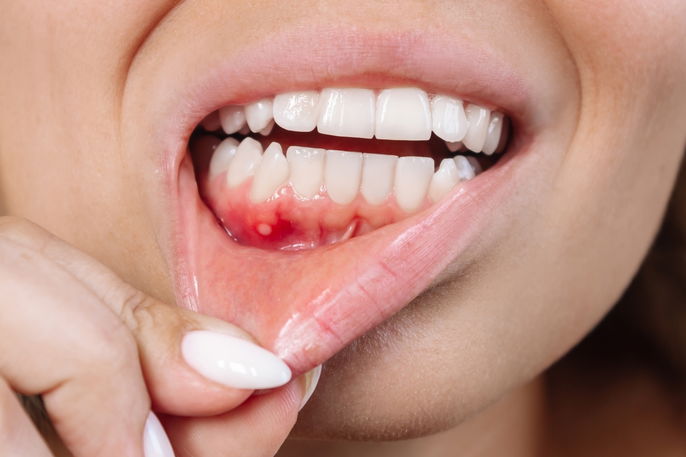
Main causes
The main causes of white gums are:
1. Leukoplakia
Leukoplakia is a condition marked by white patches on the lips, tongue, inner cheek, or gums. These patches may appear due to irritation from factors such as smoking, denture use, or regular alcohol intake.
Most of the time, leukoplakia patches are harmless. Rarely, however, they can develop into oral cancer, so a dental evaluation is important and a biopsy may be needed.
How to treat: Treatment is done by a dentist and may involve removing the patches with a laser or scalpel. A dentist may also recommend procedures such as photodynamic therapy, cryotherapy, or electrocauterization (using a heated needle) to remove the white patch.
2. Gingivitis
Gingivitis is gum inflammation caused by plaque or tartar buildup between the teeth and gums. It most often happens due to poor oral hygiene and can lead to white or red gums, pain, swelling, bad breath, and bleeding gums when brushing.
Based on the National Institute of Dental and Craniofacial Research (NIDCR), gum disease is typically caused by poor brushing and flossing habits that allow plaque to build up on the teeth and harden.
How to treat: A dentist typically recommends a professional cleaning to remove plaque and tartar. Daily brushing after meals with a soft-bristled toothbrush and an antibacterial toothpaste, plus flossing, is also recommended.
In more advanced cases, a dentist may prescribe oral antibiotics and antiseptic mouth rinses to control bacteria more quickly.
3. Oral lichen planus
White gums can be a sign of oral lichen planus, a chronic inflammatory condition affecting the gums, tongue, and inner cheek. It can also cause pain, sores, and red lesions.
Oral lichen planus may be linked to the use of antibiotic medications, nonsteroidal anti-inflammatory drugs (NSAIDs), or antihypertensive medications; dental treatments that involve nickel, resin, acrylates, or gold; and hepatitis C.
How to treat: Treatment may include stopping the medication thought to be triggering the condition, quitting smoking, and keeping good oral hygiene. It may also include rinsing once a week with diluted chlorhexidine or an alternative mouth rinse recommended by a clinician.
A clinician may also recommend oral corticosteroids and other systemic medications, such as hydroxychloroquine or methotrexate.
4. Menopausal gingivostomatitis
Menopausal gingivostomatitis is a mouth and gum infection associated with hormonal changes during menopause. It can cause gums to look white and feel dry and may sometimes cause bleeding.
How to treat: Treatment may include antibiotics and pain relievers prescribed by a dentist to treat the infection and reduce symptoms. Helpful supportive measures include brushing after meals and flossing, rinsing with warm salt water twice a day, and avoiding spicy, hot, and salty foods.
5. Tooth extraction
White gums can appear after a tooth extraction and are often a good sign. They can indicate the formation of blood vessels, collagen, and white blood cells, which are part of the normal healing process.
However, if there is severe pain at the site, fever, or a bad taste in the mouth, white gums may suggest pus and infection. In that case, a dental evaluation should happen as soon as possible so the most appropriate treatment can be prescribed.
How to treat: After the extraction, ice packs can be applied to the face over the area where the tooth was removed, repeating every 30 minutes for 5 to 10 minutes. It is also important to avoid very hard or hot foods and to keep up oral hygiene by brushing after meals and flossing once a day.
If there is an infection, a dentist may prescribe anti-inflammatory medications, antibiotics, and pain relievers.
6. Anemia
Anemia is a condition in which hemoglobin levels within red blood cells are altered. It can cause symptoms such as white gums, weakness, poor appetite, pale skin and eyes, and memory loss.
How to treat: Treatment should be guided by a clinician and may include corticosteroid medications, antibiotics, immunomodulators, and anti-inflammatory medications, as well as oral iron, vitamin B12, and folic acid supplements. Depending on the situation, treatment may also involve iron or vitamin B12 injections, blood transfusion, or a bone marrow transplant.
Depending on the type of anemia, a registered dietitian may also recommend iron-rich foods such as liver, chicken, fish, pumpkin seeds, and chickpeas, along with vitamin C sources such as acerola, guava, strawberries, and kiwi.
7. Canker sore on the gum
A canker sore on the gum is one or more sores that can be triggered by brushing with a hard-bristled toothbrush or eating very hot foods. It can cause small, round, whitish lesions that make the gum look white, along with mouth pain and trouble chewing or speaking.
How to treat: Canker sores on the gums often do not require specific treatment and usually clear within 1 to 2 weeks. In some cases, a clinician may recommend medications such as ointments, gels, or solutions containing anesthetics or anti-inflammatory agents to ease symptoms and support healing.
Home measures such as saltwater rinses may help support comfort, and applying propolis extract is sometimes used as a complementary approach.
8. Oral candidiasis
Oral candidiasis (oral thrush) is a mouth infection that can cause white patches that look like cottage cheese on the gums, tongue, inner cheeks, tonsils, and throat. It can also cause sores on the tongue or cheek, a cotton-like feeling in the mouth, and pain in the affected areas.
How to treat: Treatment should be recommended by a primary care provider, dentist, or pediatrician and may include antifungal medication in gel, liquid, or mouth-rinse form for 5 to 7 days. According to the CDC, the type and duration of treatment depend on the infection and the patient’s overall health.
Brushing at least 3 times a day with a soft-bristled toothbrush and avoiding fatty foods or foods high in sugar is also recommended.
Some home remedies, such as propolis and rinsing with barbatimão, are sometimes used as complementary options because they are described as having antifungal and bactericidal action.
9. Mouth cancer
Mouth cancer is a type of malignant tumor that can develop on the lips, tongue, cheeks, palate, gums, or oropharynx. It may cause symptoms such as a white patch on the gums, sores or canker sores that take a long time to heal, lumps in the mouth, throat irritation, or the sensation that something is stuck in the throat.
How to treat: Treatment should be guided by an oncologist and may include surgery, chemotherapy, radiation therapy, targeted therapy, or immunotherapy. The plan depends on the tumor location, the severity of the disease, and whether the cancer has spread to other parts of the body.
White gums in babies
White gums in babies can be caused by an oral candidiasis infection, also known as thrush. Thrush in babies develops when a fungus spreads, often through kissing, and a baby’s immune system is still immature and unable to fight it off completely.
Treatment for thrush in babies should be guided by a pediatrician and may include applying an antifungal in liquid, cream, or gel form to the infected area inside the mouth. If the baby’s thrush is linked to breast candidiasis in the mother, the mother may also need treatment to reduce reinfection risk, and antifungals in ointment or tablet form may be recommended.