


- A vegetative state can follow severe brain injury, and may include eye-opening and sleep-wake cycles without signs of conscious awareness.
- Common signs include no meaningful response to sights, sounds, or touch, along with reflex-like movements such as swallowing, moaning, or muscle tightening.
- Diagnosis is made by a neurologist using repeated bedside assessments and tests like EEG, MRI, or CT to evaluate brain function and injury severity.
A vegetative state is a disorder of consciousness that can happen after a brain injury affects areas involved in behavior and thinking. The person is not aware of themselves or their surroundings, but they may still open their eyes and cycle between sleep and wakefulness.
In a vegetative state, there are no purposeful, voluntary movements. The person also cannot meaningfully respond, communicate, or understand what is happening around them.
A vegetative state, also known as a wakeful coma or unresponsive wakefulness syndrome, most often occurs after a severe brain injury such as major head trauma, a brain tumor, or a stroke.
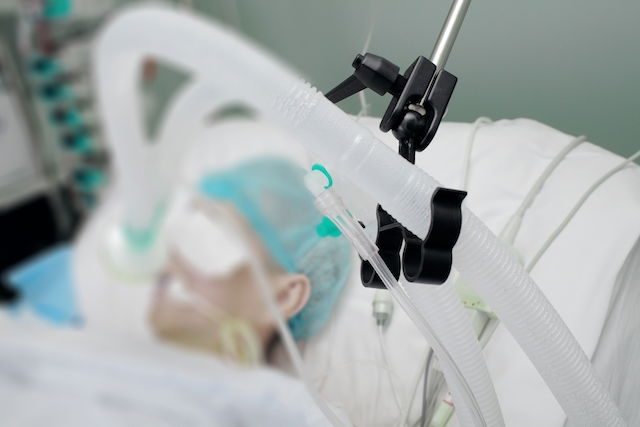
Main symptoms
Based on CDC-supported clinical literature, vegetative state (also called unresponsive wakefulness syndrome) is characterized by spontaneous eye-opening with no signs of conscious awareness.
The main symptoms of vegetative state are:
-
No awareness or emotional response;
-
Inability to interact with the surrounding environment;
-
No response to visual, auditory, or touch stimuli;
-
Opening and closing the eyes during the day;
-
Slow eye movements;
-
Waking and sleeping in regular cycles;
-
Chewing or swallowing even when not eating;
-
Making small sounds or moaning;
-
Muscle tightening when hearing very loud sounds or when pain is applied to the skin;
-
Producing tears.
Even though the person is unconscious and has no voluntary movement, they can still regulate heart rate, body temperature, and breathing. This is because the parts of the brain that control vital functions may continue to work normally.
Coma vs vegetative state
The main difference between coma and vegetative state is that in a coma, the person does not appear awake. In general, there is no eye opening and no behaviors like yawning, smiling, or making small sounds.
Confirming a diagnosis
A neurologist diagnoses a vegetative state by reviewing a person’s symptoms and performing a physical exam. The American Academy of Neurology (AAN) recommends using repeated, reliable tests to help improve the accuracy of diagnosis in people with long-term consciousness disorders. One of the most common tests used to measure a person’s level of alertness is the Glasgow Coma Scale.
The doctor may also order tests such as an electroencephalogram (EEG), brain magnetic resonance imaging (MRI), computed tomography (CT), positron emission tomography combined with CT (PET-CT), or single-photon emission computed tomography (SPECT). These tests help evaluate the type and extent of brain injury, as well as how the brain is functioning.
Main classifications
Vegetative state can be classified as:
-
Persistent vegetative state: lasts longer than 4 weeks;
-
Permanent vegetative state: lasts longer than 6 months due to a non-traumatic brain injury, or longer than 12 months when caused by a traumatic brain injury.
A doctor determines the classification based on how long the person has been in this condition and the type of brain injury involved.
Possible causes
The main causes of vegetative state are:
-
Traumatic brain injury;
-
Severe blows to the head;
-
Serious accidents or falls;
-
Cerebral (brain) hemorrhage;
-
Aneurysm or stroke;
-
Brain tumor;
-
Neurodegenerative diseases.
Cardiac arrest can also lead to a vegetative state due to reduced oxygen delivery to the brain. This lack of oxygen can cause irreversible brain damage.
Is there a cure?
In some cases, a vegetative state can be reversible, especially when it lasts less than one month and has a reversible cause, such as intoxication. Recovery can also be more likely when it lasts less than 12 months and is related to head trauma, for example.
However, when a vegetative state results from structural brain damage or a long period without oxygen, recovery is less likely and may not occur at all. If the condition lasts longer than six months, the chances of recovery decrease even further, and those who do recover often experience serious long-term problems, such as difficulty speaking, walking, or understanding.
Treatment options
There is no single specific treatment for a vegetative state. Treatment is individualized based on the person’s symptoms and the underlying cause.
For example, if there is a cerebral hemorrhage, it must be controlled. Because the person cannot do basic daily tasks like bathing or eating, hospitalization is often recommended so nutrition can be provided directly into a vein to help prevent malnutrition and so daily hygiene care can be provided.
In some cases, especially when there is a higher likelihood of recovery, a doctor may recommend passive physical therapy. In passive physical therapy, a physical therapist regularly moves the person’s arms and legs to help prevent muscle loss and keep the joints functional.