


- Vasectomy is a minor outpatient procedure that permanently prevents pregnancy by blocking sperm from entering semen, without affecting testosterone, erections, or ejaculation.
- It is highly effective, but condoms are still needed to reduce the risk of sexually transmitted infections, since vasectomy does not provide STI protection.
- Full effectiveness requires follow-up semen testing and about 3 months or 25 ejaculations to confirm that no sperm remain.
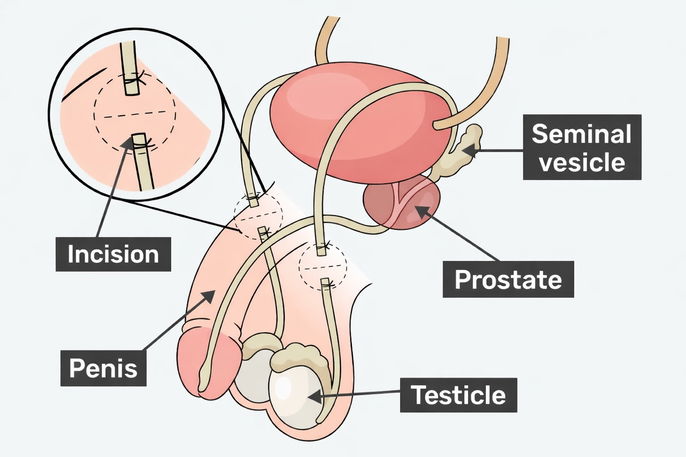
A vasectomy is a minor surgical procedure that prevents the release of sperm, making it impossible to cause a pregnancy. It works by cutting, sealing, or blocking the vas deferens, the tubes that carry sperm from the testicles to the penis.
By stopping sperm from mixing with semen during ejaculation, vasectomy prevents pregnancy. The procedure does not affect testosterone levels, sexual performance, or the ability to ejaculate.
Although vasectomy is highly effective, it does not protect against sexually transmitted infections (STIs). After the procedure, follow-up semen testing is required to confirm that no sperm remain.
Who should consider a vasectomy
Vasectomy is recommended for men and people with testes who are certain they do not want to have more children. It is important for a couple to discuss the decision together with a doctor to make sure all questions and concerns are addressed before surgery.
Vasectomy procedure
Vasectomy is a simple outpatient procedure performed by a urologist and typically takes 15 to 30 minutes.
To perform a vasectomy, the doctor:
- Cleans the skin of the scrotum with an antiseptic solution;
- Administers local anesthesia to prevent pain and discomfort;
- Feels the area to locate the vas deferens;
- Makes a small incision in the upper part of the scrotum;
- Identifies and gently pulls out the vas deferens through the incision;
- Cuts, cauterizes, and ties off the vas deferens;
- Places the ends of the vas deferens back inside the scrotum;
- Closes the incision with stitches or surgical glue.
After the procedure, the patient can go home the same day. Applying ice packs and resting for about 7 days is usually recommended.
How it works
Vasectomy prevents pregnancy by stopping sperm from entering the semen, the fluid released during ejaculation. Without sperm in the semen, fertilization cannot occur.
Because sperm do not reach the penis during ejaculation, pregnancy is prevented even though ejaculation still occurs normally.
According to the World Health Organization (WHO), vasectomy is a highly effective and permanent method of male contraception.
Preparing for surgery
Before having a vasectomy, it is important to:
-
Discuss all questions about the procedure, recovery, and possible complications with the urologist;
-
Review the advantages and disadvantages of vasectomy and the technique that will be used;
-
Inform the doctor about any allergies to anesthetics or other medications;
-
Tell the doctor if you take blood-thinning medications such as warfarin, heparin, rivaroxaban, aspirin (acetylsalicylic acid), or clopidogrel, since you may need to stop them a few days before surgery.
Before the procedure, the doctor will also perform a physical exam of the scrotum to evaluate the vas deferens and check for hernias, varicocele (enlarged scrotal veins), masses, or testicular tenderness.
The doctor will also review your full medical, sexual, and social history, including any past genitourinary problems, genital trauma or surgery, scrotal pain, or testicular cancer.
Vasectomy recovery
After surgery, it is normal to have mild pain and discomfort in the scrotal area. Rest and cold compresses, as recommended by your doctor, can help relieve symptoms.
Wearing supportive, comfortable underwear and avoiding sexual activity for about 14 days, or until cleared by your doctor, is also advised.
It is essential to use condoms during sexual activity after vasectomy because sperm may still remain in the vas deferens for a period of time and could be released during ejaculation.
Follow-up visits with a urologist are necessary to perform a semen analysis. The test should confirm the absence of sperm (azoospermia) or the presence of only rare non-motile sperm before relying solely on vasectomy for contraception.
Advantages and disadvantages
The main advantage of vasectomy is increased control over pregnancy. About 3 months after the procedure, and after confirmation through semen testing, a partner may no longer need to use other contraceptive methods such as birth control pills or injections.
The exact waiting period varies from person to person because around 25 ejaculations are typically required to completely clear sperm from the ducts. Your doctor can advise you on the appropriate timeline for your situation.
One disadvantage is that vasectomy does not protect against sexually transmitted infections (STIs). According to the Centers for Disease Control and Prevention (CDC), condoms are the only contraceptive method that also reduce the risk of sexually transmitted infections, including HIV.
Can you reverse a vasectomy?
In some cases, vasectomy can be reversed through a procedure that reconnects the vas deferens. However, the success rate depends largely on how much time has passed since the original surgery.
Over time, the body may produce fewer sperm and may also develop antibodies that attack sperm. Even if sperm production resumes after reversal, the sperm may not function normally, making pregnancy more difficult.
For this reason, vasectomy should only be chosen when the individual is confident they do not want more children, since reversal is not always successful.
Possible complications
Vasectomy is considered safe, but rare complications can occur, including:
-
Scrotal hematoma;
-
Bleeding or blood clots inside the scrotum;
-
Blood in the semen, which usually improves without treatment;
-
Infection at the surgical site;
-
Chronic scrotal pain;
-
Sperm granuloma;
-
Vasectomy failure, requiring repeat surgery.
Seek medical care immediately if you develop signs of infection such as fever, redness, worsening pain, or increasing swelling. In some cases, antibiotics may be necessary.
Frequently asked questions
Some common questions about vasectomy include:
1. Is vasectomy covered by insurance?
Yes. Vasectomy is typically covered by most private health insurance plans, Medicaid programs in many states, and some public health clinics, although coverage details vary by state and insurance provider.
Under the Affordable Care Act (ACA), most insurance plans are required to cover female sterilization without cost-sharing, but male sterilization such as vasectomy is not federally mandated as a preventive service. However, many insurance providers still cover vasectomy either fully or with a copay. It is important to check directly with your insurance company or local health department to confirm coverage and any out-of-pocket costs.
2. Is recovery painful?
Vasectomy is a simple procedure, but the incision and manipulation of the vas deferens can cause temporary inflammation. This may make the scrotum more sensitive and cause discomfort when walking or sitting during the first few days.
Pain usually improves gradually, and most men can return to driving and regular daily activities within about 7 days. Sexual activity is generally resumed after about 4 weeks to allow proper healing.
3. How long does it take to work?
It is important to continue using another contraceptive method, such as condoms, for up to 3 months after surgery. Although sperm are blocked immediately, some may still remain in the ducts and can lead to pregnancy.
An average of 25 ejaculations is usually needed to clear any remaining sperm. A semen analysis must confirm the absence of sperm before vasectomy is considered fully effective.
4. Does the person stop producing ejaculatory fluid?
Ejaculatory fluid is made up of sperm and fluids produced by the prostate and seminal vesicles, which help sperm move.
Because the prostate and seminal vesicles continue to function normally after vasectomy, the individual will still produce ejaculatory fluid. However, it will not contain sperm, which prevents pregnancy.
5. Is there a risk of sexual dysfunction after the procedure?
There is no risk of erectile dysfunction caused by vasectomy because the procedure does not involve the penis or affect blood flow or nerves responsible for erections.
Also recommended: What Causes Erectile Dysfunction? 8 Common Reasons tuasaude.com/en/what-causes-erectile-dysfunctionSome men may experience temporary anxiety that can affect erections, especially in the first few weeks while recovering, but this is psychological rather than physical.
6. Can it reduce sexual pleasure?
Vasectomy does not reduce sexual pleasure. It does not change sensation in the penis or affect testosterone production, which means libido remains unchanged.