


- The vagus nerve helps control heart rate, breathing, digestion, swallowing, and several protective reflexes.
- Vagus nerve dysfunction may cause hoarseness, fainting, nausea, bloating, reflux, or changes in heart rate and blood pressure.
- Treatment depends on the underlying condition and may include medications, speech therapy, surgery, or vagus nerve stimulation.
The vagus nerve, also known as cranial nerve X, helps regulate vital functions such as heart rate, breathing, and movement through the digestive tract. It is also involved in reflexes such as coughing, swallowing, and vomiting.
There are two vagus nerves, one on each side of the body. Together, they make up the 10th of the 12 pairs of cranial nerves, which carry signals between the brain and different parts of the body.
Because cranial nerves are identified using Roman numerals, the vagus nerve is also called cranial nerve X. Changes in vagus nerve function may cause symptoms such as persistent hoarseness or frequent choking, which should be evaluated by a healthcare provider.
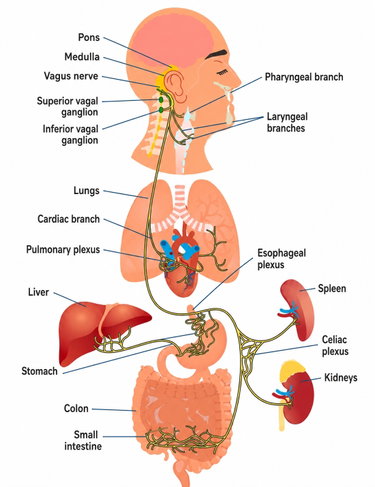
Vagus nerve location
The vagus nerve is the longest cranial nerve and is known as cranial nerve X. It begins at the back of the medulla oblongata, a structure that connects the brain to the spinal cord.
The nerve leaves the skull through an opening called the jugular foramen. It then travels down the neck and through the chest before reaching the abdomen.
Branches of the vagus nerve
As it travels through the body, the vagus nerve branches out to structures and organs including the pharynx, larynx, esophagus, heart, intestines, and pancreas.
These branches carry information between the organs and the brain, helping the brain monitor and regulate how they function.
Vagus nerve function
The main functions of the vagus nerve include:
-
Activating the coughing, swallowing, and vomiting reflexes
-
Contracting the vocal cords to produce sound
-
Regulating the heart rate by slowing it down
-
Controlling breathing movements
-
Stimulating narrowing of the bronchi
-
Promoting contraction of the lymphatic system
-
Coordinating movements of the digestive tract, including the esophagus and intestines
-
Stimulating increased gastric secretions
-
Promoting the production of sweat, saliva, and mucus
The vagus and glossopharyngeal nerves share some functions in the neck, including their role in taste. The vagus nerve helps detect sour flavors, while the glossopharyngeal nerve is more closely associated with bitter flavors.
Vagus nerve dysfunction
To evaluate possible vagus nerve dysfunction, a neurologist typically begins with a medical history and physical examination. Depending on the symptoms, additional tests may be recommended to help identify the underlying cause.
During the physical examination, the doctor may assess the gag reflex and the movement of the soft palate by gently touching the back of the throat with a tongue depressor. These tests help evaluate the function of the glossopharyngeal and vagus nerves.
Depending on the symptoms, the doctor may also order tests such as magnetic resonance imaging (MRI), a CT scan, an electrocardiogram (ECG), or other diagnostic tests to help identify conditions that may affect the vagus nerve or the organs it controls.
Symptoms of an inflamed vagus nerve
Changes in vagus nerve function may cause symptoms such as:
-
Nausea and vomiting
-
Changes in heart rate and blood pressure
-
Decreased appetite and weight loss
-
Voice changes, including hoarseness or loss of voice
-
Dizziness or fainting
-
Abdominal pain and bloating
-
Gastroesophageal reflux
Anyone with symptoms that may indicate a vagus nerve problem should consult a neurologist. A neurologist specializes in evaluating conditions that affect the nervous system.
The neurologist may perform a neurological examination and order tests, such as magnetic resonance imaging (MRI), to help identify the cause of the symptoms.
Vagus nerve disorders
The most common vagus nerve disorders include:
1. Gastroparesis
Gastroparesis is paralysis of the stomach that may occur when the vagus nerve is damaged. Possible causes of this damage include surgery, tumors, and uncontrolled diabetes.
Damage to the nerve prevents the stomach from making the movements needed to digest food and move it into the intestines. This may cause gas in the stomach, abdominal pain, nausea, vomiting, or abdominal bloating.
Treatment: According to the National Institute of Diabetes and Digestive and Kidney Diseases, gastroparesis treatment may include dietary changes and medications that improve stomach emptying or help control symptoms such as nausea and vomiting.
2. Vasovagal syncope
Vasovagal syncope is a sudden and temporary loss of consciousness caused by excessive stimulation of the vagus nerve. It is also known as the vasovagal reflex, vagal reflex, or vasovagal syndrome.
Excessive vagus nerve stimulation may be triggered by intense heat, strong emotions, standing for a long time, anxiety, hunger, or pain.
Treatment: There is no specific treatment for vasovagal syndrome. Avoiding excessive stress and staying well hydrated are generally recommended.
3. Vocal cord paralysis
Vocal cord paralysis may be caused by compression of or damage to the vagus nerve. It can cause a hoarse, weak, or whispering voice, as well as difficulty breathing or swallowing.
Treatment: Treatment is managed by an otolaryngologist and may include speech therapy, procedures to improve vocal cord function, or surgery to treat the underlying cause. In some cases, a tracheostomy may be needed to help maintain an open airway.
Vagus nerve stimulation
Vagus nerve stimulation is a type of neuromodulation treatment in which a small device similar to a cardiac pacemaker is implanted under the left collarbone. The device sends electrical impulses to the vagus nerve, stimulating the brainstem and changing how brain cells communicate.
According to the US Food and Drug Administration (FDA), certain vagus nerve stimulation systems are approved as adjunctive therapy for treatment-resistant partial-onset seizures and, when paired with rehabilitation, for upper-limb motor deficits following chronic ischemic stroke.
Vagus nerve exercises
Techniques that may help promote relaxation include diaphragmatic breathing, meditation, mindfulness, and yoga.
These techniques may help reduce anxiety and stress, which can excessively stimulate the vagus nerve and trigger vasovagal syndrome.