


Types of salt vary in sodium content, mineral profile, and how they’re used in cooking. Salt, also called sodium chloride (NaCl), is made up of 39.34% sodium and 60.66% chloride.
Most health guidelines recommend limiting salt intake to about 5 grams per day, roughly equal to one teaspoon or five 1‑gram packets. The healthiest option is usually the type of salt with the lowest sodium content, since too much sodium can raise blood pressure and cause fluid retention.
When choosing a type of salt, it’s also important to consider whether it’s refined or unrefined. Unrefined salts, such as Himalayan pink salt, usually retain more of their natural minerals and contain fewer added ingredients.
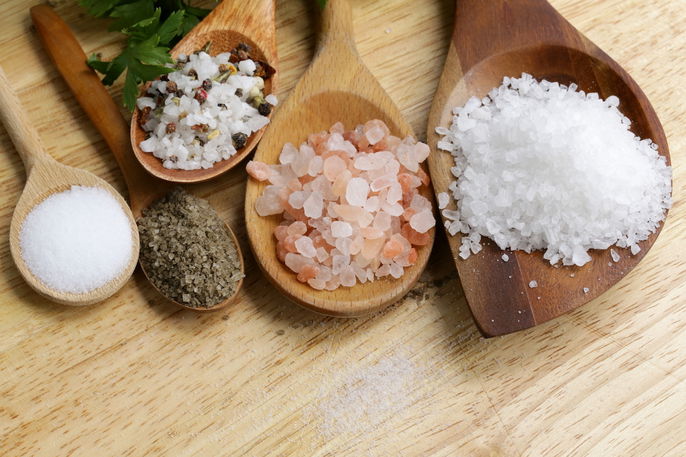
Main types
The table below shows different types of salt, their characteristics, how much sodium they provide, and common ways they’re used:
Processed foods can contain large amounts of sodium, including sweet foods like soda, ice cream, and cookies. For that reason, it’s a good idea to read labels and avoid products with 400 mg or more of sodium per 100 g of food, especially if you have high blood pressure.
According to the U.S. Food and Drug Administration (FDA), more than 70% of the sodium consumed in the U.S. comes from processed, packaged, and prepared foods (including restaurant foods), rather than from salt added at home.
Consuming in moderation
No matter which type of salt you use, it’s important to keep portions moderate or as low as possible. To help manage your salt intake, try the following:
-
Remove the salt shaker from the table;
-
Don’t add salt to food before tasting it;
-
Limit bread and highly processed foods, such as packaged snack foods, French fries, powdered or cube seasonings, ready-made sauces, and processed meats like hot dogs, ham, and nuggets;
-
Limit preserved foods, such as olives, hearts of palm, corn, and peas;
-
Avoid monosodium glutamate, which is found in Worcestershire sauce, soy sauce, and instant soups;
-
Use a small measuring spoon to portion salt instead of adding pinches;
-
Replace salt with natural seasonings like onion, garlic, parsley, chives, oregano, cilantro, lemon, and mint, or grow herbs at home to use more often.
Another healthier way to replace salt is to use gomasio (also called sesame salt). It’s low in sodium and is a source of calcium, healthy oils, fiber, and B vitamins.
According to the World Health Organization (WHO), adults should consume less than 2,000 mg of sodium per day, which is equivalent to under 5 g of salt (about 1 teaspoon).