


Trigger finger is a condition in which one of the fingers remains in a bent position, even when trying to straighten it. It can cause intense pain felt in the finger and affected hand, especially when trying to forcibly straighten it.
Trigger finger, also known as stenosing tenosynovitis, occurs due to inflammation in the tendon that is responsible for bending the finger. It can be caused by activities that require repetitive movements or diseases like arthritis and decompensated diabetes.
Trigger finger can usually be treated through physiotherapy, however, very severe cases may require surgical repair.
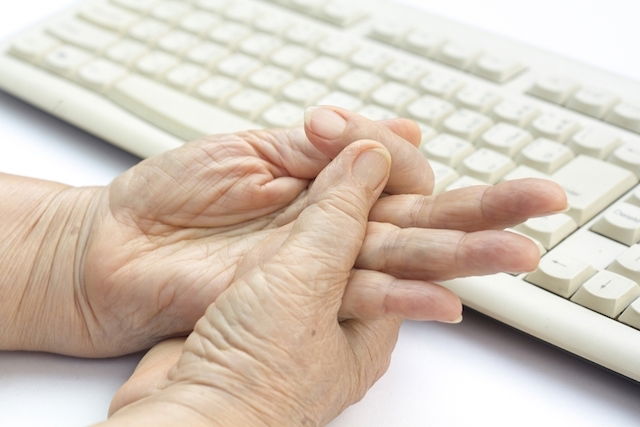
Main symptoms
The main symptoms of trigger finger are:
- A bent finger that worsens in pain when trying to straighten it
- Pain at the base of the affected fingers or palm
- Swollen fingers
- Limited finger movement
Trigger finger most commonly affects the middle or ring finger, however it can affect any finger. Symptoms are more intense in the morning, due to inactivity and increased swelling that usually occurs at night.
If left untreated, the finger may remain locked in a bent position, making it difficult to pick-up objects or perform other activities of daily living (like getting dressed or washing your hair).
Confirming a diagnosis
A trigger finger diagnosis is typically confirmed by a family doctor or orthopedic surgeon, and is initiated with an assessment of the patient's symptoms.
The doctor may also perform a physical exam by performing passive range of motion exercises on the affected hand. This will also help to assess the severity of the condition and guide the most appropriate treatment approach.
Common causes
Trigger finger is more common in people who perform repetitive activities with their hands, like picking objects up, pinching, or using hand tools. Therefore, people who sew, garden or perform construction work frequently are at most risk to developing trigger finger.
Trigger finger can also affect those with preexisting medical conditions like rheumatoid arthritis or diabetes.
In addition, infectious diseases that are left untreated can also lead to trigger finger, as harmful microorganisms can enter the bloodstream and cause finger joint inflammation.
In many cases, however, the exact cause of trigger finger is not fully known.
Congenital trigger finger
Congenital trigger finger is a condition that can be noted at birth or develop in early childhood. This condition is mainly related to abnormal bone development, and has a greater change of emerging in finger joints with nodules or other obvious deformities.
Treatment for these cases typically involves physiotherapy and massage therapy, while surgery can be consider after the child turns one year old.
Some doctors prefer to perform surgery immediately, while others prefer to try more conservative approaches to treatment first. However, surgery is strongly recommended when finger and hand movement is impaired.
Treatment options
Depending on the severity of the symptoms, your doctor may advise:
- Physiotherapy, with exercises and massages that are aimed at strengthening surrounding muscles, maintaining mobility and relieving swelling and pain
- Rest for 7 to 10 days, avoiding repetitive manual activities that require effort
- Use a special splint for a prescribed amount of time, to keep the finger in a stretched position
- Hot compresses, especially in the morning, to relieve pain
- Ice packs for 5 to 8 minutes on the area to relieve swelling during the day;
- Applying anti-inflammatory ointments like diclofenac to reduce inflammation and pain.
In severe cases, where the pain is very intense and physiotherapy become difficult, the doctor may also inject cortisone directly into the finger. This procedure is simple, quick and can be beneficial for pain relief.
A series of cortisone injections over time may be necessary to achieve results. However, very frequent cortisone inections can weaken the tendon and increase the risk of rupture or infection. Therefore, you should speak to your doctor to determine whether this is a viable option for you.
When surgery is necessary
Trigger finger surgery is performed when other forms of treatment have failed. It involves making a small incision in the palm of the hand, which allows the doctor to widen or release the initial portion of the tendon sheath.
This type of surgery is usually performed under general anesthesia in the hospital. Although it is a simple surgery with a low risk of complications, it may be necessary to stay in the hospital overnight to ensure that the anesthesia wears off completely.
Recovery is relatively quick, and you can return to performing light activities with your hand in 1 to 2 weeks, depending on your surgeon's instructions.