


Trench foot is a nonfreezing cold injury that develops when the feet remain wet and cold for a long period. It is also called immersion foot and can occur even when temperatures are above freezing.
Early symptoms may include tingling, itching, numbness, swelling and pale or blotchy skin. After the feet begin to warm, they may become red, painful and very sensitive.
Treatment involves removing wet footwear, carefully drying the feet, slowly warming them and managing pain. Medical care is important when symptoms are severe, blisters develop or there are signs of infection or tissue damage.
Main symptoms
Common symptoms of trench foot include:
-
Tingling, itching or a prickling feeling
-
Numbness or reduced feeling in the feet
-
Cold, pale, gray or blotchy skin
-
Swelling
-
A heavy feeling in the feet
-
Trouble walking
-
Pain or burning, especially during rewarming
-
Red or warm skin after the feet are warmed
-
Blisters in more serious cases
-
Increased sweating or long-term sensitivity to cold
The skin may initially look pale and feel cold and damp. As circulation returns, the feet can become red, swollen and very painful.
Severe trench foot can lead to open sores, infection and tissue loss. Some people continue to experience pain, numbness, abnormal sweating or sensitivity to cold after the initial injury has healed.
Common causes
Trench foot develops when the feet remain wet and cold for a long time. Cold narrows the small blood vessels, while moisture causes the feet to lose heat faster, reducing blood flow to the skin, nerves and other tissues. It is not contagious and can occur at temperatures as high as 60°F, or about 16°C, when the feet stay constantly wet.
Wet socks, poorly ventilated shoes and tight footwear can trap moisture and further restrict circulation. Risk increases when socks and shoes cannot be changed for several hours or days, such as during military activities, outdoor work, hiking, camping, festivals, floods or other emergencies.
Poor circulation, nerve damage, malnutrition, infection, substance use and limited access to dry shelter or clean socks may increase the risk or severity of trench foot. People experiencing homelessness, outdoor workers, military personnel and disaster-response workers may be especially vulnerable.
Confirming a diagnosis
Trench foot is usually diagnosed through a physical examination and a history of prolonged exposure to wet and cold conditions. There is no single laboratory test that confirms the condition.
A doctor may examine the skin color, temperature, swelling, sensation and blood flow in the feet. The timing of symptoms is also important, particularly numbness and paleness during cold exposure followed by redness, swelling or pain during rewarming.
Other conditions may need to be ruled out, including frostbite, cellulitis, blood vessel disease, nerve damage and injuries caused by pressure or trauma. Unlike frostbite, trench foot develops without the tissues freezing.
Treatment options
Treatment should begin as soon as possible to restore a dry, warm environment and prevent further tissue damage.
1. Removing moisture and warming the feet
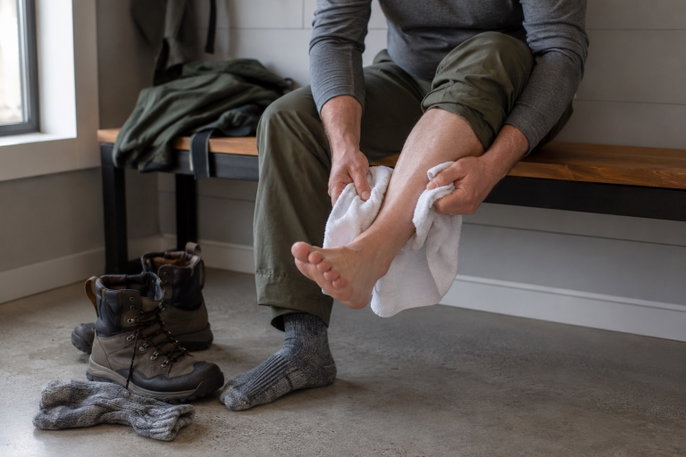
Wet socks and footwear should be removed, and the feet should be gently cleaned and completely dried. Rewarming should be gradual and passive, using a warm room rather than direct heat.
Heating pads, fires, radiators and very hot water should be avoided because numb skin can burn easily. The feet should also not be rubbed or massaged, as this may damage affected tissue.
2. Rest and elevation
The feet may be elevated to help reduce swelling. Walking and pressure on the affected areas may need to be limited until pain and swelling improve.
Clean, loose and dry socks can protect the feet during recovery. Any blisters or open wounds should be covered with clean dressings and monitored closely.
3. Pain relief
Pain may become intense when circulation returns. Nonsteroidal anti-inflammatory drugs, such as ibuprofen, may be used when medically appropriate.
More severe pain may require prescription medicine. Long-lasting nerve pain can require additional treatment and medical follow-up.
4. Wound and infection care
Blisters and damaged skin increase the risk of infection. Medical treatment may include wound care, removal of damaged tissue or antibiotics when a bacterial infection is present.
Tetanus vaccination status may also be reviewed, especially when there are open wounds. Severe tissue damage is uncommon when treatment begins early, but advanced cases may require surgical care.
When to seek medical care
Medical evaluation is recommended when numbness, swelling, skin color changes or pain continue after the feet have been dried and gradually warmed.
Urgent care is especially important when there are:
-
Blisters or open wounds
-
Increasing redness, warmth or swelling
-
Pus or a bad-smelling discharge
-
Fever
-
Severe or worsening pain
-
Black, dark purple or dying skin
-
Loss of sensation that does not improve
-
Difficulty walking
-
Signs of poor circulation
Early treatment can lower the risk of infection, tissue loss and long-term nerve or circulation problems.
Possible complications
Trench foot can damage small blood vessels and nerves. Even after the skin appears to heal, some people may experience chronic pain, numbness, tingling, excessive sweating or increased sensitivity to cold.
Open sores may become infected. In severe cases, prolonged loss of blood flow can lead to tissue death and the possible need for surgery.
Prevention measures
Trench foot can often be prevented by keeping the feet warm, clean and dry.
Preventive measures include:
-
Changing wet socks as soon as possible
-
Carrying extra pairs of clean, dry socks
-
Drying the feet thoroughly
-
Wearing well-fitting, water-resistant footwear
-
Avoiding tight shoes and socks that reduce circulation
-
Rotating footwear so that shoes or boots can dry completely
-
Removing footwear periodically when it is safe to air and inspect the feet
-
Checking the feet regularly for numbness, swelling, sores or color changes
-
Limiting prolonged exposure to wet and cold environments
-
Moving to warm, dry shelter during floods, storms or cold-weather emergencies
Outdoor workers and emergency personnel may benefit from scheduled breaks in warm, dry areas. Access to dry footwear, spare socks and foot inspections is particularly important during long shifts in wet conditions.