


- Scar revision surgery improves the appearance and texture of scars caused by cuts, burns, or previous surgeries, helping the skin look more even and natural.
- Plastic surgeons use different techniques, such as Z-plasty, dermabrasion, or tissue repositioning, depending on the scar’s type, size, and location.
- Surgery is usually recommended for severe, raised, sunken, or tight scars, while milder cases may respond well to treatments like silicone sheets, lasers, or injections.
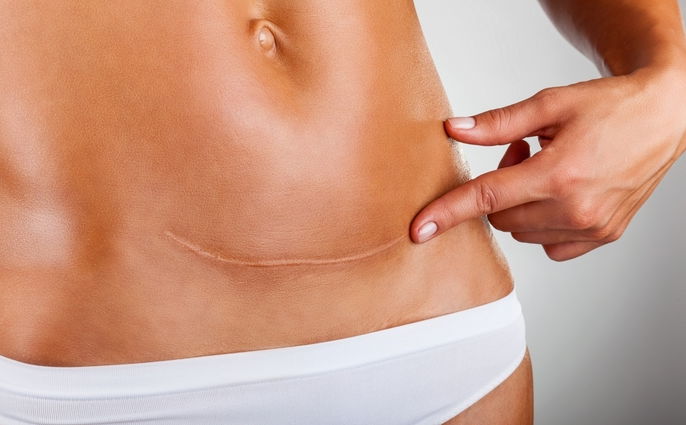
Scar revision surgery is designed to repair skin changes caused by the healing of a previous wound. This procedure can address marks left by cuts, burns, or prior surgeries like C-sections and appendectomies.
The primary goal of scar revision surgery is to minimize skin defects such as irregular textures, sizes, or uneven colors. By smoothing these imperfections, the procedure helps create a more uniform and natural skin appearance.
Revision surgery is typically reserved for severe scarring or cases where non-invasive aesthetic treatments have failed. Common alternatives include silicone sheets, specialized radiation therapy, or intense pulsed light therapy.
How the surgery is performed
The specific procedure used to improve a scar depends on its type, size, location, and overall severity. A plastic surgeon will select the best approach based on your specific needs and how your skin naturally heals.
Surgeons may use various techniques to achieve the best results. These often involve making precise incisions to remove or reorient sections of the affected skin to make the scar less noticeable.
Types of surgery
-
Z-plasty: This is the most common technique for scar revision, used to reposition a scar so it follows natural skin folds.
-
Half Z-plasty: This method is used when the skin on only one side of the scar is elastic enough to be moved.
-
Four-flap Z-plasty (Limberg flap): This is particularly effective for releasing severe, tight scars that restrict movement, often seen in burn victims.
-
Planimetric Z-plasty: This is indicated for flat areas of the body, where the surgeon uses a triangular skin graft to break up the scar.
-
S-plasty: A technique used specifically for treating oval-shaped scars that have contracted or tightened.
-
W-plasty: This method is used to improve the appearance of irregular linear scars by creating a zig-zag pattern.
-
Geometric broken lines: This converts a long, straight scar into an irregular, random pattern to make it less visible to the eye.
-
V-Y and V-Y advancement: These techniques are used to lengthen a scar area, often in cases of small, tight, contracted scars.
-
Subcision and filling: For recessed or pitted scars, the surgeon releases the underlying tissue and fills the area with fat or hyaluronic acid.
-
Dermabrasion: This is a classic resurfacing technique, performed manually or with a specialized tool to smooth the skin surface.
Before the procedure, your doctor may request preoperative blood work. Most surgeries require fasting for 8 hours, and the type of anesthesia (local, sedation, or general) will depend on the complexity of the revision.
In many cases, a single procedure provides the desired results. However, for more complicated scarring, your surgeon may recommend repeating the procedure or combining it with other treatments.
Surgical recovery
Immediately following surgery, it is normal to experience swelling and redness at the site. Because the tissue needs time to settle, the final results usually appear after several weeks, while full healing can take up to a year. During your recovery, it is important to:
-
Avoid intense physical activity or heavy lifting.
-
Stay out of direct sunlight for at least 30 days.
-
Apply sunscreen daily, even after the wound has completely healed.
To ensure the best possible outcome and prevent the scar from worsening, your doctor might also prescribe topical treatments. These can include silicone sheets, specialized healing ointments, or the use of compression bandages.
Who can have the surgery
A plastic surgeon generally recommends scar revision when a scar has formed abnormally or causes functional issues. Common conditions addressed include:
-
Keloids: Thick, hardened scars that grow larger than the original wound due to excessive collagen; they may itch or appear red.
-
Hypertrophic scars: Thickened scars that stay within the boundaries of the original wound, often appearing darker or lighter than the surrounding skin.
-
Contractures: Scars that pull the skin edges together, common after C-sections or burns, which can restrict the movement of nearby joints.
-
Widened scars: Shallow, stretched scars that sit lower than the surface of the surrounding skin.
-
Dyschromic scars: Scars that result in skin discoloration, appearing significantly lighter or darker than the rest of the skin.
-
Atrophic scars: Pitted or sunken scars that sit below the skin surface, frequently caused by acne or deep injuries.
While surgery significantly improves the appearance and texture of the skin, it may not completely erase the scar. Individual results vary based on skin type and healing history.
Other treatment options for scars
Non-surgical treatments are often recommended as the first line of defense before proceeding with surgery:
1. Aesthetic treatments
Techniques like chemical peels, microdermabrasion, lasers, radiofrequency, and ultrasound are highly effective for mild scarring. These are commonly used for acne scars or to even out skin pigmentation. While a dermatologist can perform these for minor cases, larger scars may still require surgical intervention.
2. Tapes and ointments
Dermatologists often prescribe silicone sheets, medical tapes, or compression dressings to be worn for several months. Specialized massages can also help break down internal scar tissue (fibrosis) and improve the color and thickness of the area.
3. Injectable treatments
For sunken or atrophic scars, fillers like hyaluronic acid or polymethylmethacrylate (PMMA) can be injected to level the skin. The duration of these results depends on the material used. For raised (hypertrophic) scars, corticosteroid injections are often used to reduce collagen production and flatten the scar.